 Expert comment
 Jeanette Earl
 384
384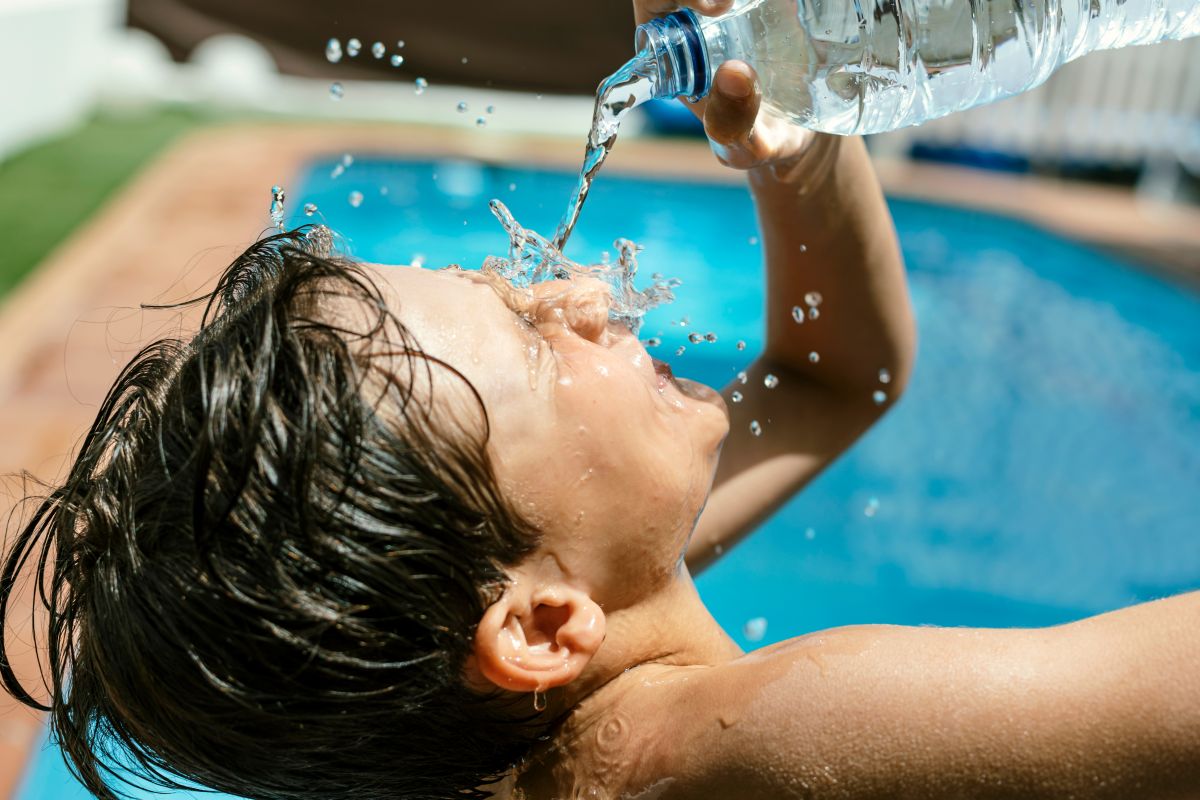
Professor Kristy Howells explains what to do to support children in heatwaves, and how we all need to build towards heat literacy.
When an Amber Heat Alert is issued, most of us know that hot weather is coming. We see the warnings, hear the forecasts, and understand that we should take care. But for many parents, schools and community settings, the next question is often much more practical: what should we actually do?
That gap matters. Warnings raise awareness, but awareness alone does not protect children. As heatwaves become a more regular part of our lives, we need to move beyond simply knowing that heat is a risk towards building everyday heat literacy.
A useful starting point is understanding the difference between heat stress and heat strain. Heat stress refers to external conditions that place pressure on the body, such as high temperatures, humidity, direct sunlight, poor ventilation, physical activity, or hot surfaces. Heat strain is the body’s response to those conditions. In children, this might appear as fatigue, headaches, dizziness, irritability, reduced concentration, emotional dysregulation, or a sudden drop in enthusiasm for activities they usually enjoy. In simple terms, heat stress is the challenge from the environment. Heat strain is the child’s body’s response to trying to cope.
This distinction matters because children do not always recognise or communicate that they are struggling. They may continue playing, running, climbing, or participating in sports even as their bodies begin to experience physiological strain. They may not say, “I am overheating.” Instead, their behaviour may tell us first. That is why we need to look beyond collapse or obvious illness. Early signs can be subtle. A child who becomes unusually tired, tearful, irritable, dizzy, distracted, or emotionally overwhelmed may not simply be “grumpy in the heat”. Their body may be working hard to regulate temperature.
The good news is that many heat-related problems are preventable.
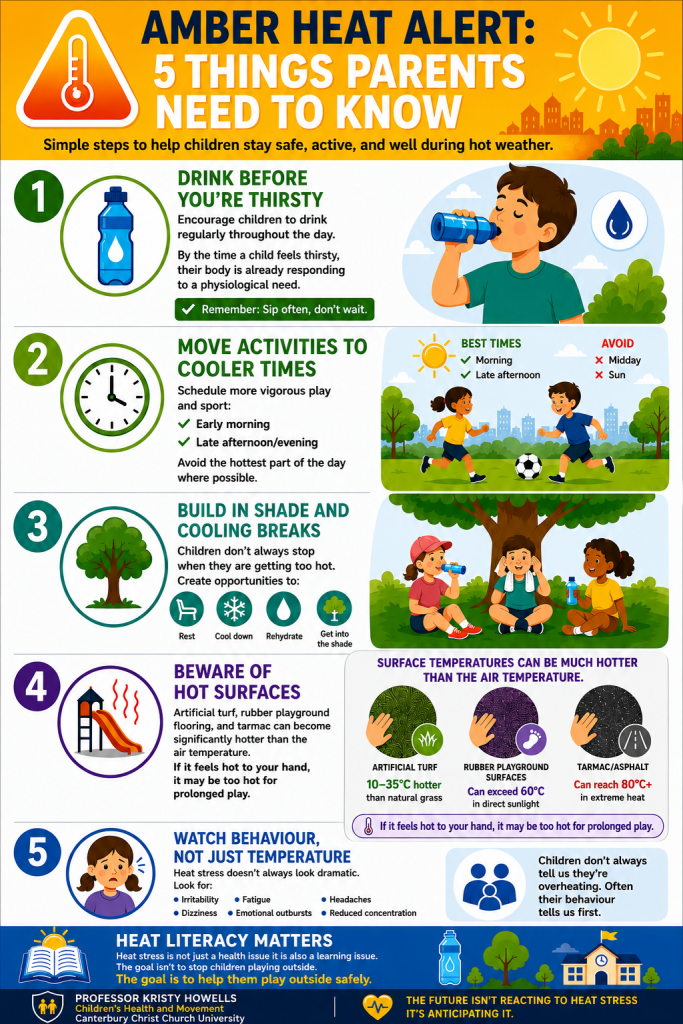
During Amber Heat Alerts, adults can take simple, practical steps:
· Encourage children to drink before they say they are thirsty.
· Move more active play, sport, or outdoor learning to cooler parts of the day.
· Build in regular shade, rest, and cooling breaks.
· Be cautious with artificial turf, rubber playground surfaces, and tarmac, which can become much hotter than the air temperature.
· Watch for behavioural changes, not just physical collapse.
The aim is not to stop children from being active. Children need to play, move, learn outdoors, and enjoy warm weather. The aim is to help them do those things safely.
This is where heat literacy and understanding what to do during heatwaves become essential. Just as we teach children about road safety and water safety, we increasingly need to teach heat safety through heat literacy. Children, parents, teachers, coaches, and community leaders all need to understand how heat affects the body, how to recognise early signs of strain, and what practical actions can reduce risk.
Professor Kristy Howells is a Professor in Children’s Health and Movement in the School of Sciences, Psychology, Arts and Humanities, Computer Engineering and Sports.


