 The Poetic Nursing Heart
 Tom Delahunt
 196
196
The secret writings of the Hobo Poet,
There is a particular strangeness to reaching the end of something that has occupied so much of your life.
For seven years I have been walking.
Not always forwards.
Sometimes sideways.
Sometimes backwards.
Sometimes in circles.
Sometimes apparently nowhere at all.
But always moving through a landscape that I could never fully see.
And now, suddenly, I have reached a hill.
I don’t think I want to rush down the other side.
I think I want to sit here for a while.
To breathe.
To look.
To understand the topography.
Because perhaps the purpose of reaching a vantage point is not immediately to choose the next road.
Perhaps it is to discover how many roads there actually are.
The room
The final room of this particular journey was the viva.
It is tempting to think of a viva as an examination of an individual: one candidate, one thesis, two examiners, ninety minutes of questions.
But that isn’t how it felt to me.
It felt as though the whole landscape had entered the room.
The nursing.
The trauma.
The poetry.
The art.
The autoethnography.
The creative therapeutics.
The philosophy.
The metaphors.
The rhizome.
Place.
Space.
Time.
Emotional sustenance.
Seven years of wandering, making, writing, questioning and connecting suddenly occupied the same space.
Professor Pamela Burnard and Professor Barry Hill sat opposite me.
And something important happened.
The lonely rhizome discovered that it was not, in fact, alone.
The people sitting in that room were not simply there to determine whether I had fulfilled the requirements for a doctorate. They were intellectual participants in a conversation that had been developing for years.
Professor Burnard’s work on Rebellious Research has been particularly important to me because it challenges the assumption that rigorous research must necessarily remain obedient to conventional disciplinary boundaries. Doing Rebellious Research: In and beyond the Academy explicitly explores transdisciplinarity, alternative methodologies, creative forms and the possibilities of researching differently.
That idea resonates profoundly with the journey I have taken.
Because I have spent years occupying spaces between things.
Nursing and art.
Research and lived experience.
Scholarship and poetry.
Health and creativity.
Education and performance.
The personal and the academic.
I have sometimes wondered whether this apparent inability to remain neatly inside one disciplinary box was a weakness.
Increasingly, I think it has been the point.
The work has not emerged despite the crossings.
It has emerged because of them.
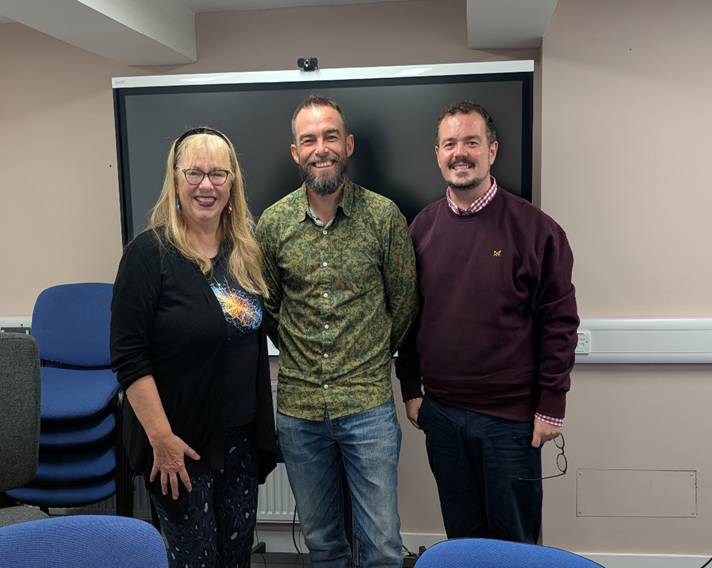
And then there was Barry
Professor Hill’s work brought another part of the landscape into view.
His research into student nurses’ experiences of moral distress explores how clinical environments, relationships and organisational cultures shape the developing professional identity of nurses. His work with colleagues has similarly examined the transition of nurses and the importance of support, identity and context in becoming a nurse and sustaining a nursing workforce.
This matters to me because it brings the conversation back to the beginning.
The student.
The nurse.
The person trying to become.
The human being moving through a system.
My own work has asked what happens when we create spaces in which nurses and student nurses can process, express and make meaning from what they encounter.
Hill’s work asks related questions through another route: what happens to professional identity when people encounter the realities of clinical practice, moral distress, transition and organisational culture?
Different routes.
Different methodologies.
Different questions.
But the paths meet.
And perhaps this is what I have been trying to do all along.
Find the places where the paths meet.
The contribution
I have spent a long time thinking about what constitutes a contribution to knowledge.
The answer is rarely as simple as producing a new fact.
Sometimes a contribution is a new concept.
Sometimes it is a new methodology.
Sometimes it is a new interpretation.
Sometimes it is a new way of seeing something that has always been there.
And sometimes, perhaps, the contribution is a room.
A room in which things that have traditionally been separated can finally meet.
This is what I am most proud of.
Even if the journey had ended there, even if the PhD had been the final point of arrival, something had already happened.
I had brought art and health into a room.
Collectively.
Seriously.
Intellectually.
Creatively.
And we had asked a question that I believe matters:
How do we sustain the people who sustain everybody else?
That question is at the heart of The Poetic Nursing Heart.
It is why emotional sustenance matters.
It is why creativity matters.
It is why poetry matters.
It is why space matters.
It is why relationship matters.
And it is why I have become increasingly interested in what happens when knowledge is not simply transmitted, but created between people.
The room becomes part of the research.
The encounter becomes part of the method.
The relationship becomes part of the knowledge.
The autoethnographic self
This is also why the autoethnographic element of my work matters.
I did not stand outside the landscape and observe it.
I occupied it.
I brought my nursing experience.
My academic identity.
My creative practice.
My dyslexia.
My neurodivergent ways of encountering the world.
My history.
My emotional proximity.
My questions.
My uncertainties.
My failures.
My imagination.
Into the research.
That does not make the work less rigorous. It makes the question of how knowledge is produced impossible to ignore. I became researcher and researched. Practitioner and scholar. Nurse and academic. Artist and investigator. Participant and observer.
The distance between those positions became productive.
The metaphor became a method of thinking.
The artwork became a form of inquiry.
The poem became a way of knowing.
The room became a site of emergence.
And gradually I began to understand that the apparent messiness of the journey was not evidence that I lacked direction.
It was evidence that the work was rhizomatic.
The portfolio was the map
Perhaps this is why, looking back now, the portfolio feels so important.
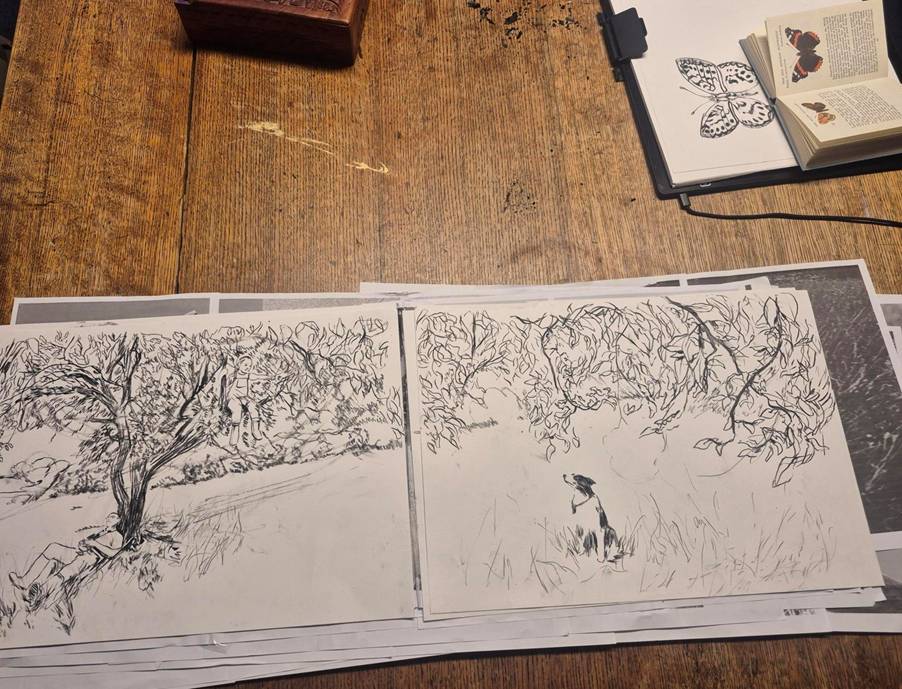
For years I thought I had made a collection of things.
A book.
The Wandering Lamb.
A conservation and education project.
The Butterfly Farmer.
Poetry.
The Poetic Nursing Heart.
A gallery exhibition.
A play.
The Table of Consciousness.
Immersive work.
Schools.
Symposiums.
Festivals.
Nursing education.
Research.
Publications.
A doctoral thesis.
A doctorate.
It looked like a collection.
But from the hill, it looks different.
It looks like a map.
The book connects to the child.
The child connects to the school.
The school connects to the butterfly.
The butterfly connects to ecology.
The ecology connects to the rhizome.
The rhizome connects to relationality.
Relationality connects to nursing.
Nursing connects to trauma.
Trauma connects to creativity.
Creativity connects to expression.
Expression connects to emotional sustenance.
Emotional sustenance connects back to the nurse.
And suddenly the apparently disparate projects begin to speak to one another.
Perhaps I was never building separate things.
Perhaps I was building a landscape.
The lonely rhizome
And here, finally, I understand the loneliness of the rhizome.
There is something rather sad about a root that thinks it is growing alone.
It pushes through darkness.
It encounters stones.
It searches for water.
It reaches out.
It makes contact with something beneath the surface but cannot see the whole system.
So it assumes it is alone.
Perhaps human beings do this too.
We see the certificate and forget the conversations.
We see the publication and forget the people.
We see the exhibition and forget the invitation.
We see the doctorate and forget the ecology that produced it.
We mistake visibility for existence.
But no node exists independently of the network that constitutes it.
The lonely rhizome was never actually lonely.
It simply did not yet possess the vantage point from which the network could be seen.
The hill
And perhaps that is why I need to sit on this hill now.
Not because I have run out of ideas.
Quite the opposite.
There are too many.
Not because I have stopped.
But because I have moved far enough to realise that consolidation is part of movement.
For seven years I have been making.
Writing.
Teaching.
Researching.
Performing.
Building.
Connecting.
Responding.
Beginning again.
Perhaps now I need to look.
What is the landscape?
What have I actually built?
Where are the paths?
Where are the gaps?
Where are the possibilities?
Which connections are already strong enough to carry something further?
Which new landscapes are beginning to appear beyond the horizon?
This is not retreat.
It is not indecision.
It is the moment before the next expedition.
The traveller has climbed high enough to see the map.
And now I know someone is there
This is where the old Hobo Poet question changes.
For years, the question was:
Is there someone there?
The lonely figure called from the cave.
From the margins.
From the liminal spaces.
From the places between disciplines.
Waiting for a response.
But now I know.
There is someone there.
There are people there.
There are thinkers and researchers and artists and educators who are also looking across the landscape.
Pamela Burnard, writing about rebellious and transdisciplinary research.
Barry Hill, exploring the lived experience of nurses and students as they negotiate identity, moral distress, transition and practice.
The colleagues, students, artists, nurses and communities who have occupied these rooms with me.
The people who have answered the call.
The people who have helped me understand that the network was always there.
And perhaps that is the real meaning of the viva.
It was not the moment when I finally proved that I could stand alone.
It was the moment when I realised I didn’t have to.
From Mot
And so I return to where I began.
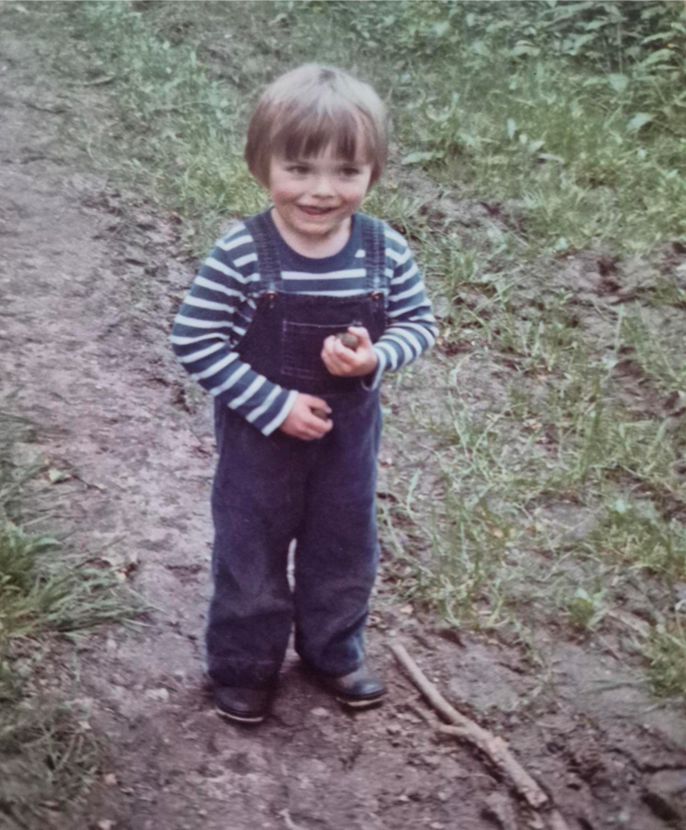
M-O-T.
The dyslexic boy who couldn’t always spell his own name.
I used to think the story was one of overcoming.
I don’t think that anymore.
I didn’t overcome Mot.
I carried him.
He became part of the way I think.
The difficulty with language became an obsession with metaphor.
The experience of not fitting became a curiosity about systems.
The feeling of being outside became a fascination with liminality.
The loneliness became a search for connection.
The wandering became a methodology.
The creativity became a way of knowing.
And the network eventually became visible.
Seven years of The Poetic Nursing Heart now look different from this height.
The cave.
The call.
The wandering.
The butterfly.
The red thread.
The scar.
The canopy.
The breadbasket.
The shared palette.
The radical art.
The rhizome.
The room.
The PhD.
They were not separate metaphors.
They were fragments of one long argument.
We become through one another.
The arrow
Kahlil Gibran’s The Prophet gives us the image of the arrow released into a future that the archer cannot control.
I think the PhD is like that.
For years, the thesis was something I had to complete.
Now it is something I have to release.
The ideas must travel.
The creative practice must travel.
The research must travel.
The questions must travel.
Perhaps even I must travel.
But not yet.
First, I want to sit here.
To look.
To listen.
To understand.
Because an arrow cannot be aimed properly without first looking at the landscape.
And perhaps the next destination is not a job title.
Not an institution.
Not a country.
Not even a project.
Perhaps the next destination is the right ecology.
The place where the work can grow.
The people with whom the questions become more interesting.
The institution willing to make room for something that does not fit neatly into one disciplinary box.
The community that understands that nursing and art do not have to be strangers.
The space in which emotional sustenance can become not merely an idea, but a field of practice.
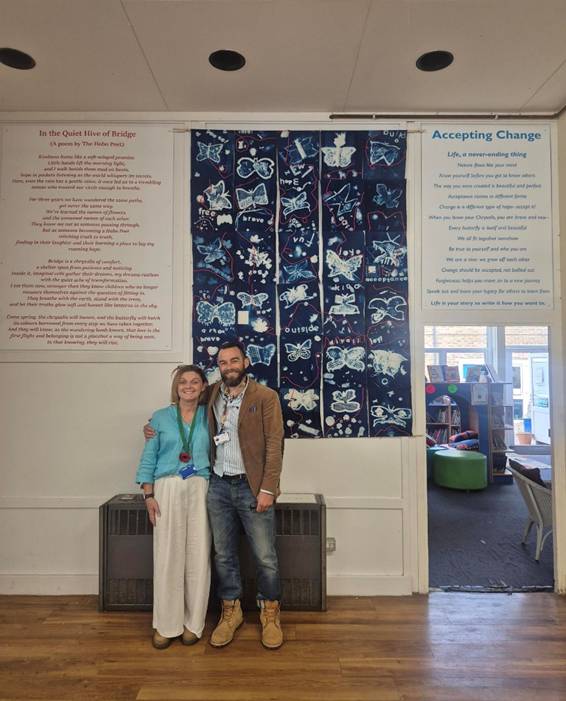
The view
So I am going to sit on the hill for a while.
I am going to look across everything that has happened.
The books.
The children.
The nurses.
The students.
The gallery.
The stage.
The festivals.
The classrooms.
The poems.
The research.
The relationships.
The PhD.
And I am going to allow myself, perhaps for the first time, to say:
This was something.
Not because it became a doctorate.
But because it created a room.
And people entered it.
And art entered it.
And health entered it.
And nursing entered it.
And research entered it.
And we talked about how to sustain nurses.
That is not a small thing.
Perhaps it is the beginning of a field.
Perhaps it is a conversation that will travel further than I can see.
Perhaps someone else will pick up the thread.
Perhaps another researcher will take the idea somewhere I could never have imagined.
Perhaps the arrow is already travelling.
And perhaps this is what it means to become a Doctor of Philosophy.
Not to arrive with all the answers.
But to become sufficiently aware of the landscape to ask better questions.
So I am sitting here.
The Hobo Poet.
Mot.
Thomas.
The nurse.
The artist.
The researcher.
The Doctor.
Looking across the valley.
And now, when I ask:
“Is there someone there?”
I already know the answer.
Yes.
There are people there.
The question is no longer whether someone will answer.
The question is:
What might we build together?
And perhaps, somewhere beyond this hill, the next room is already waiting.
The rhizome continues.
References
Burnard, P., Mackinlay, E., Rousell, D. & Dragovic, T. (eds.) (2022) Doing Rebellious Research: In and beyond the Academy. Leiden: Brill. Available at: https://www.degruyterbrill.com/document/isbn/9789004516069/html
Deleuze, G. & Guattari, F. (1987) A Thousand Plateaus: Capitalism and Schizophrenia. Translated by B. Massumi. Minneapolis: University of Minnesota Press. Available at: https://www.upress.umn.edu/9780816614028/a-thousand-plateaus/
Delahunt, T. (2024) ‘Nurturing nursing professionals: unleashing the rhizomatic power of expression, creativity, and art as resistance’, PRACTICE: Contemporary Issues in Practitioner Education, 6(2–3), pp. 72–76. doi: 10.1080/25783858.2024.2380280.
Delahunt, T. (2025) ‘The shared palette: how philosophy, art, and phenomenology can help nursing education heal trauma’, PRACTICE: Contemporary Issues in Practitioner Education. doi: 10.1080/25783858.2025.2603937.
Delahunt, T. & Barnes, J. (2025) ‘The radical art of nursing’, Nurse Education in Practice, 89, 104467. doi: 10.1016/j.nepr.2025.104467.
Gibran, K. (1923) The Prophet. New York: Alfred A. Knopf. Available at: https://newmexicoliteracyproject.org/first-edition/the-prophet
Hill, B., Mitchell, A., Machin, A.I., Derbyshire, J., Wamburu, A., Lamichhane, G., Ayo-Ajayi, H. & Wade, J. (2026) ‘Get in line: A hermeneutic phenomenological study exploring moral distress in UK pre-registration student nurses’, Western Journal of Nursing Research. doi: 10.1177/01939459261416325.
Macfarlane, R. (2019) Underland: A Deep Time Journey. London: Hamish Hamilton. Available at: https://www.penguin.co.uk/books/56082/underland-by-macfarlane-robert/9780241978733
Sheldrake, M. (2020) Entangled Life: How Fungi Make Our Worlds, Change Our Minds and Shape Our Futures. New York: Random House. Available at: https://www.penguinrandomhouse.com/books/566795/entangled-life-by-merlin-sheldrake/9780525510338/
Simard, S.W., Perry, D.A., Jones, M.D., Myrold, D.D., Durall, D.M. & Molina, R. (1997) ‘Net transfer of carbon between ectomycorrhizal tree species in the field’, Nature, 388, pp. 579–582. doi: 10.1038/41557.
Tolkien, J.R.R. (1977) The Silmarillion. Edited by C. Tolkien. London: George Allen & Unwin. Available at: https://tolkienbooks.net/php/details2.php?id=726
Wohlleben, P. (2017) The Hidden Life of Trees: What They Feel, How They Communicate—Discoveries from a Secret World. London: William Collins.


