 The Poetic Nursing Heart
 Tom Delahunt
 1240
1240
Last week I was rejected by the Arts Council….
For approximately twenty-three minutes I was convinced this was not simply disappointing, but cosmically misjudged. I developed several highly refined internal arguments involving phrases such as “they just don’t understand the work” and “this would clearly change everything if only someone had read it properly.”
It was, in short, a very dignified form of sulking.
Then I went for a walk.
This is becoming a pattern.
When thinking becomes too tight, too circular, or too self-referential, something in me insists on movement. Not resolution. Not answers. Just movement. And eventually, without planning it, I found myself watching a bee.
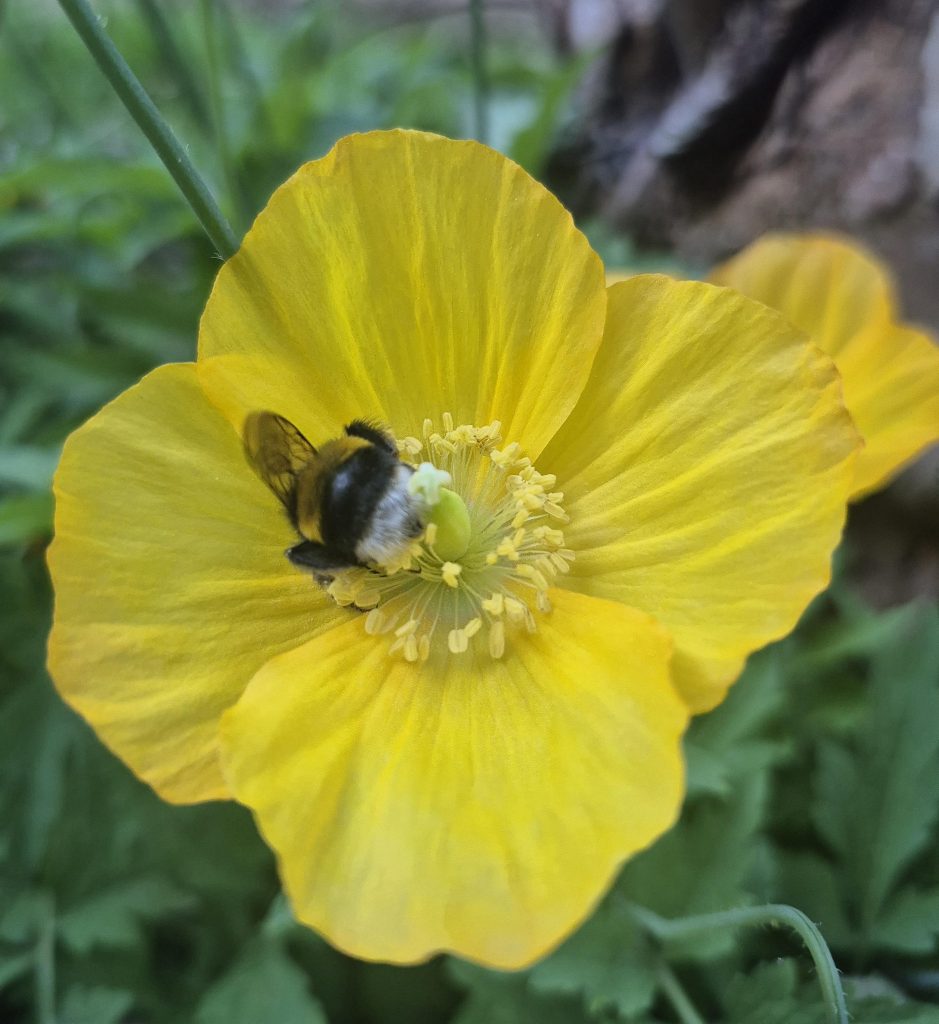
The bee was not interested in my funding application.
It was not interested in my sense of injustice.
It was not interested in anything beyond the next flower.
It moved with a kind of unbothered clarity that I found mildly offensive.
Then comforting.
Then instructive.
Because what it was doing was simple: gathering.
Not performing. Not justifying. Not explaining.
Gathering.
And returning.
And gathering again.
I began to imagine it as a researcher.
Each flower a fragment of encounter.
A patient story.
A nursing student trying to articulate something just out of reach.
A quiet moment in a hospital corridor that never makes it into formal records.
A poem scribbled between shifts.
A breath held in a waiting room.
The bee did not require every flower to be complete, legible, or fully formed.
It simply collected what was there.
And took it home.
That image stayed longer than I expected.
Because somewhere in it sits a different understanding of value.
One that is not immediately tied to evidence frameworks or impact statements, but to accumulation, attention, and return.
Which is difficult, because the Arts Council feedback was not unreasonable.
It noted that the project is grounded in lived experience but would benefit from clearer articulation of partnerships across creative and healthcare contexts. It also highlighted that the application did not fully specify the range of collaborators who might support delivery and impact.
In other words: the idea matters, but the structure around it needs strengthening.
‘The flower is wonderful, but the ground must be enriched’
This is not a rejection of value.
It is a request for architecture.
Still, emotionally, the experience did not arrive in that neat form.
For many people, especially those with ADHD, rejection can land with an intensity that exceeds the apparent scale of the event itself. This is often described in clinical and lived-experience literature as rejection sensitive dysphoria (RSD), where perceived criticism or exclusion produces a strong emotional response that can feel disproportionate, immediate, and identity-linked (Barkley, 2015; Brown, 2021).
Even when the rational mind understands that a funding decision is procedural, the emotional system can interpret it as existential.
Not “this proposal needs revision,” but “I am not enough.”
Not “this needs more partnerships,” but “this is not wanted.”
The mind moves quickly to narrative.
I AM NOT WANTED.
Meaning arrives later.
Sometimes much later
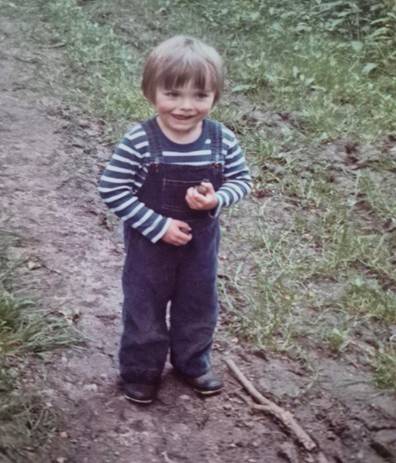
And so the void opens.
Not empty.
Crowded.
With older versions of ourselves who remember earlier forms of rejection.
Earlier silences.
Earlier moments of not being fully received.
Nietzsche described such moments as confrontations with the collapse of inherited meaning, where individuals are forced into the uncomfortable position of creating values rather than inheriting them (Nietzsche, 1883/2006).
These are not abstract philosophical events.
They are lived.
Often quietly.
Often inconveniently.
Often after receiving an email at 14:03 on a weekday.
In nursing, this is familiar terrain.
Shifts rarely resolve cleanly.
Outcomes rarely arrive in satisfying narrative arcs.
Patients stabilise, deteriorate, recover, or remain uncertain.
Care continues regardless.
Meaning is not delivered; it is constructed over time.
Florence Nightingale understood nursing as both an art and a science, recognising that care involves interpretation, attention, and relational presence as much as technical skill (Nightingale, 1860/1969).
This matters because it reframes what “value” looks like.
Not as a single outcome.
But as sustained attention over time.
There is something in this that begins to resemble philosophy.
John Dewey suggested that learning begins with disruption: an experience that unsettles, interrupts, or disturbs equilibrium, forcing reflection and reconstruction of meaning (Dewey, 1938). In that sense, rejection is not an endpoint. It is a condition of inquiry.
Something breaks.
Something is felt.
Something is reassembled.
Not immediately.
Usually after some walking.
And possibly some sulking.
At another level, there is something phenomenological happening here too.
Husserl’s call to return “to the things themselves” is, at its simplest, a reminder to attend to experience before it is immediately categorised or explained (Husserl, 1913/2012).
The feeling of rejection.
The sensation of disappointment.
The bodily response to uncertainty.
These are not secondary to understanding.
They are the beginning of it.
Somewhere in the background, another image returns.
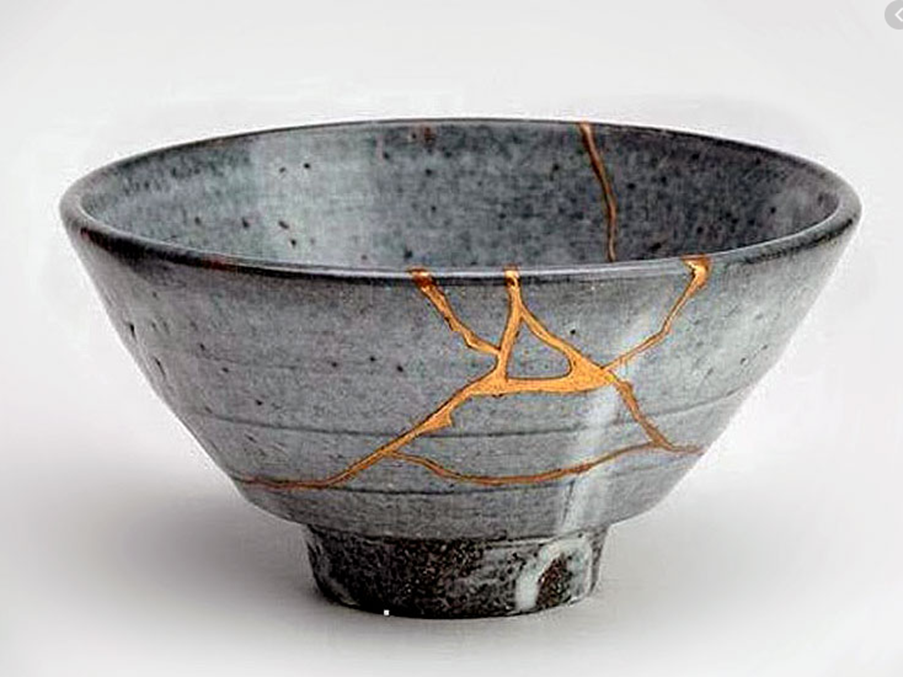
Kintsugi.
Broken pottery repaired with gold.
Not hiding fracture, but revealing it.
Not restoring “original condition,” but acknowledging transformation.
There is something quietly accurate about this when thinking about both nursing and creative work.
We are not dealing with unbroken systems.
We are dealing with lives that have already been shaped by rupture.
Illness.
Loss.
Disconnection.
Uncertainty.
And the question is not how to erase these fractures, but how to hold them differently.
And then there are the waiting rooms.
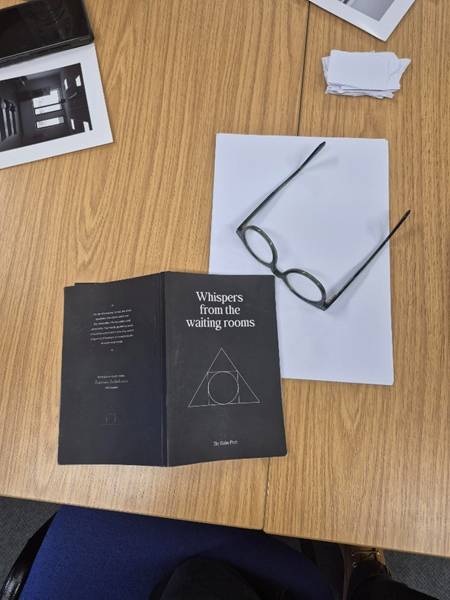
Waiting rooms are full of things that are not yet spoken.
Fear that has not found language.
Grief that is still forming.
Hope that is trying not to collapse under uncertainty.
In healthcare, these spaces are often seen as transitional.
But they are also emotional landscapes.
Places where meaning is suspended but not absent.
Much of my work, I realise, emerges from listening to these suspended moments.
Creative therapeutics, in this sense, is not a fixed discipline.
It is an emerging way of paying attention.
A way of creating space for what otherwise remains unspoken.
A way of translating experience without reducing it.
A way of allowing narrative to form without forcing closure.
It sits somewhere between nursing, poetry, education, and research.
And it is still forming.
There is also something important about scale here.
The Arts Council rejection, from one perspective, is a procedural outcome within a competitive funding environment.
From another perspective, it becomes a moment that touches much larger themes: belonging, recognition, identity, purpose, and the fragile architecture of hope.
Both readings are true.
Neither cancels the other.
And so I return, again, to the bee.
It does not interpret its work as failure when a flower yields little.
It simply continues.
It trusts accumulation over singular success.
It trusts return over immediate recognition.
It trusts the hive.
Perhaps that is what research is.
Perhaps that is what care is.
Perhaps that is what creative practice is.
And in the background of all this, something quieter is forming.
A sense that none of this is fully separate.
Nurse.
Researcher.
Poet.
Teacher.
Dreamer.
These are not roles to be chosen between.
They are ways of noticing.
Ways of attending.
Ways of being in the world.
And so the rejection remains.
But so does everything else.
The bee continues.
The chrysalis continues.
The waiting rooms continue.
And somewhere, just beyond certainty, something is still becoming.
The Kindly Hobopoet
There is a small figure
who keeps leaving notes in my coat pockets.
He calls himself the Kindly Hobopoet.
He says he does not belong anywhere,
but somehow recognises every road.
He tells me:
I have walked through your silences.
I have sat in your waiting rooms.
I have listened to your almost-thoughts.
He laughs softly when I try to explain myself.
Then he says:
You are not behind.
You are becoming.
Even bees do not ask permission to gather.
Even broken things continue to hold light.
And before he leaves, he adds:
If the world feels like rejection,
try listening more carefully.
It may simply be rearrangement.
Then he disappears again,
leaving only pollen on the page.
References
Barkley, R.A. (2015) Attention-Deficit Hyperactivity Disorder: A Handbook for Diagnosis and Treatment. 4th edn. New York: Guilford Press.
Brown, T.E. (2021) Smart but Stuck: Emotions in Teens and Adults with ADHD. San Francisco: Jossey-Bass.
Dewey, J. (1938) Experience and Education. New York: Macmillan.
Freire, P. (2017) Pedagogy of the Oppressed. 50th anniversary edn. London: Penguin. (Original work published 1970).
Husserl, E. (1913/2012) Ideas: General Introduction to Pure Phenomenology. Abingdon: Routledge.
Nietzsche, F. (1883–1885/2006) Thus Spoke Zarathustra. Cambridge: Cambridge University Press.
Nightingale, F. (1860/1969) Notes on Nursing: What It Is and What It Is Not. New York: Dover Publications.


