 Expert comment
 Jeanette Earl
 625
625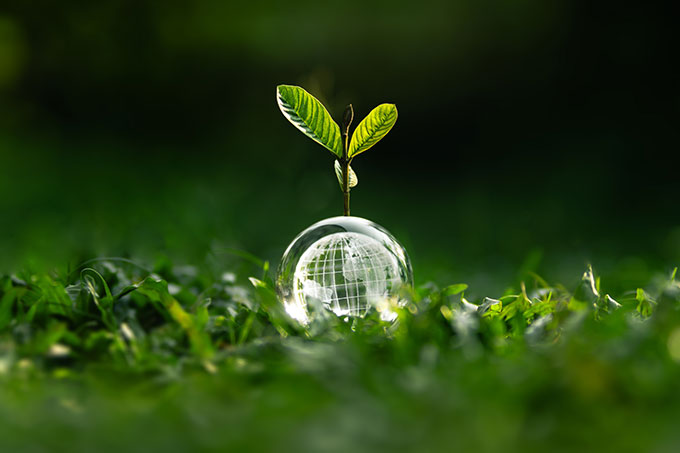
Dr Alex Cockain explains how we need to ensure the right conditions if we are to meet our sustainable goals.
Sustainability is commonly understood as a long-term, balanced approach to meeting present needs without undermining those of future generations, and it has long occupied a central place in public discourse. Yet everyday news tells a different story. As one colleague’s daughter remarked the other day, “the world is on fire.”
Similar tensions, or struggles, are evident in discourse, and without care, attentiveness, and slowness, there is a risk that words like sustainability may become merely floating buzzwords, and perhaps empty signifiers.
To resist this, sustainability needs to be understood as a multidimensional concept, concerned not only with the economic but also, and especially, the environmental and social.
The economic should be understood beyond narrow numerical measures such as GDP, which only recognises what can be counted in monetary terms, and ignores many other things which are vital to sustain social wellbeing.
Sustainability also requires resisting systems, structures, and discourses which treat land, labour, and human life as commodities, despite that they are not produced for sale. These are what Polanyi calls fictitious commodities (The great transformation). Under such conditions, environments are depleted and people exhausted, in the profoundest of senses.
Approaching sustainability slowly offers further potential. It may help resist today’s culture of speed and acceleration, which makes the contemporary world as fragile, like thin ice, where safety appears to depend on speed, even though speed is not conducive to thinking (skating on thin ice). In doing so, sustainability might be cultivated with greater care and compassion. This might even generate more enduring outcomes than those promised by entrepreneurs of sustainability who relentlessly seek out “new” markets and resources to exploit. Resembling those febrile capitalists described by Marx and Engels (The communist manifesto) who range across the globe, depleting and exhausting precisely those things they claim to sustain.
Yet, certain conditions must be realised for it to become conceivable, let alone realise, sustainability slowly. For this to be made possible, it is vital to support the making of less porous and precarious organisations and worlds. Such efforts might begin with basic conditions: a desk, a place of one’s own, and time and space away from the disciplining gaze of regimes that govern through the power of the single number. They might also involve conversations oriented towards imagining how universities, humans, and other forms of life could exist if not fully outside then perhaps more critically on the margins of marketplace conditions, however difficult this may be to envision and practise in contemporary conditions.
More simply, sustainability requires that certain fundamental conditions be secure and secured; a solid root from which something more enduring can be built and maintained. Only through such conditions can anything worth sustaining take root and grow.
Dr Alex Cockain is a Senior Lecturer in Social Work.


