 Sustainability
 Bethany Climpson
 697
697
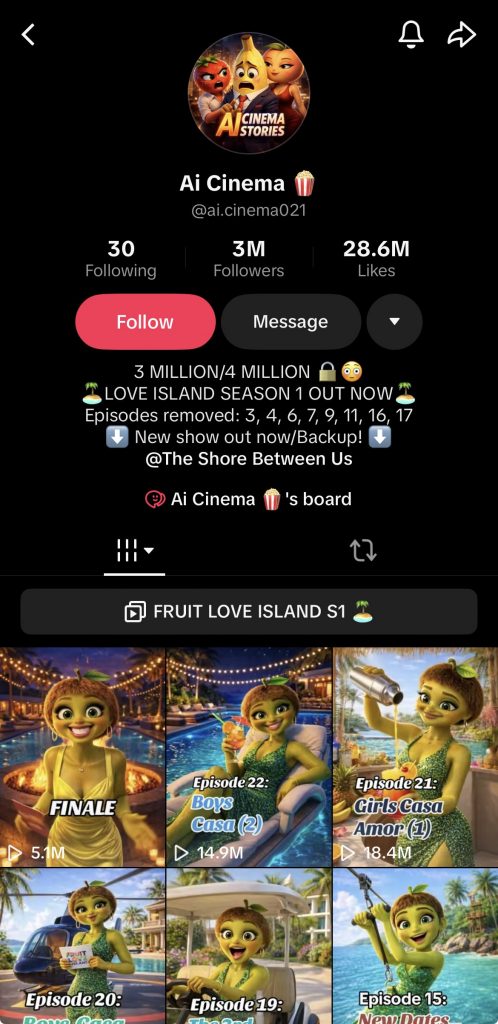
86%. That, according to Adobe, is the percentage of creators that are currently using creative generative AI in their projects. Take ‘AI Cinema’, a TikTok account that produces AI generated fruit-themed Love Island videos (AI generated videos depicting fictional characters based on various fruits as Love Island contestants), or Fortnite, which is now making skins based on AI generated characters (Tung Tung Tung Sahur and Ballerina Cuppacina, to name two) and putting them in the game for their players to buy. Are we currently witnessing the slow and brutal death of the creative industries? Does the average consumer believe that the ends justify the means? When I graduate will I look at my degree in Creative Writing as 3 years wasted? Despite the signs screaming that it may already be over, I believe there’s never been a more appropriate time to have hope.
WHAT IS GENERATIVE AI AND WHAT DOES IT MEAN FOR ART
First, we need to understand what generative AI (GenAI) is and how it generates art. Generative AI is given data and trained using the patterns it finds within it. It then mimics those patterns to create ‘new’ art. For example, let’s say some of Pablo Picasso’s work was fed into an AI model. The AI would take notice of the abstract shapes and the intense use of colour and attempt to make something similar. This obviously raises ethical concerns, as the art fed as data into the AI models is not given consensually by its human creators; instead, the companies running the models steal the art to put through this training module so GenAI can continue to create what the internet has coined as ‘slop.’
Steps are being taken to counteract this. After initially training its own AI model on its users work without their permission, DeviantArt created an ‘opt-in’ service, where artists using their site have to manually choose to allow their art to be used to train AI, otherwise their account will be in an ‘opt-out’ status by default. Licensing agreements are also being created that allows artists to be compensated financially when their artwork contributes to a piece generated by AI. In addition to this, there is GLAZE, which is a software that applies a layer of pixels over the top of images. While these pixels can barely be seen by the human eye, they manipulate AI models into seeing these images in a different style in comparison to how they appear to humans.
Obviously, these aren’t perfect solutions, nor do they solve another big issue with generative AI: the environmental impact. Generating even one image can use an amount of energy equivalent to charging your phone battery halfway, and some of the most carbon-intensive models can produce an amount of carbon equivalent to what the average car would produce over the course of 4.1 miles. Then there’s the data centres. A new data planned to be built at a former coal power plant in Northumberland, UK is expected to emit more than 180,000 tons of CO2 a year. That’s the equivalent of 24,000 homes. These data centres also produce unnatural amounts of e-waste which contain harmful chemicals such as mercury and lead. This leads to the contamination of water and soil, directly affecting our agriculture. We shouldn’t move away from generative AI solely for the arts. We cannot continue to create art if the home continues to die due to the profit-led ambitions of a few.
But I told you at the beginning that there is hope. Well, here’s why.
THINGS ARE SLOWLY CHANGING
You may (or may not) have seen the recent news that OpenAI has decided to shut down Sora, its AI video making platform. You also may (or may not) have also seen that Disney subsequently decided to exit it’s deal with OpenAI. Disney had initially agreed to invest $1 billion into the company, even agreeing to give them licence to use some of their own characters in Sora. While this doesn’t necessarily mean the end of GenAI, it is a massive victory nonetheless.
The growing public perception of GenAI is a negative one, and companies are starting to realise and capitalise on it. Major companies like Lego and Porsche are going out of their way to make it clear to their customers that no AI is being used to create their adverts. It’s a recent trend that we are seeing amongst these corporations: being anti-AI is now becoming a selling point and without going into a rant on the amoral nature of capitalism, it does further back my point: YOUR opinion, PUBLIC opinion, does matter. It is true that at the end of the day, massive corporations like Disney, Warner Brothers, Netflix etc. just want to make a profit. But they know that if people don’t want to see their films and don’t want to pay their subscriptions, they won’t make any money at all.

Back in November 2025, Forbes reported that OpenAI could be spending as much as $15 million a day (roughly £11 million) on Sora and its AI video generation. According to the BBC, OpenAI failed to ‘prevent the creation of the creation on non-consensual media.’ Plus, there is also the fear of copyright infringement. Disney may have been willing to partner up with them initially but that doesn’t mean that every film studio wants in on AI.
WHAT IS THE INDUSTRY SAYING
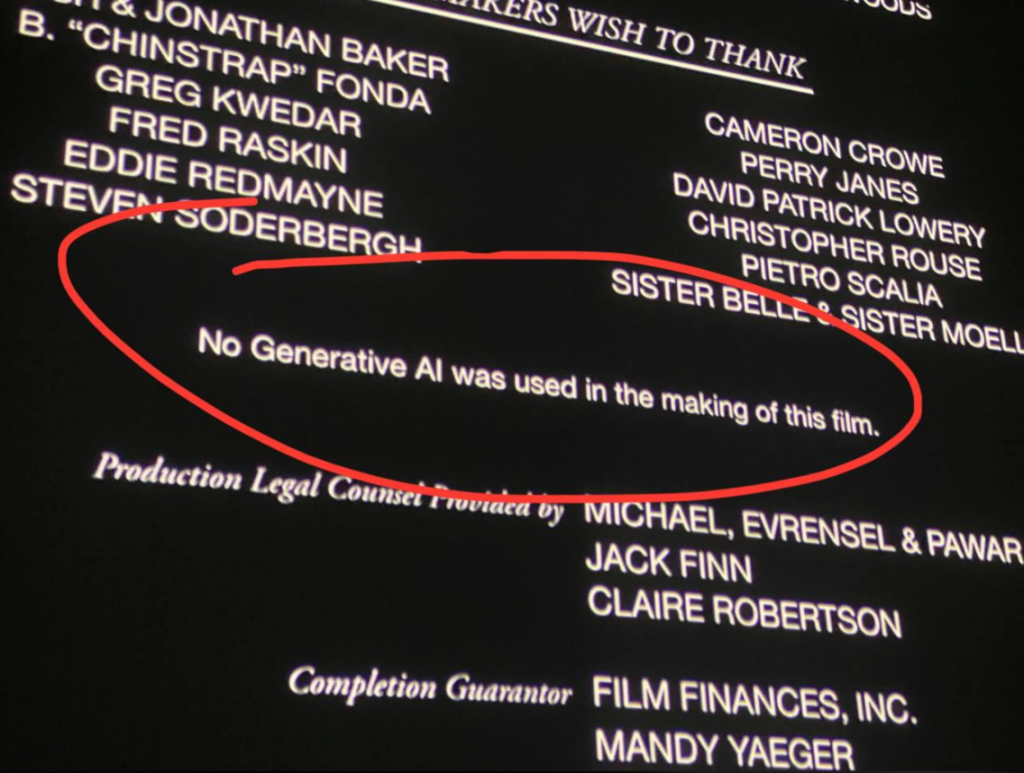
In the end credits of The Bad Guys 2 (2025), DreamWorks included a warning, deterring anyone from using the film to train their AI models. It states: ‘All rights in this work are reserved for purposes of laws in all jurisdictions pertaining to data mining or AI training, including but not limited to article 4(3) of directive (EU) 2019/790. This work may not be used to train AI.’ They included a similar message in the end credits of How to Train Your Dragon (2025) while A24 included a ‘No Generative AI was used in the making of this film’ message in the end credits for Heretic (2024) making their stance on AI very clear.
Larian Studios, creator of the 2023 Game Awards ‘Game of the Year’ winner Baldur’s Gate 3, recently announced that it will no longer use GenAI for concept art nor will it use it for in-game assets. 10,000 writers, including the likes of Phillippa Greogory and Kazuo Ishiguro, recently published a book ahead of the 2026 London Book Fair titled Don’t Steal This Book in protest of their work being stolen by AI companies and being used to train their AI models. The books only contents are the name of all the contributors, highlighting their stance against GenAI.
The big players in the creative industries are starting to take a stance. We are far away from seeing a future where no generative AI is used as the cheapness of GenAI makes it too tempting for some studios to look away, yet they are also aware of how the public perceives them and how that could affect their bottom line. In a capitalistic society such as ours, the best way to voice our opinions will always be with our wallets and the film studios and publishers are all too aware of this.
LIVE BY AI, DIE BY AI
And they are aware of this. Do not for a second believe that public outrage cannot make a difference because those who believe they can cut corners or play both sides have realised that they were mistaken.
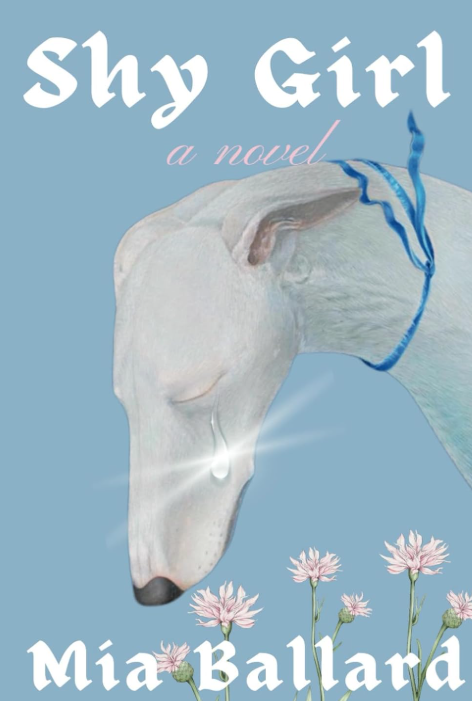
‘Big Five’ publisher Hachette recently cancelled the release of US author Mia Ballard’s horror book Shy Girl as concerns were raised that AI was used to write it. This became the first case of a major publisher cancelling as well as discontinuing a new book due to the use of generative AI.
NaNoWriMo (also known as National Novel Writing Month) was a creative writing challenge that took place every November tasking its users to write a 50,000-word draft by the end of the month. Back in 2024 it proceeded to shock its users regarding its stance on AI, saying that the condemnation of AI had ‘classist and ableist undertones.’ This sparked outrage amongst the writing community, leading to four members of their writer’s board stepping down and the withdrawal of sponsorship deals such as Ellipsus, a google doc alternative that had made it’s anti-AI stance very clear.
The music industry has also been affected. Back in 2023 Spotify removed thousands of songs ‘produced’ by Boomy, a music creation platform that allowed users to AI generate songs in minutes, upload them to the likes of Apple Music and Spotify while also generating royalty payments.
This doesn’t mean that Spotify are innocent themselves. The band Massive Attack became the first major-label act to remove their music from Spotify as an act of protest towards Spotify CEO Daniel EK’s increased investment in AI military company Helsing.
There is also the story of Jason M. Allen, an artist whose work won first place at a fine arts competition in 2022. He created his work using a combination of Photoshop and GenAI services such as Midjourney and Gigapixel, generating hundreds of images before editing and polishing them into the final piece. While he did declare he had used AI before submitting his piece, the judges were not aware of this. After his win, Mr. Allen decided to submit a copyright application for his piece, but his claim was swiftly rejected due to the use of AI. He has since gone on to sue the US Copyright Office, claiming that he has lost millions of dollars due to people ‘stealing’ his work.
CREATIVITY IS THE RESIDUE OF TIME WASTED
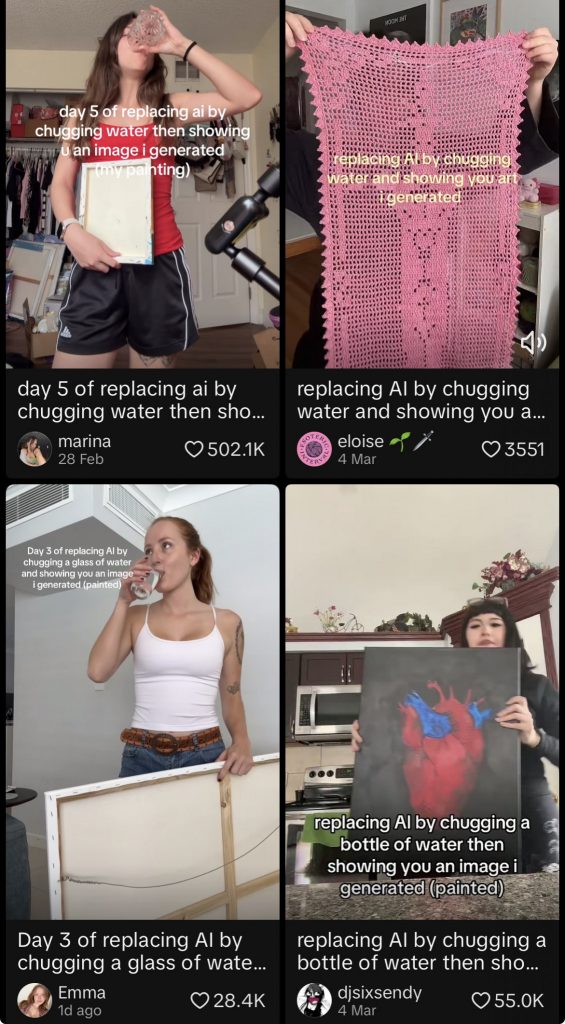
There was a recent TikTok trend in which an artist would drink a cup or bottle of water before showing off their art as a way to make fun of generative AI and put that water to good use. ‘Feed water to artists, not AI.’ Moments like that is what keeps me hopeful.
I believe that art is the result of the accumulation of one’s personal experiences. Whatever you have created, whether that be a book or a short story, a film or a YouTube video, a painting or even a simple doodle in your notebook while your lecture drives you insane, it is an expression of everything you’ve been through. The good and the bad. This is why AI cannot replace, nor can it adequately replicate, human expression.
AI can’t experience anything. It can’t experience pain, or happiness, or disappointment. Most important of all, AI cannot experience boredom. Boredom is the catalyst in which artistic expression is born. When you ask AI to generate an image or a story all it can do is copy certain aspects from the various pieces its model had been fed. But it doesn’t understand the why. Mary Shelley wrote Frankenstein as a way to express her grief. Van Gogh’s Starry Night reflects his own mental health struggles. While I am not saying that one must experience trauma to create art, I am saying that you have to experience something. AI can’t do that. And that’s why I still feel hope despite everything. Humans will always have experiences. Moments in our lives that shape the very foundations of our souls and influence the decisions we make every day. It is what makes us human, and there is not a single AI model in the entire world that can replicate that.
So do not be afraid to pick up a pen, a pencil, to log into WriterDuet, to record that video, to upload that song or to make that game. Your experiences have shaped your art. Your art is your soul. And your soul cannot be generated.
By James Olalusi, second year Creative and Professional Writing student


