 Sustainability
 Bethany Climpson
 266
266
A few weeks ago, I went to London to see the musical adaptation of The Devil Wears Prada. It was visually stunning. One scene stayed with me long after the show ended: the stage filled entirely with clothes, layers and layers of them, and one line cutting through it all:
“Don’t be ridiculous. Everyone wants to be us.”
I started to wonder, how did “us” become what everyone wants?
At the top of the fashion hierarchy sits Miranda Priestly: precise, controlled, and quietly decisive. She does not follow trends; she decides them. Today, that power has not disappeared. It has multiplied. Figures like Kim Kardashian and the rise of influencer culture have transformed fashion from a closed system into an always-on performance. Platforms turn everyday life into a stage, where style is no longer seasonal, but constant. Events like Coachella illustrate this shift perfectly. Outfits are curated for visibility, worn for a moment, and replaced instantly. Not because they are worn out, but because attention has moved on. The structure of power has changed. But the pressure to consume has not.
We often frame sustainability as a problem of fast fashion: overproduction, waste, unsustainable consumption. But that explanation is too easy. The Devil Wears Prada reminds us that the problem begins much earlier in the system. By the time fashion becomes mass-produced, the desire for it has already been designed, filtered through runway shows, editorial decisions, and cultural authority. Luxury fashion sits at the centre of this process, presenting itself through a story of exclusivity, craftsmanship, and timeless value. Yet behind this narrative are materials and practices that raise uncomfortable questions. For example, exotic leathers like crocodile skin require resource-intensive farming and raise ethical concerns that are rarely part of the aesthetic conversation. Sustainability, then, often arrives too late: trying to regulate production without questioning the logic that made the product desirable in the first place. Responsibility cannot start at the factory. It has to start with influence.
This is where luxury fashion becomes critical, not as the problem, but as a potential leverage point. Research on luxury supply chains suggests that responsible fashion is not achieved through isolated “green” materials, but through a systemic shift built on three principles: innovation, exclusivity, and consciousness (Karaosman, Marshall and Brun, 2020). That means:
- innovating materials and processes
- producing less, not just producing differently
- embedding ethics into decision-making, not marketing
Luxury fashion has a structural advantage: it does not depend on volume. It has the capacity to slow down, to prioritise quality, and to set standards that others follow. If it defines desire, it can also redefine it.
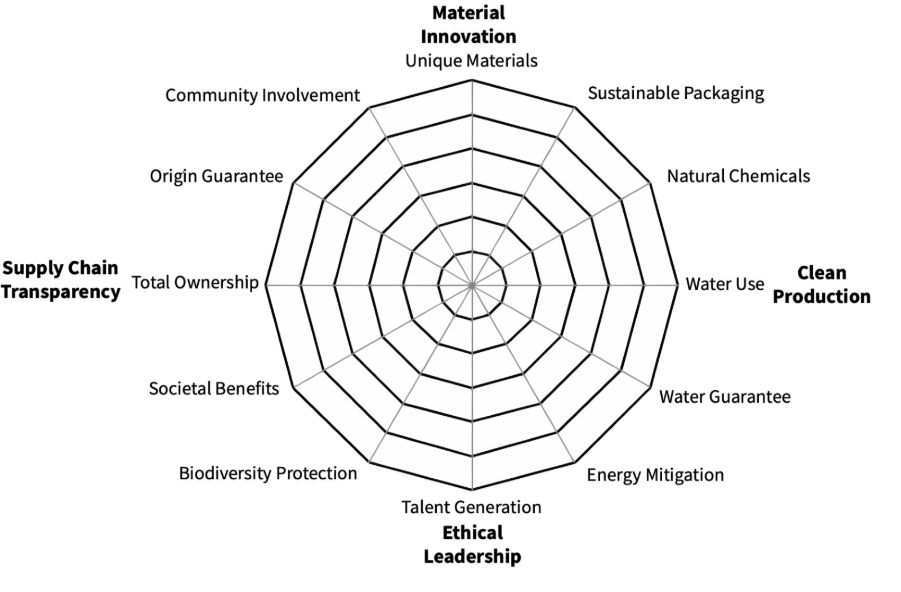
But sustainability is only one part of the equation. If The Devil Wears Prada were written today, it would not only address what clothes are made of, but also (Black Pearl, 2023):
- who gets to wear them
- who produces them
- whose cultures are being referenced
A fashion system cannot claim responsibility if it changes materials but leaves power structures untouched. Responsible fashion should extend beyond carbon footprints to include:
- fair labour and transparent supply chains
- inclusive representation across the industry
- respect for cultural context, not appropriation
Because fashion does not only produce garments. It produces visibility, hierarchy, and meaning.
If influence is the starting point, then responsibility requires a shift in what fashion chooses to make desirable. Not louder trends, but better ones.
- Design for longevity, not turnover
- Reduce frequency, not just impact
- Make transparency visible, not hidden
- Redefine luxury as craftsmanship and accountability
The goal is not to remove aspiration from fashion, but to rebuild it. It is easy to ask whether fashion can become sustainable. It is harder to ask:
Can the system that taught us what to want… teach us to want differently?
Because the problem is not only what we buy. It is why we want it, so quickly, so easily, and often without question.
Walking out of the theatre, the image of those endless clothes stayed with me. Not because of their beauty, but because of what they represented: a system that works precisely because it feels natural. And that is where responsibility becomes most urgent. Not at the point of consumption. Not even at the point of production. But at the point where desire is designed. If Miranda Priestly can make the world want something, then the future of fashion depends on a different question:
What happens when what we want is no longer just beautiful, but also accountable?
By Huiwen Wang, SGO Projects Officer
References
BLACK PEARL (2023) The Devil Wears Prada Prepares for a Return: A Chance to Address Sustainable Fashion and Representation. Available at: https://withblackpearl.com/article/the-devil-wears-prada-prepares-for-a-return-a-chance-to-address-sustainable-fashion-and-representation/ (Accessed: 25 April 2026).
Karaosman, H., Marshall, D. and Brun, A. (2020) Does the Devil Wear Prada? Lessons in Supply Chain Sustainability from Luxury Fashion. Available at: https://re.public.polimi.it/retrieve/handle/11311/1165627/598943/TEBR%20NovDec_Does%20the%20Devil%20wear%20Prada.pdf (Accessed: 25 April 2026).


