 Library
 Amelia Turner
 59
59
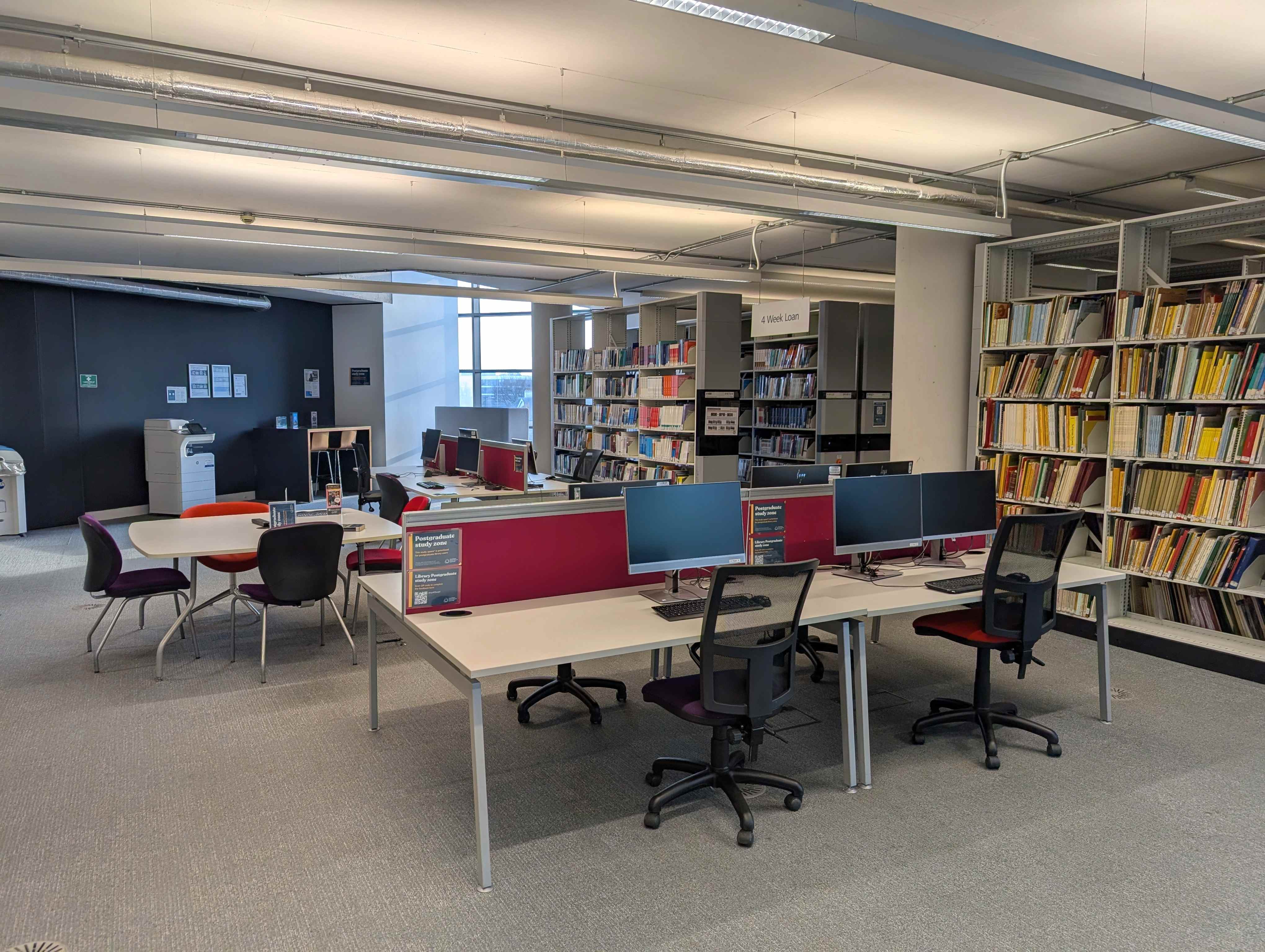
Since March, Augustine House has been undergoing significant building works and changes to enhance your library experience. One of these has been the creation of our new, exclusive Postgraduate Study Area, located now at the front of our second-floor Collaborative zone.
The creation of our new Postgraduate zone has been a collective endeavour, building its foundations within the lived experience of our Postgraduate students. Rather than treating your feedback as opinion, we have taken it as expertise. From feedback forms to conversations with library staff to fine-tune the smaller details, your voices have shaped how the space appears, acts, and supports all our Postgraduate students.
In taking the time to hear from you, we truly came to understand the importance of having a study space dedicated for Postgraduates. We aimed to design a space that responds not just to the practical needs of our Postgraduates, but also emotional and social needs. In our efforts, we hoped to create an area that supports both academic focus and a sense of belonging and community within the library.
Our Original Postgraduate Study Area
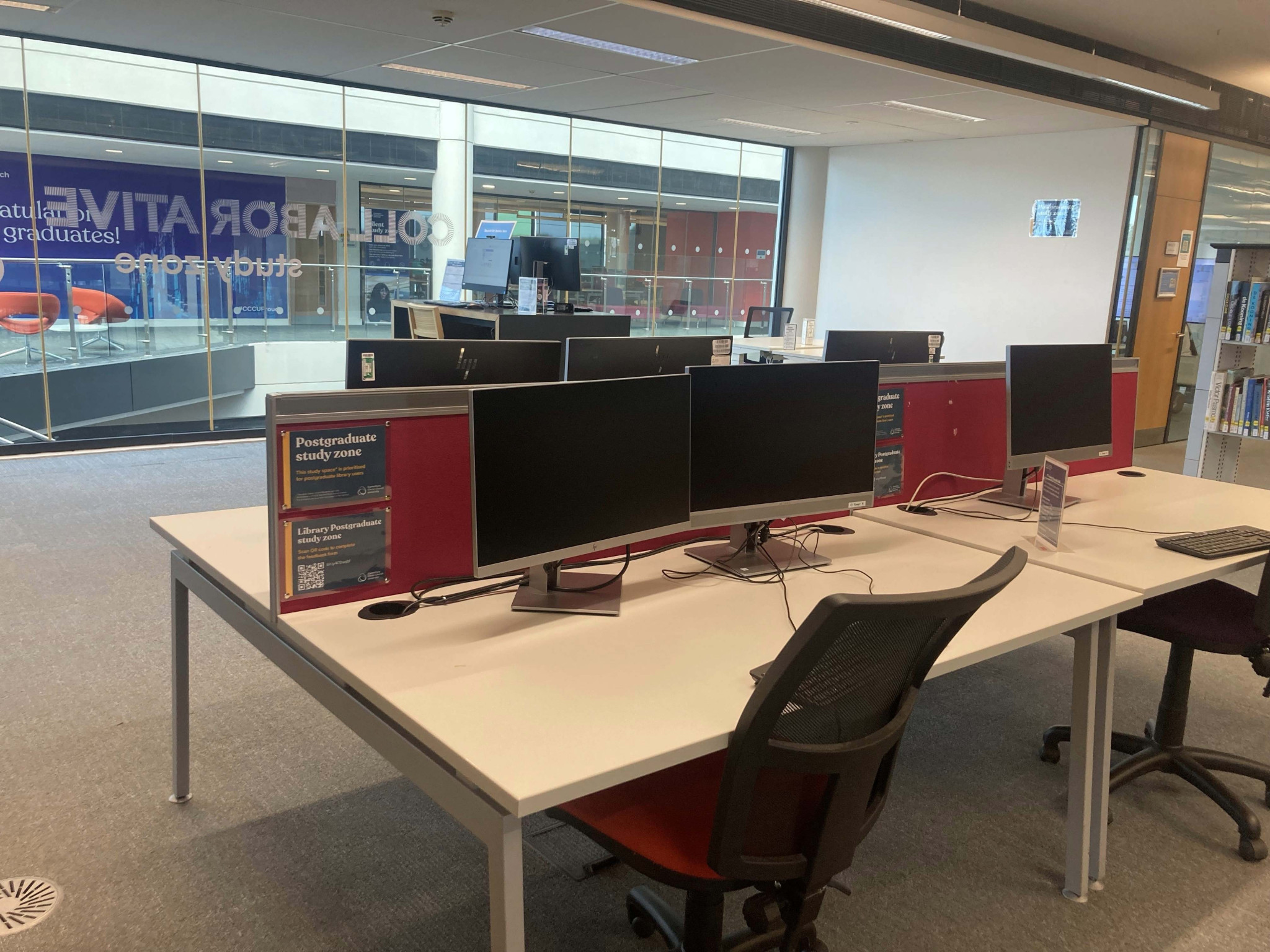
Our original Postgraduate Area was an open area located at the back of the third-floor collaborative zone, in front of the moving shelves and by the doors. The space consisted of three large study desks, two dual screen PCs, six single PCs, and one docking station.
This space, as evidenced within your feedback, wasn’t supporting your needs and serving its intention as a space for deep, sustained postgraduate focus. Your feedback raised to us two main issues: the location and it’s lack of exclusivity.
The Problem of the Location
Mismatched Behavioural Expectations
Being located within a collaborative zone was a central issue for our original Postgraduate Area. From first glance, it was not immediately clear when entering the space that it was prioritised for Postgraduate students and silent study. Rather, the expectations for the area were communicated through posters found on desks.
In our discussions, you voiced that this signage was easy to miss and appeared temporary. This lack of immediate signage meant that behaviour and noise were difficult to manage, as those entering the space were not made aware that postgraduate study and research was being carried out. Being within a collaborative zone, in which discussion and group work is allowed, meant that the expectations for silent Postgraduate study were misaligned with it’s surroundings.
The Effects on our Postgraduate Students
In your day-to-day experience of the space, you found that undergraduates would also use the space, both to use the equipment and to chat with other students on the nearby sofa. Additionally, being located by the doors into the Collaborative zone and in front of the moving shelves meant that the area was treated more of a thoroughfare for passing students than a space dedicated for focused study.
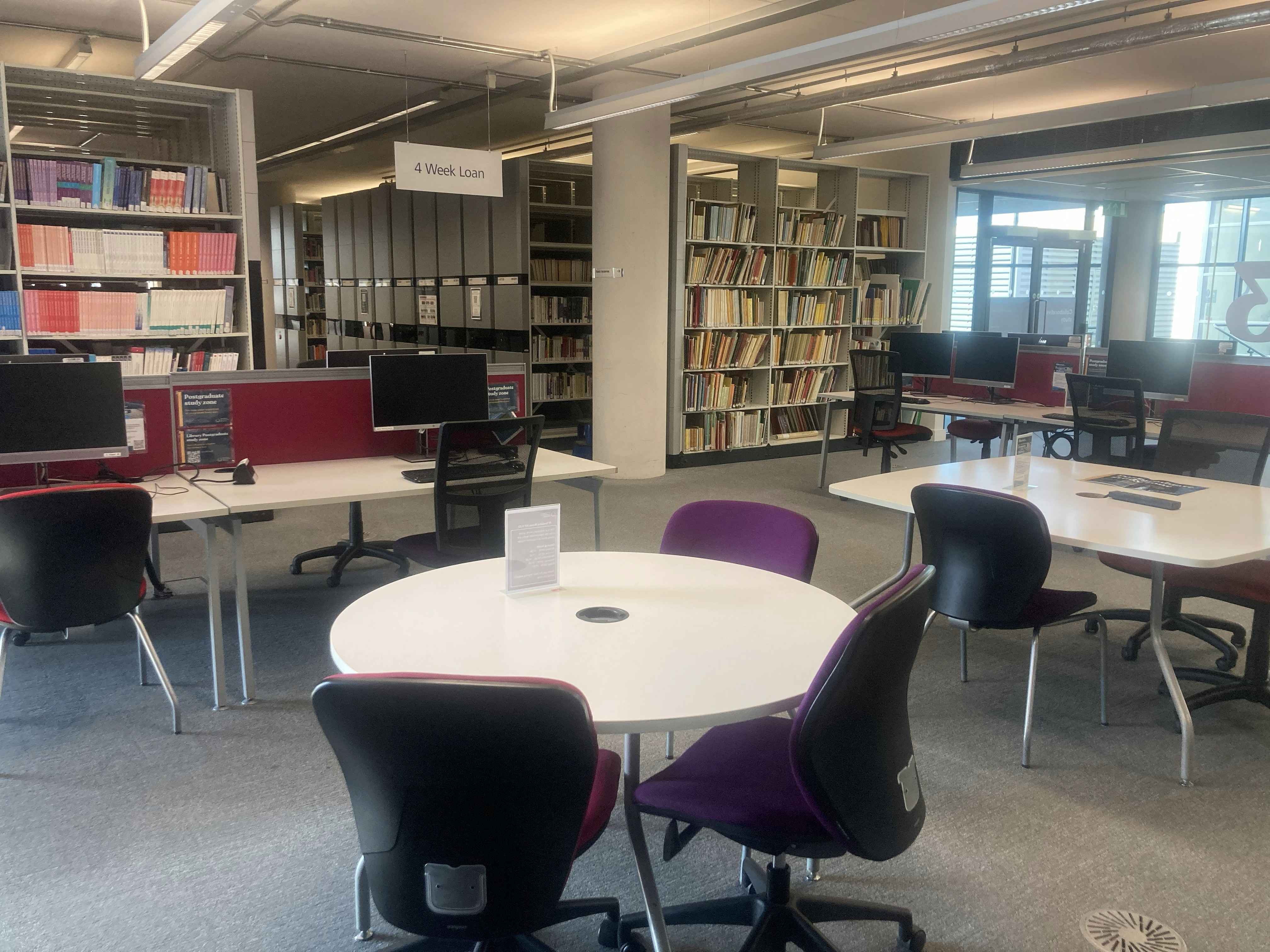
The moving shelves themselves posed a large distraction both due to their beeping, and as a form of additional labour for our Postgraduate students using the space. From your feedback and discussions, you told us that Postgraduate students often ended up supporting Undergraduate students by helping them use the moving shelves and locate books, purely to stop the beeping that persists from incorrect use.
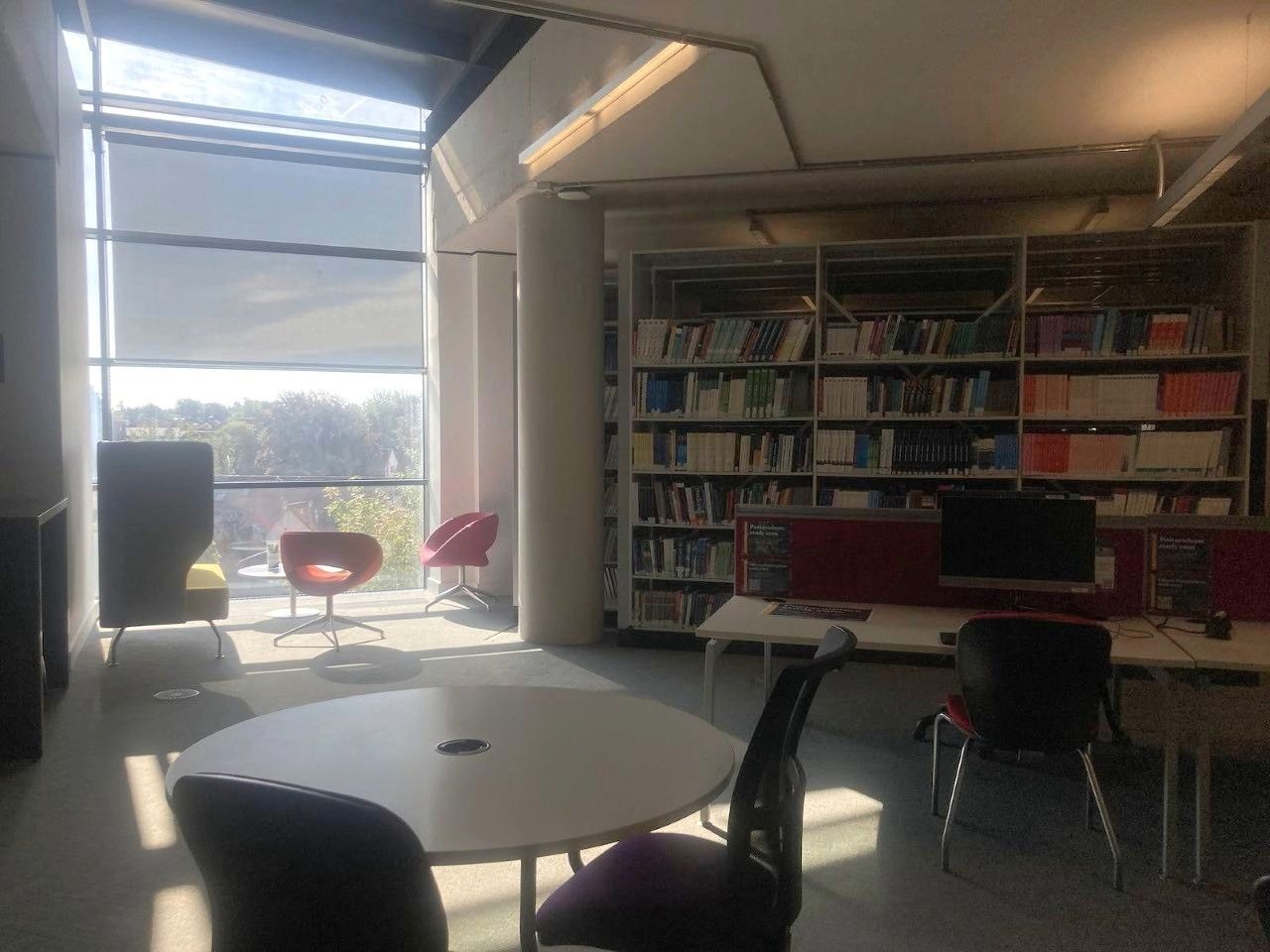
Whilst this is primarily distracting in a study sense, it also affected the way you felt about the space in an emotional sense. Behind your feedback lies a feeling that the area was not respected, both for the type of academic work being undertaken, and as a communal area for Postgraduates.
The Importance of Community
Whilst the original Postgraduate Study Zone wasn’t supporting your needs in an academic way, your feedback did tell us the emotional value of having a space dedicated solely for Postgraduates: community.
“One of the most frequent complaints by students pursuing PhDs by research is that they are lonely” – Cantor (2019, p.56)
Research is inherently a solitary activity, and we therefore recognise how isolating pursuing PhD research can be. Due to a lack of scheduled lectures and seminars, a PhD student’s supervisor might be their only form of interaction for long periods of time. From moving away from home and established social circles to pursue further study, demanding research that skews a healthy work-life balance, a lack of understanding from friends and family concerning your research topic, and a feeling of ‘imposter syndrome, loneliness is a common feeling amongst Postgraduates.

Photo by Hannah Busing on Unsplash
You told us how central this small area has become to your social routines, providing opportunities to meet other students who share similar experiences, form familiar connections with regular faces, and learn from one another, from developing practical skills in formatting and software to navigating conversations with PhD supervisors. Through your feedback, we came to understand the human element of the space, and its function not solely as a place for study, but as a third space for familiarity, routine, and connection.
Research Retreats
The practical concerns over the area had a knock-on effect on the community element of the space. The Postgraduate Study Area was also used as space for informal Research Retreats held by the Postgraduate Student Association (PSA) (previously known as the Postgraduate Research Association (PGRA)), an independent student group that aims to support CCCU Postgraduate students.
As PSA writes, these Research Retreats are intended to “…help foster a research community amongst CCCU postgraduate research students as well as organising social events to help students get to know each other on a more informal basis.”
Due to the lack of study equipment and environmental disruptions from students and moving shelving, PSA’s Research Retreats slowly began to see the number of Postgraduate students attending lessen. Some Postgraduates also told us that due to the lack of dual screen monitors, they opted to use our other study spaces within the library instead.

Image by StartupStockPhotos from Pixabay
With community dispersing, and specialised events in which connection and productivity went hand in hand, our Postgraduate Area wasn’t supporting your needs in the ways that matter most. Whilst your feedback highlighted the positives of the space, it also enforced the importance of the area not just as a practical place for postgraduate study, but as a space that reduces postgraduate isolation, supports our student’s mental health, and fosters a sense of community within a high-pressure, and often lonely, academic experience.
Creating a New Postgraduate Area for You, with You.
Your feedback formed the foundations of the area. We aimed to design a space that caters for both solitude and community at the same time, one that not only supports deep, sustained Postgraduate focus, but that is also respected as a community space for connections to form.
A New Location
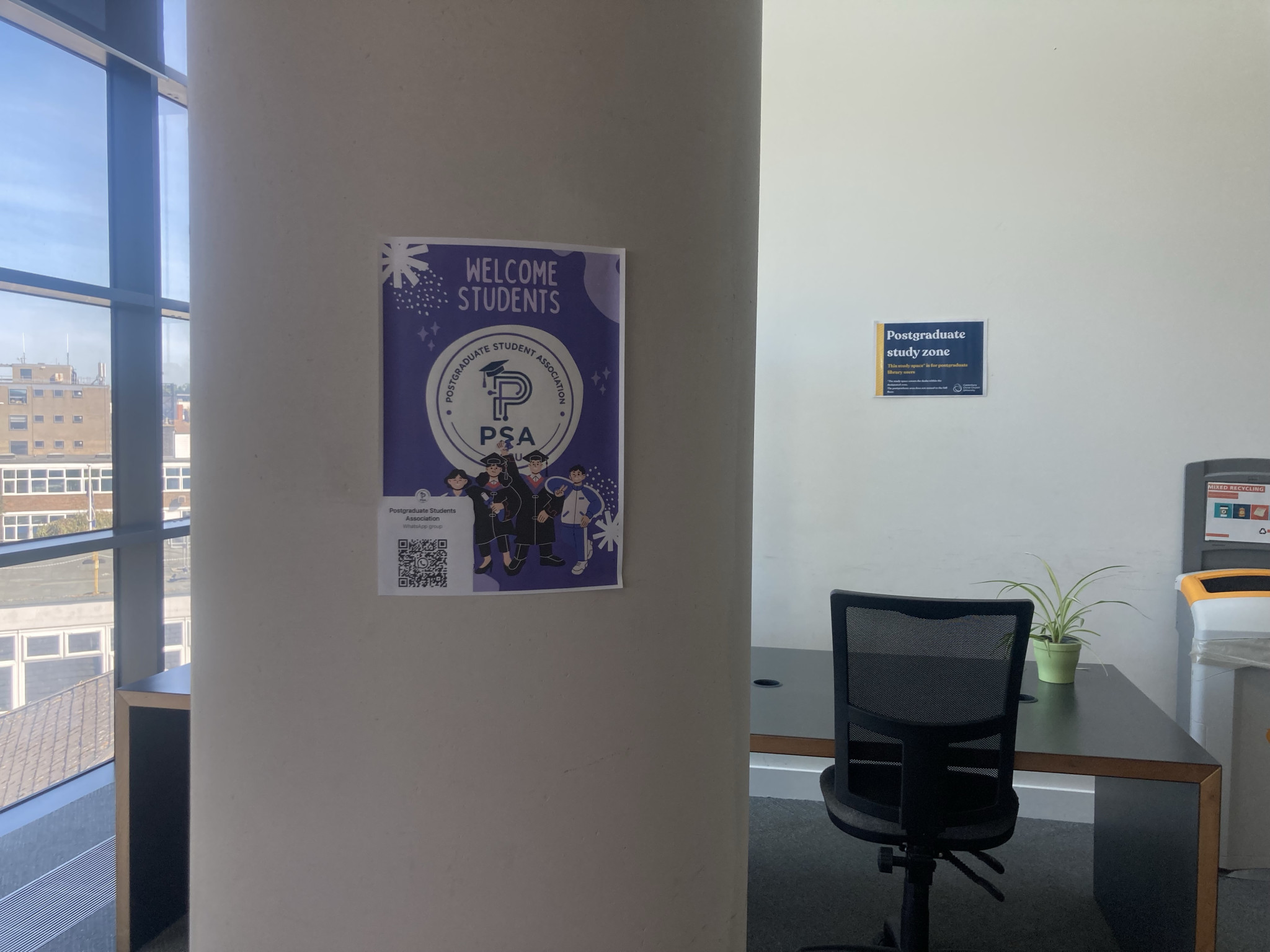
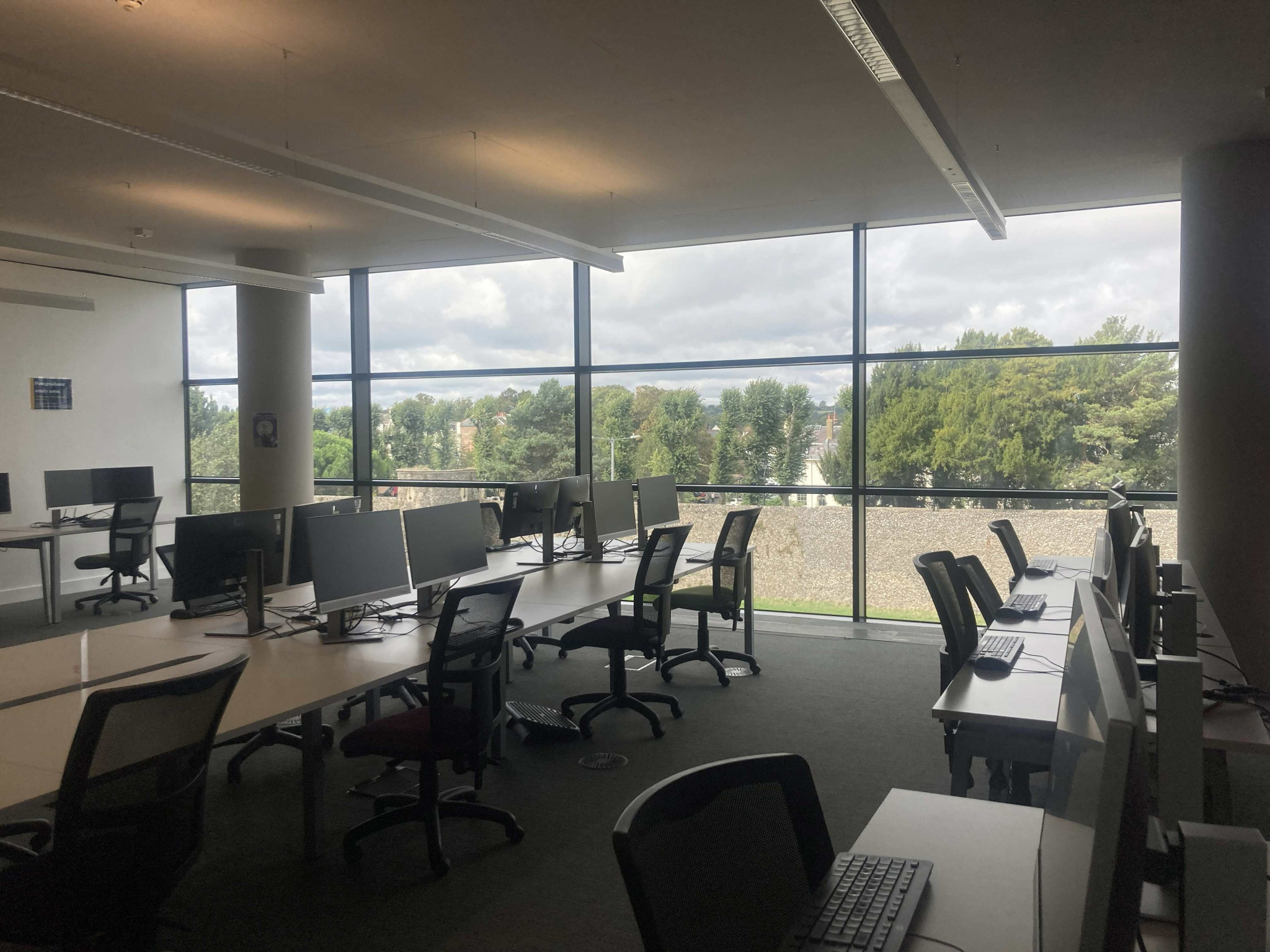
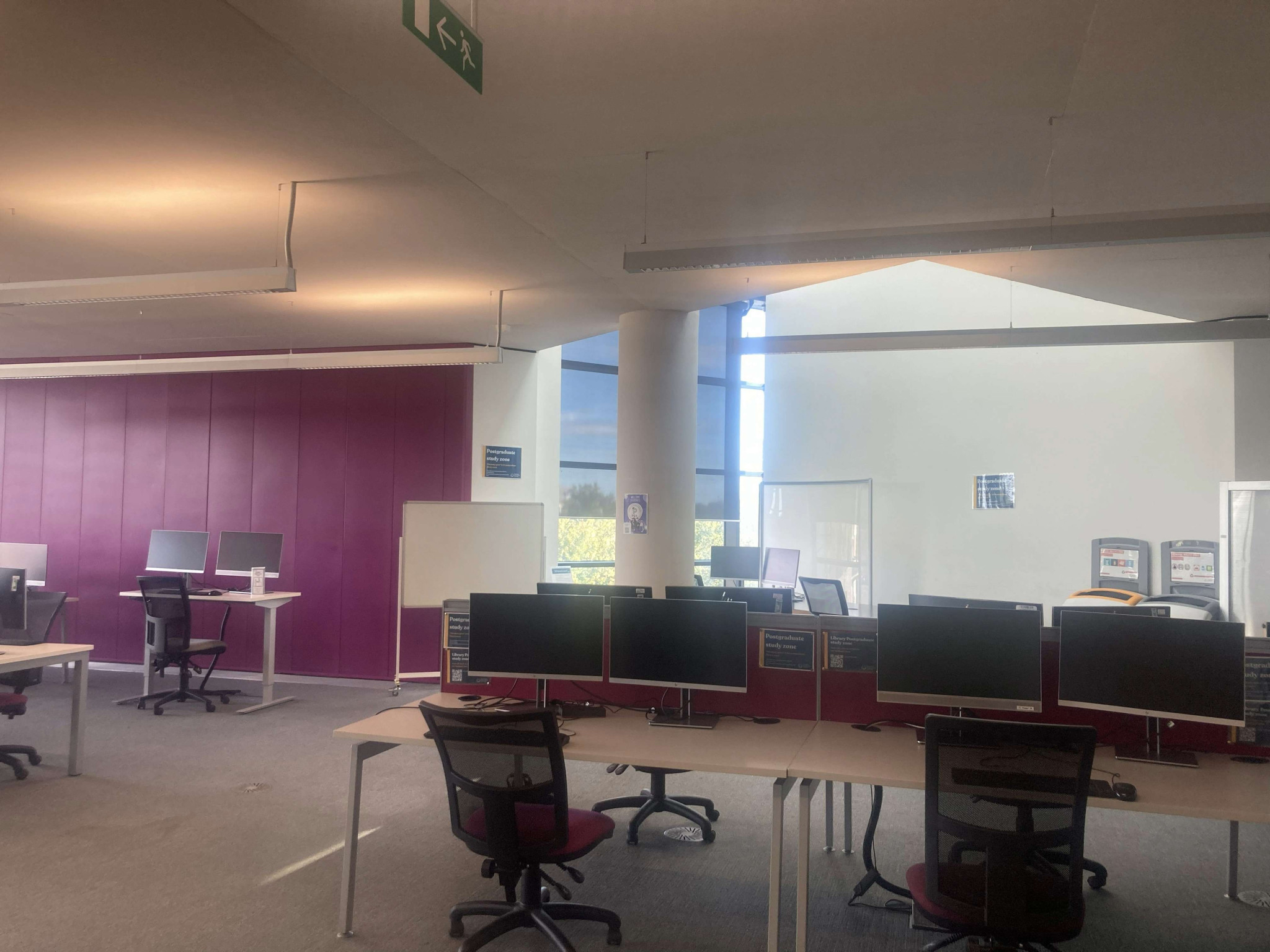
The first primary change is the location. From the back of the third-floor Collaborative zone, the Postgraduate Study Area has now moved to the front of the second-floor Collaborative zone. The space now offers more computers, dual-screens, and study desks, as well as two height-adjustable desks, allowing more postgraduate students to use the area comfortably while accommodating for a broader range of needs.
Exclusivity
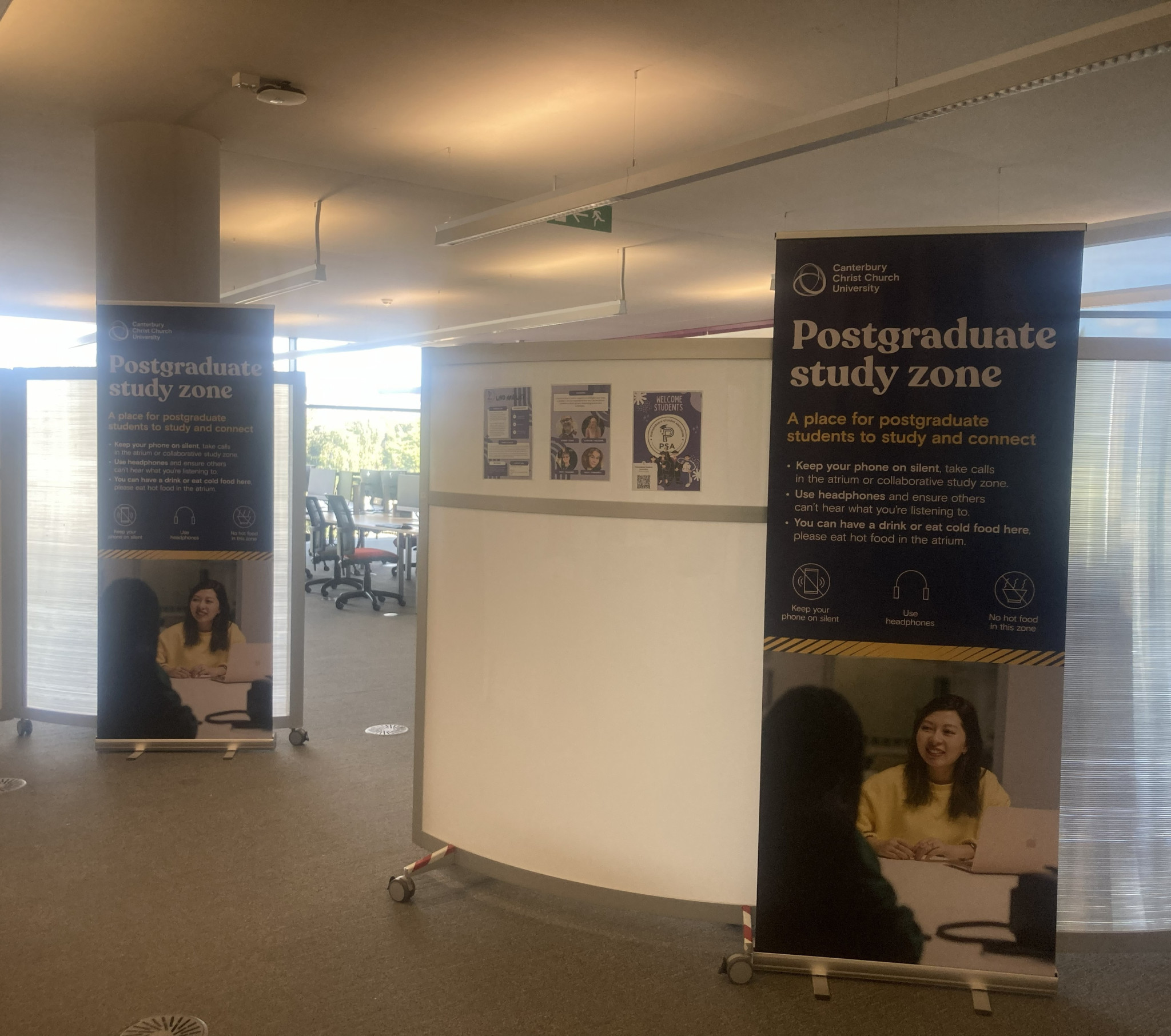
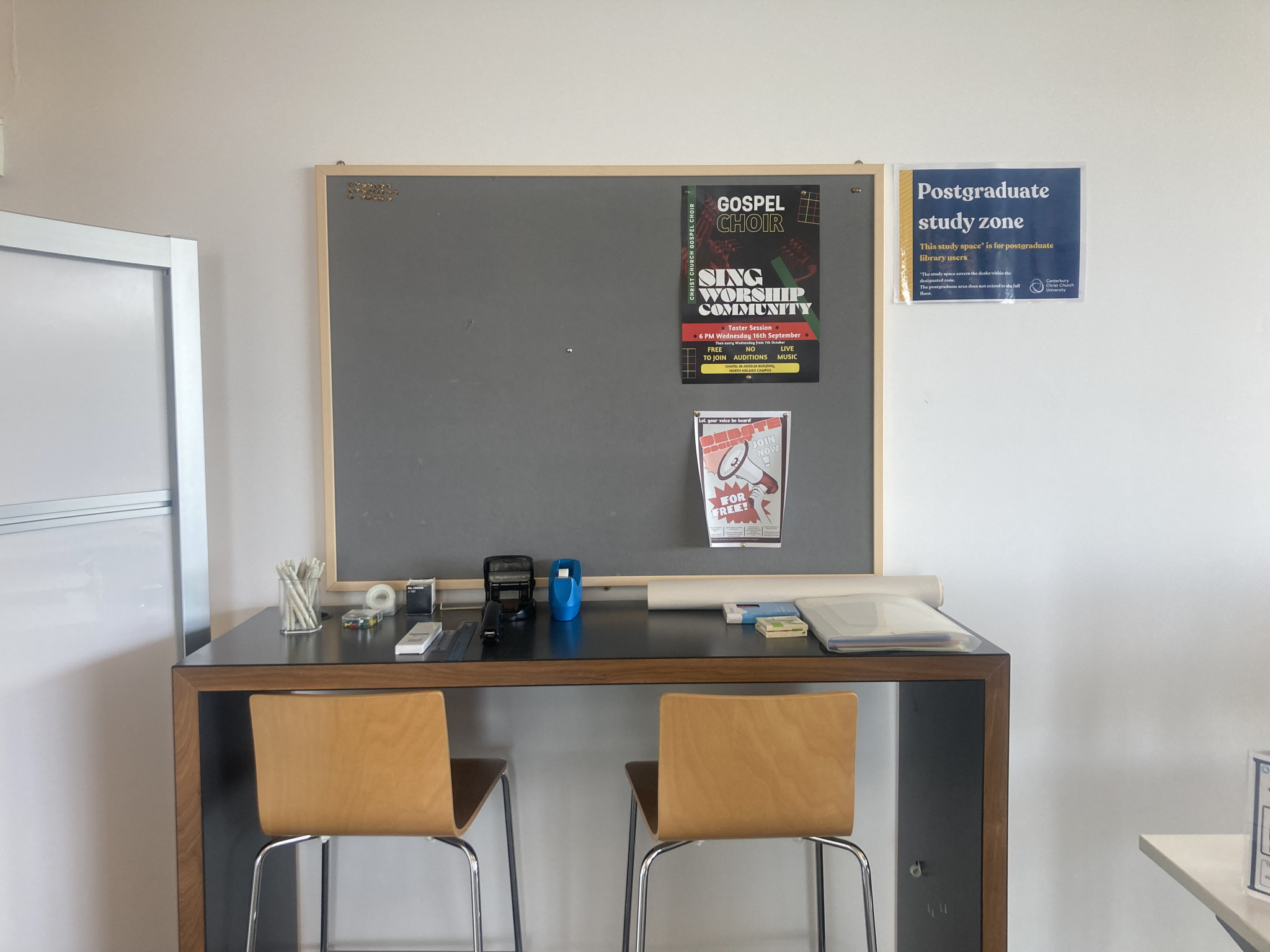
The area is clearly demarcated, with wall dividers to provide a sense of exclusivity from the rest of the Collaborative zone. New banners with clearer signage have been designed and installed to set the expectations for the zone and inform Undergraduate students of the space’s intention.
With more natural light, a larger area, and intentional exclusivity, we aimed for the area to provide a calmer environment, away from the additional stressors that came from the zone’s previous location.
A New Community Space
Based on your requests within your feedback, we have also installed a notice board. A small addition, but one that we hope will support the area as an area for connection. All postgraduates are welcome to use the board, allowing you to set up informal events, stay informed on PSA events and upcoming Research Retreats, and curate community amongst other students.
A Collaborative Conclusion
Through listening to your feedback and redesigning this space, we came to understand that postgraduate study is not only an academic journey, but a deeply personal one. By relocating the area, creating a sense of exclusivity, improving it’s study facilities, and creating room for community to grow, we hope this new space becomes somewhere you can work with focus, connect with others who share your journey, and feel a sense of belonging within the library.
This space was created for you, but more importantly, it was created with you. As your needs evolve, so will the area. We will continue to monitor and improve the space across the year, and there will be plenty of opportunities to provide feedback and engage with staff regarding your experiences.
We will remain committed to listening to your feedback, learning from your experiences, and adapting alongside you throughout your time at CCCU, and for all Postgraduates students to come.
Further References
- Cantor, G. (2020) ‘The loneliness of the long-distance (PhD) researcher’, Psychodynamic Practice, 26(1), pp. 56–67. doi:10.1080/14753634.2019.1645805. Available to read through Library Search
- Featured image – Image by Ralf Ruppert from Pixabay
- Further information on CCCU’s Postgraduate Student Association (PSA) can be found on the Christ Church Students’ Union website


