 Centre for Kent History and Heritage
 Claire Bartram
 452
452
This week Edd shares his experience of work-based learning at the Kent’s Finds Liaison Office and give us an insight into the meticulous cataloguing process that PAS undertake to record finds made by members of the public.
As part of the Professional Development module during my MA Heritage course, I undertook work-based learning at Kent’s Finds Liaison Office. My main aim was to gain experience of the type of work that Finds Liaison Officers do and learn about the process of cataloguing archaeological finds.
Finds Liaison Officers (FLOs) are a vital part of the British Museum’s Portable Antiquities Scheme (PAS). The scheme started in 1997. As this volume of the Internet Archaeology journal explains, the scheme established a ‘national network of largely county-based FLOs assist in the voluntary recording of (archaeological) finds’.
FLOs and their volunteers also maintain and add entries to the PAS online database. This database holds information for millions of archaeological finds recorded across the country. FLOs also do a lot of community work by visiting local metal detecting clubs and examining and discussing finds with members.
To help me learn about the process of recording finds, I was given a box of Roman and Iron Age objects from the same archaeological dig. These objects included beautiful brooches, interesting coins and other materials. My placement supervisor showed me the process and then allowed me to write my own, gradually suggesting fewer and fewer changes as I got the hang of it.
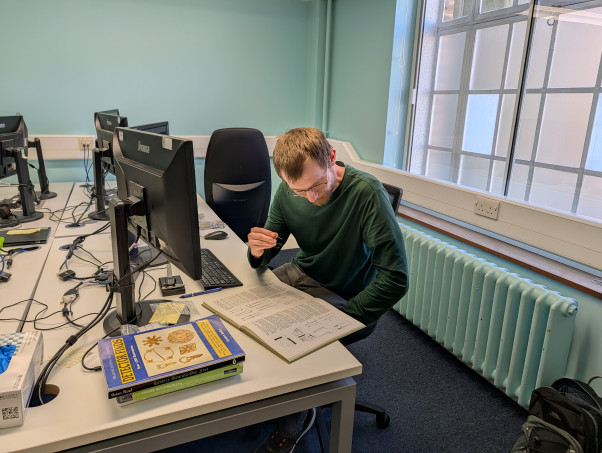
For each object, I started by examining it to determine what it was likely to be. Basic information provided by the finder helped with this. I then used the FLO research library to find out more information. For example, this included narrowing down what type of brooch I was looking at. Reference materials included books and online resources, as well as previous entries on the PAS database.
I then described each object using common archaeological terms. The idea was to describe each object in such a way that someone could clearly visualise it even if a photo wasn’t available. This was the part of the process that took the most getting used to, but my supervisor gave great guidance for how to keep improving.
I also measured and weighed each object and added that data to its entry. I then added the location data of the find site. This is designed to help researchers look for patterns in local archaeological finds. Archaeological students and professionals alike use the PAS database to write papers and theses.
Overall, I really enjoyed my work experience with Kent’s FLOs! I picked up the archaeological terminology pretty quickly, which boosted my confidence. I now feel more confident that I can quickly adapt to new specialist topics within the heritage industry.
My experience also confirmed to me that I really enjoy the process of cataloguing historical objects. I already do this in a slightly different way through volunteering at my local museum. So, learning how objects are catalogued at Kent’s Finds Liaison Office gave me experience at how different parts of the industry process historical objects. And I think enjoying the process itself in any career is absolutely vital!
I also gained two new professional connections which could be important for future projects in my career. As we’ve learnt from numerous visiting speakers on our Professional Development module, future career opportunities often arise from networking and gaining contacts within the industry.
I’m very grateful to my tutors at CCCU for arranging this work experience opportunity! I’m also grateful to the staff at the Finds Liaison Office for providing an interesting and enjoyable placement.


