 Expert comment
 Jeanette Earl
 617
617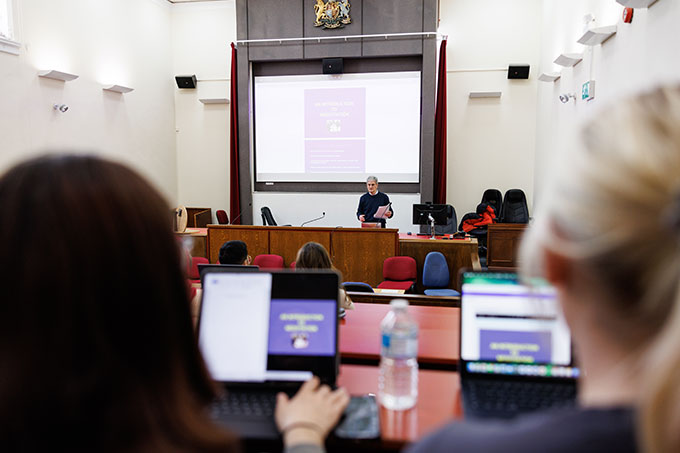
Lauren Martins and Claire Yates explain how, in the face of ever-increasing scrutiny on child safeguarding, they are building a meaningful bridge between theory and practice, and preparing the next generation of social work professionals to navigate a system which intervenes directly in private family life to support safer outcomes.
With a continued national focus on safeguarding reforms, Family Courts and Social Workers are under intense scrutiny.
Policy discussions, shaped by the Department of Education (DFE), the Ministry of Justice (MOJ), and Child Safeguarding Practice Review Panels (CSPR), are focusing on early, timely intervention and the critical role of robust evidence in ensuring safe outcomes for children. Understanding these priorities on paper is one thing, experiencing the reality of how they play out in a courtroom is quite another.
Stepping beyond the lecture theatre
We have just finished delivering our fourth cycle of court skills days to Social Work students at CCCU.
Rather than teaching child protection law solely through traditional lectures, we designed three Court Skills Day focused on a realistic child protection scenario. Students took on roles in a simulated family court, addressing the Judge, presenting evidence, being cross-examined by counsel and experienced the formality, pressure and responsibility that comes with presenting evidence that will impact decisions about a child’s future.
The shift in learning was immediate
In a traditional classroom, students can describe the threshold criteria or the welfare checklist. In the courtroom, the weight of decisions is felt, needing to justify assessments clearly, withstanding challenge and thinking carefully about proportionality and permanence — issues central to current policy debates. Students saw how social work evidence is tested and how judicial reasoning balances risk, rights and long-term welfare.
Collaboration was key
We worked closely with external partners including barristers, the judiciary, and an independent social worker. Their expertise brought authenticity that no lecture could replicate.
This multi-disciplinary approach mirrors the reality of child protection proceedings. Family justice is not delivered in silos; it relies on careful coordination between social workers, legal professionals and the court.
At a time when policy stresses joined-up safeguarding and improving professional standards, our teaching model reflected exactly that.
A positive response
The response has been overwhelmingly positive. Students described feeling more confident in articulating their evidence and rationale and more aware of the importance of precise, evidence-based reasoning. Many said the experience helped them understand how their written reports translate into courtroom.
Perhaps most encouragingly, alumni have since contacted us to say the intervention supported them during their newly qualified year. They reported feeling less intimidated when giving evidence and better prepared for cross-examination. In a field where confidence and clarity directly affect outcomes for children and families, that preparation matters.
Family courts are often discussed in the context of reform, delay and pressure. Universities have a responsibility to contribute meaningfully to that debate by not just teaching law or practice, but through preparing professionals capable of navigating a system which intervenes directly in private family life to support safer outcomes.
By moving learning from the classroom to a courtroom and grounding it in current child protection policy, our contribution is both timely and essential.
Lauren Martins, Senior Lecturer and BA Hons Social Work Course Director, and Claire Yates, Senior Lecturer and Social Work Skills Lead, in the School of Social Work, Education, and Teacher Education.
They will be presenting for Social Work England on the court skills days in celebration of World Social Work week, 16 March 11am-12pm online. Book here if you want to find out more.


