 Sustainability
 Bethany Climpson
 4178
4178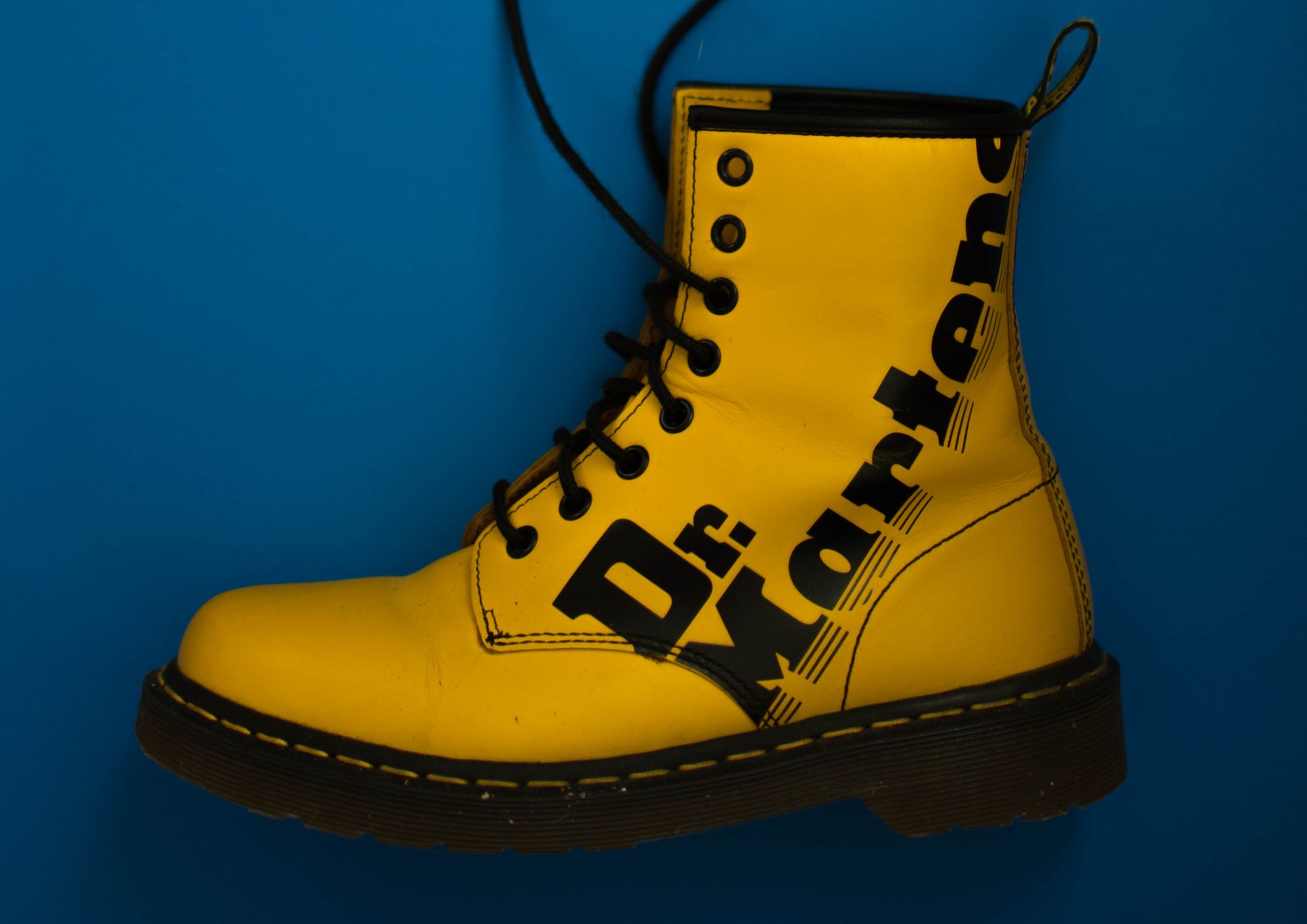
For some reason, the sustainability of trending footwear brands intrigues me, consider this a part two from one of my older blogs: What the Croc? The story behind the popular footwear brand and sustainability.
Dr Martens have become a symbol of individuality, authenticity and self-expression through footwear. An impact not thought of over one hundred years ago in 1901 where reliable work boots were crafted in Northamptonshire, England by the Griggs family. Several decades later, in post-war Germany, soldier Dr Maertens set about creating an air-cushioned sole to challenge the traditional leather sole whilst recovering from a foot injury. A prototype saw Dr Maerten team up with Dr Funk in producing and distributing across Germany before expanding overseas in 1959. The Dr Martens that many have come to know and love today blossomed in the 1960’s when the Griggs family from Northamptonshire acquired a licence with the brand altering the heel and stitching. This led to the branding of ‘Airwair’ and iconic yellow stitching. This was when the classic 1460 Dr Martens boot entered the market.
The Birth of Dr Martens and Revival
- 1960’s – This decade was instrumental in creating change and social revolution accessorised with extravagant fashion, many favoured this leather boot despite it initially being intended as a work boot for postmen and factory workers.
- 1970’s – Continuing from the previous decade, Dr Martens became synonymous with ‘skinheads’, a diverse group of working-class individuals in the UK, featuring many subtypes. It grew in popularity with punk and goth Brits, particularly those favouring a sense of anti-establishment.
- 1980’s – Touring musicians taking the boots back to America.
- 1990’s – Became an icon of festival culture, new metal and early stage ‘emo’s’.
- 2000’s – Sales started to decline.
- 2010’s – Introduction of social media saw popularity grow again, and Dr Martens one more became a symbol of expression and rejecting the norm.
The Environmental Impact of Dr Martens
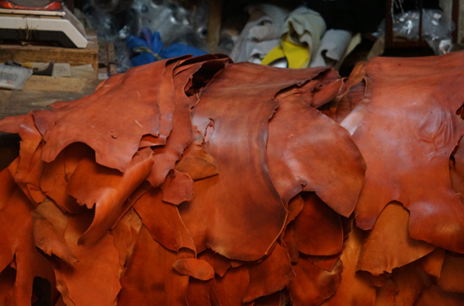
Image Description – A pile of animal hide
Although Dr Martens have several systems in place to be environmentally conscious, there is no avoiding the obvious here: Dr Martens are made from leather.
Leather is heavily reliant on a complicated supply chain. Sourcing leather leads to deforestation – destruction of forests for human activity. Did you know that 80% of deforestation in the Amazon Rainforest is directly linked to the rearing of cattle? Leather sourcing also results in high levels of greenhouse gas emissions, from the cattle themselves who produce large amounts of methane, as well as the process of deforestation – land clearing. During the 2023 financial year, Dr Martens were responsible for 280,456 tonnes of CO2 emissions. To put this into perspective, 1 tonne of CO2 emissions is the equivalent to fully charging your smartphone 120,000 times – shocking right? Large amounts of water are also used to produce leather, but this production process also pollutes it with what is used to tan the leather. The chemicals used for tanning are harmful for both people and the environment.
Leather is primarily sourced through cows (65%) due to its durability but it can also come from sheep, pigs and goats. Leather is often a by-product of the meat industry, meaning animals are not purposefully killed for their hides, but used after meat has been sourced. Yet around 40% of usable cow hide is sent to landfill further producing CO2 as it is left to decompose. However, some animals are sometimes reared specifically for hide. Luxury leather goods often use a very soft form of leather that can only come from calves – a short life ended for the purpose of a handbag or pair of shoes.
The Response of Dr Martens
Dr Martens have acknowledged their responsibility for both people and planet and continue to strive for footwear that is “timeless, hardwearing, repairable” and sustainable. Whilst the company have made many changes, with a specific focus on human rights, there is still more that can be done for the environment. Current initiatives include:
- Packaging – 100% comes from post-consumer waste materials.
- Labour – Most production has been moved to Asia. Labour laws are not as strict there and is known for exploitation. As of 2025, the company brought in Slave-free Alliance (SFA) to review their Human Rights Policy which applies to all employees worldwide. This includes policies against child labour, discrimination, entitlement to fair wages and a work-life balance.
- STOP THE TRAFFIK – In 2025, Dr Martens partnered with ‘STOP THE TRAFFIK’ to identify human trafficking routes, hotspots and communities most at risk to avoid exploitation.
- Vegan Leather – Vegan Dr Martens were first launched in 2011 as an animal free alternative to the classic boot whilst maintaining the durability the brand is known for. The most popular styles now offer a vegan leather alternative.
- Chemicals – Regularly testing products with trusted partners to ensure they are safe and the chemicals used do not bring harm to people or the planet.
Is it enough?
To put it simply, no. Although there is significant evidence that Dr Martens are making efforts to be more sustainable, there is minimal environmental change in areas that could have a significant impact. There should be an urgency in reviewing their practices from an environmental perspective particularly around the actual footwear product itself.
Some benchmarks for the company are fast approaching, for the 2026 financial year, Dr Martens pledged to increase active annual sourcing of renewable electricity to 100%. They also aim to achieve net zero by 2040 but whether this happens or not will be observed. In my opinion, it feels that Dr Martens efforts are focused on all areas apart from the actual product. Even though the introduction of Vegan leather products is significant in reducing the ethical issues with the sourcing of real leather, it replaces one issue with another.
However, it is important to consider that for a company like Dr Martens, who’s entire brand image has been built on the reliability, sturdiness and comfort of their footwear, drastically changing their offerings could negatively impact their business.
Leather Vs. Vegan Leather – Which is more durable?
The leather vs. vegan leather debate is longstanding and is a bit paradoxical. One the one hand, leather is sourced from animals (although it is mostly a by-product of the meat industry) and produces large amounts of carbon emissions, but on the other, vegan leather is obviously not animal leather – it’s plastic! In the grand scheme of environmentalism, is this not just switching one problem for another?
The plant based alternative used is made from the synthetic material ‘Felix Rub Off’ or Polyurethanes (PU), which is a form of plastic. The sourcing of this is non-renewable and being a plastic, is very difficult to dispose of and ‘quick methods’ result in incineration, further contributing to greenhouse gas emissions. So, whilst it is better for animal welfare, it is still having a significant impact on the environment.
For something like this, it is important to consider to wider picture and question which is more durable – leather or its vegan alternative (plastic!). Dr Martens are rather well known for their durability, with classic leather expected to last between 5 and 20 years. However, reviews suggest that the vegan boots are tarnishing, cracking and failing within 2 years of purchase. These boots are pricy, and for consumers they are likely to favour spending their money on something that will last far longer. Although animal leather has its issues, in the potential 20-year lifecycle of leather boots, several vegan leather boots could be in landfill. It could be argued that by looking at the bigger picture, it is more sustainable to purchase real leather to begin with. So for Dr Martens, maybe real leather is the better option and at present, they might be short on suitable alternatives.
Moving Forwards

Image Description – A pineapple plant
Leather made from partially bio-based alternatives could be the way forward for Dr Martens. Did you know that plant-based leather can be made from grape waste, apple skins, and pineapple leaf fibre? I think the pineapple alternative shocked me the most! Pineapple leather (Pinatex) has a lower carbon footprint, uses less water, and is 80% biodegradable. The leaves of pineapple plants are considered a waste product, but this ensures that nothing is going to waste and is making an environmentally sustainable alternative to leather. Pineapple leather is still coated with PU, but this only makes up a very small part of its composition. Perhaps the future of Dr Martens will be reliant on this unassuming fruit (well, its plant leaves!).
The current market for faux-leather boots is heavily reliant on plastic. Companies that use material like Pinatex are mostly focussed on trainers, sandals and even an alternative for popular footwear brand ‘Ugg’s’. Although Pinatex has a similar issue with durability as synthetic vegan leather, it is less harmful than plastic. Maybe, starting to address the leather issue, Dr Martens could begin with transitioning to Pinatex as the vegan alternative, minimising the impact of their plant based products and then re-visiting their classic offerings.
Do you think Dr Martens are doing enough to help the environment?
Thanks for reading 😊
By Maddie Polston, SGO Projects Officer
Fancy some extra reading, check out our sources:
Dr._Martens_plc_Annual_Report_2024_Sustainability_TCFD.pdf
Material Guide: Is Leather Ethical or Sustainable? – Good On You


