 Sustainability
 Bethany Climpson
 809
809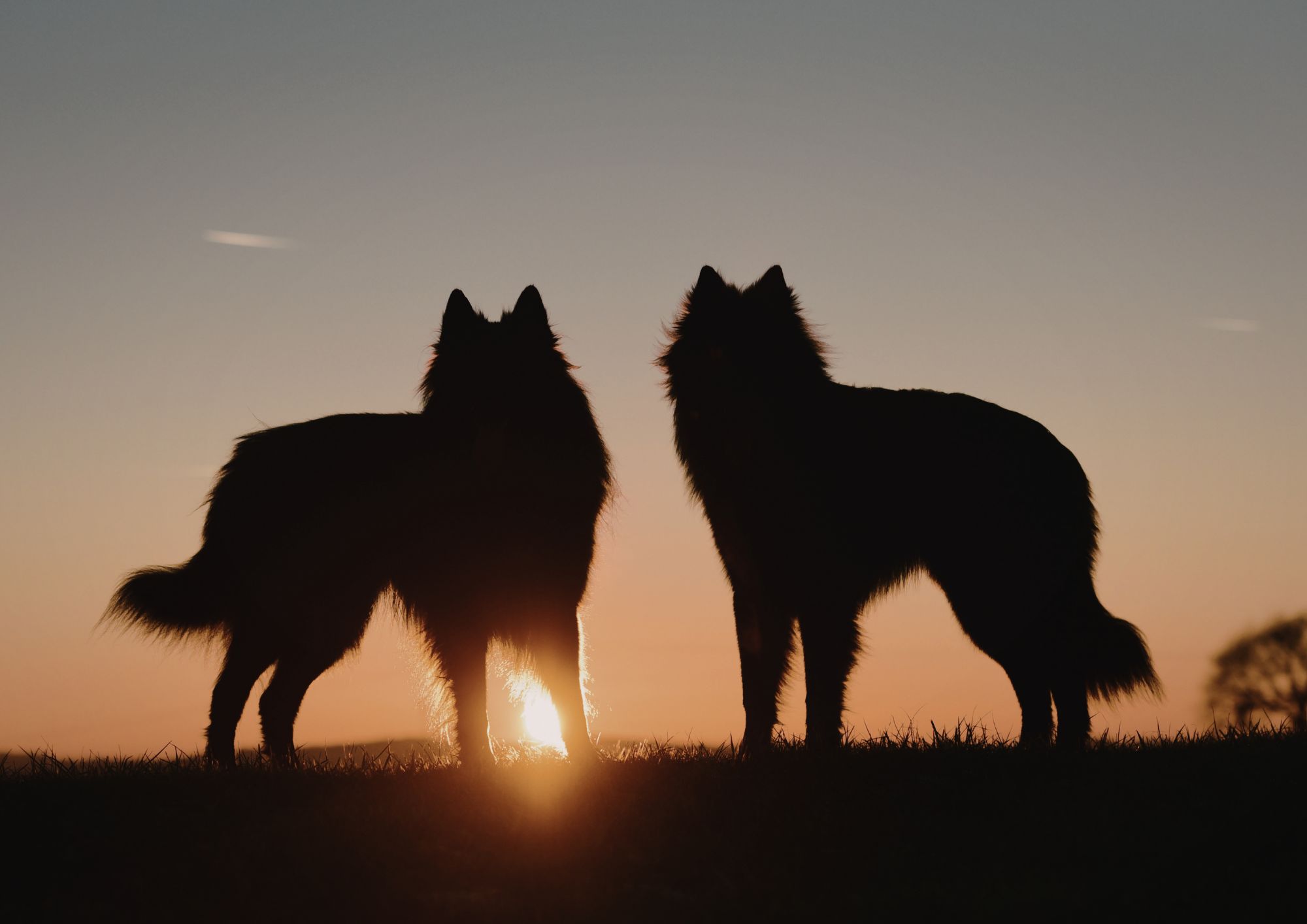
This is a true story. My name is Green, because my human mother hoped my life would have a happy ending — just like Grimms’ fairy tales. So far, I am the only wolf known to have been raised by a human mother, successfully returned to a wild wolf pack, formed friendships with my natural enemies — Tibetan Mastiffs — and ultimately become a wolf king.
I was born on the Zoige Grassland in the spring of 2010. I do not remember my parents’ faces clearly, but my body remembers the loss.
My father, the Wolf King, was larger than two men. One winter, driven by hunger, he entered a pasture and took a single sheep. In response, traps were set. Humans later used firecrackers to deafen him. Dizzy and disoriented, he was captured alive. Desperate to escape, he bit off his own paw and fled. He did not get far. Dogs tracked him down. When he died, his body told a silent story: his face was destroyed but his back was unbroken, untouched — because wolves do not retreat. A wolf moves forward, even in pain. Even in the end.
My mother tried to avenge him. In daylight, she returned to the pasture without fear — not of humans, not of dogs. At night, she howled for him across the grassland. Her grief was loud enough to be heard. The humans decided she must be removed. To prevent her body from becoming a trophy, she swallowed poisoned bait. Before she died, she tore her own fur so that no one could profit from her body, leaving behind a den of newborns.
I was five days old when I was found. My other five brothers and sisters were already gone. Only one of us was still breathing. That was me.
Growing Up Between Two Worlds
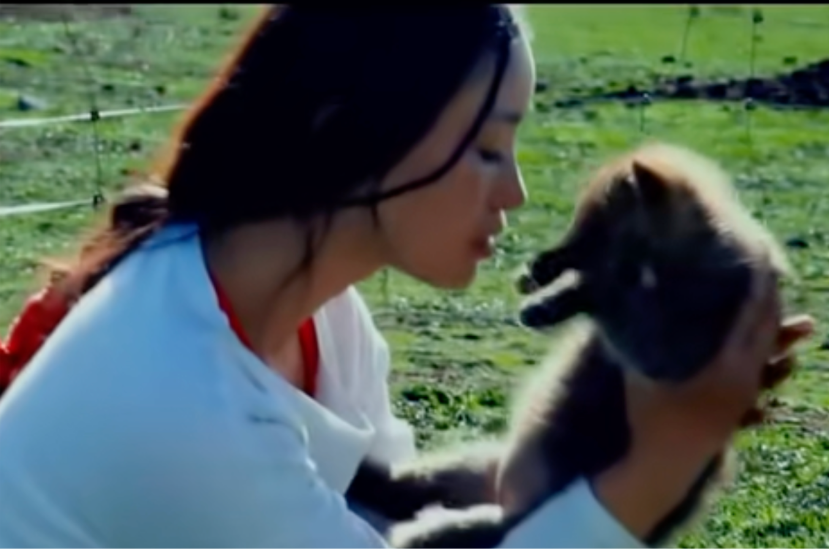
A woman named Li Weiyi carried me away from the grassland. She did not mean stealing me from my world — she was trying to save my life. In the city, I learned many strange human things. I watched television. My favorite was Dances with Wolves. I learned so much about hunting that the very next day, I caught a fish from the pond in our neighborhood. My human mother did not seem pleased. I drank milk from a bottle. I learned how to unwrap candy with my paws.
I always loved running freely. I could never stay in one place for long. Once, I got lost in the city. Everywhere I went, there were people who were afraid of me — some even tried to hurt me. My human mother realized that the city could never be my home. With a heavy heart, she made the hardest decision of all: she let me return to the grassland, to the place where I truly belonged.
Returning to the Grassland
In 2011, my human mother made the hardest choice of her life. She decided to let me go.
When we first arrived on the grassland, a group of feral dogs chased me. Shepherds rushed in and saved us. They allowed us to stay and live in the pasture. It was there that I became a guardian of the grassland. I helped watch over the sheep. My human mother taught me how to hunt pikas and how to block other burrows. For months, we lived on the grassland together — through storms, hunger, attacks from dogs and birds of prey. I protected her when she was sick. I brought her food. I guarded her while she was asleep.
And I learned how to live and cooperate with a group of Tibetan Mastiff brothers. At first, I didn’t fit in at all. But I learned to be clever. During their midday rest, I dug a small tunnel that only I could fit through. When they went to drink water, I would slip out, tip over their water bowls, and sneak back into my tunnel — a playful reminder that I wanted to live together in peace. Over time, as I built trust and even formed a special bond with the head Mastiff, the others gradually accepted me.
One day, while hunting pikas, one of the Mastiffs bit my head. My mother rushed to save me and pulled me free. I was badly injured, but I survived. When my Mastiff friends learned what had happened, they fought fiercely in my defense. To keep me safe from further danger, my mother placed me in a cage. I couldn’t bear being confined — for my brothers, I slammed my head against the bars again and again. I was too weak to break free, but the attempt left a scar on my head, a mark I carry to this day. That scar reminds me of resilience, of the bonds I share with my friends, and of the courage it takes to survive in a wild world.
But this life did not last long. People in the pasture kept saying I had eaten their sheep and threatened to take me away — even though I had never touched a sheep. Every day, I hunted only pikas. One day, I was almost beaten to death with a shepherd’s stick. My human mother realized that the city and even the nearby pastures could never be my home. She decided to help me find my own kind — a real wolf pack.
After much effort and many long days, my mother finally helped me find my wolf family. When it was time to leave, I looked at her and shed tears. On the other side, my wolf pack was calling me, urging me to come. I did not know what to do. She took a chain from her bag. It was the first time in my life that I did not struggle. I loved her more than freedom. But she gently removed the chain from my head and let me return to my wolf pack. She loved me more than she wanted to keep me. I returned to them, to my true home, and to the life I was born to live.
Later, I found a wife. We had three beautiful wolf cubs. But life on the grassland is never easy. Two of them were lost to human traps. The third was badly injured by a yak and was close to death when my human mother found the cub and treated the wounds. At first, I did not know it was her who had saved my child. But when I smelled the belt used to wrap the wounds, I recognized her scent. From that day on, I kept it with me.
In 2020, when a wolf protection station was finally established on my homeland, she returned again. I was old by then. Thin. Slow. She sang our song — the howl we once shared. I answered. I carried something in my mouth that day: a belt she once used to save my child. I had kept it for seven years. Because wolves remember. After that, I disappeared back into the mountains. I did not know how to face humans anymore. Humans had given me life, love, and protection, but also fear and loss.
Why Wolves Matter — and Why We All Do
Wolves are not symbols of fear. We are indicators of balance. When wolves disappear, grasslands change. Herbivores overgraze. Soil weakens. Rivers shift. What looks like “progress” quietly becomes collapse. Protecting wolves is not about choosing animals over humans. It is about choosing long-term harmony over short-term gain. It is about understanding that no species survive alone.
A Quiet Request
My story is not unique. Every year, countless wild animals lose their families not to nature — but to fear, greed, and misunderstanding. When humans destroy ecosystems, they do not just erase species; they break relationships, cultures, and knowledge older than cities.
I do not ask humans to leave the world. I ask you to stay — wisely. Protecting wildlife means:
- protecting ecosystems that support agriculture and water
- respecting boundaries between wildlives and human lives
- choosing coexistence over domination
- teaching future generations that strength includes restraint
What You Can Do
- Support wildlife protection and anti-poaching efforts
- Respect wild animals’ distance — love does not mean possession
- Protect habitats, not just species
- Speak up when development threatens ecosystems
Sustainability is not only about carbon and energy. It is about coexistence.
By Huiwen Wang, SGO Projects Officer
Please note:
This story is based on and adapted from the true events in the book and also the documentary Return to the Wolves (重返狼群 https://www.youtube.com/watch?v=iUJqU_hH_Io), which follows the life of a wolf cub rescued by wildlife photographer Li Weiyi and her journey back to the wild with the help of Yi Feng and local herders on the Zoige Grassland. This piece is written for educational and conservation awareness purposes. If there are any copyright concerns, please contact us and we will address them promptly.


