 Politics
 Kamalakhanim Aghazada
 215
215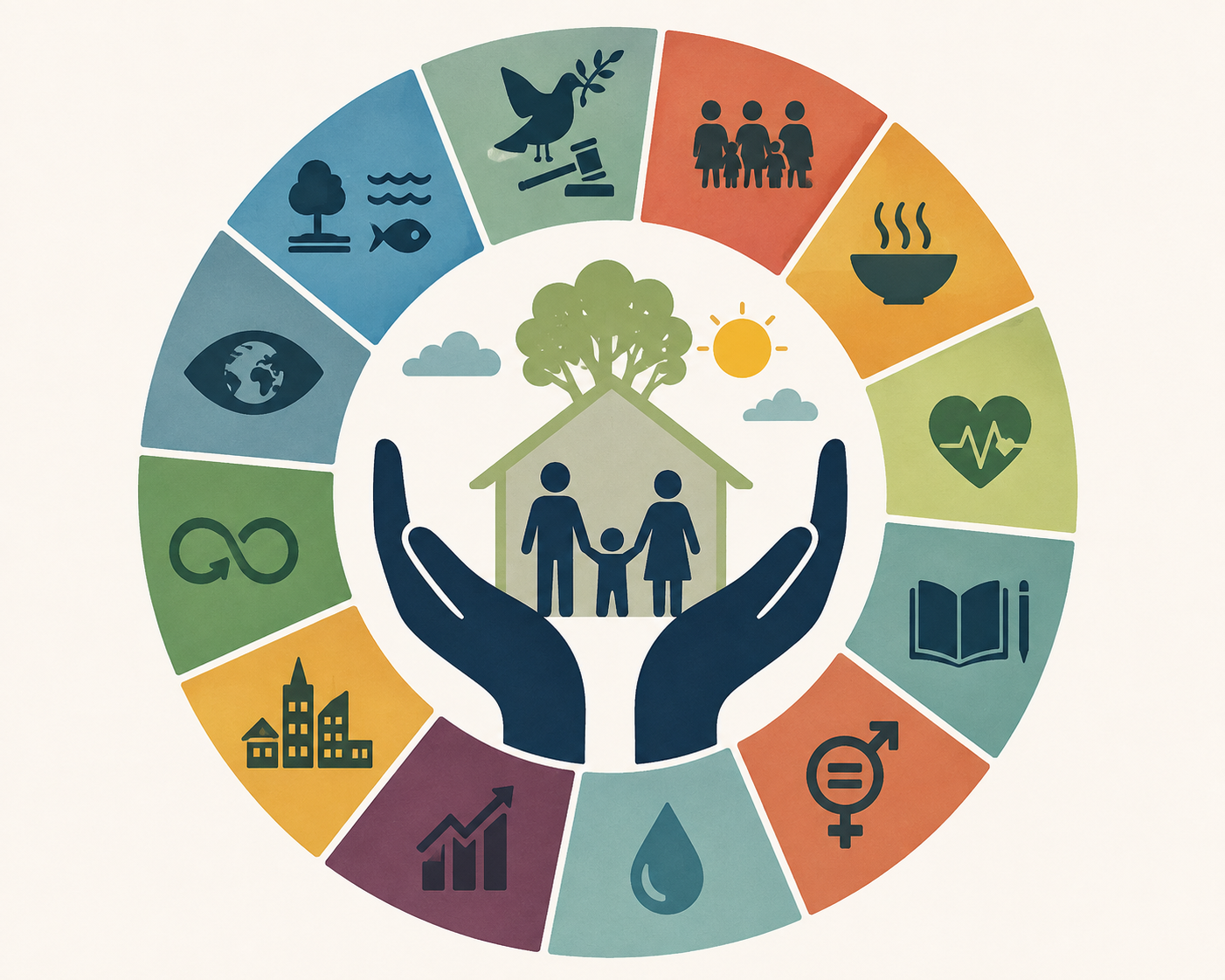
What does it really mean to protect the right to life when people lack access to healthcare, food, water, safe housing and a healthy environment? Dr Emo Pearce, Senior Lecturer in Law, explores the relationship between the right to life and Economic, Social and Cultural Rights, and asks whether protecting life must also mean protecting the conditions necessary to live.
The right to life is widely recognised as one of the most fundamental human rights. It is protected under major international and regional human rights instruments, including the Universal Declaration of Human Rights, the International Covenant on Civil and Political Rights (ICCPR), and regional human rights treaties. Yet, despite its foundational status, the right to life has traditionally been understood in relatively narrow terms, principally as a protection against arbitrary killing, unlawful state violence, and other direct threats to physical existence. That understanding is increasingly difficult to sustain. What does it mean to protect someone’s right to life if that person has no access to essential healthcare, adequate food, clean water, safe housing or the basic conditions necessary to survive? Can the right to life be meaningfully protected where individuals are exposed to preventable environmental hazards, extreme poverty or conditions that place their health and survival at serious and foreseeable risk? These questions require us to reconsider the relationship between the right to life and ESCRs. The argument advanced here is not that every failure by a state to provide a social service automatically amounts to a violation of the right to life. Rather, the central proposition is more measured. Where deprivation of essential socio-economic conditions creates a serious, foreseeable and preventable threat to life, the right to life should impose corresponding positive obligations on the state.
From the right not to die to the right to live
Traditional approaches to the right to life have focused predominantly on negative obligations. States must not arbitrarily take life; they must prevent unlawful killings, and they must protect individuals from direct threats to their physical existence. These protections remain indispensable. But they represent only one dimension of what it means to protect life. Consider a child who dies because essential healthcare is unavailable or inaccessible. Consider a family living in conditions so unsafe that they face a foreseeable risk to their health and survival. Consider communities deprived of safe drinking water or exposed to severe environmental contamination. In such circumstances, asking only whether the state directly caused the death provides an incomplete account of the state’s human rights responsibilities. The more difficult question is whether the state took reasonable steps to prevent a foreseeable threat to life; this distinction is important. Expanding the right to life does not mean imposing an unlimited obligation on states to guarantee every socio-economic entitlement immediately. Rather, it means recognising that, in certain circumstances, state inaction can be as consequential for the protection of life as direct state action. The right to life should therefore evolve from merely protecting individuals from being killed, towards protecting the conditions necessary for people to live.
The traditional classification of human rights into civil and political rights on the one hand and ESCRs on the other has contributed to the narrow conception of the right to life. Civil and political rights have often been regarded as immediately enforceable, while ESCRs have been characterised as dependent upon resources and progressive implementation. This distinction obscures the extent to which rights operate together. The reality of human experience therefore does not conform neatly to the traditional categorisation of rights. Human rights are indivisible and interdependent, and the denial of one right can undermine the enjoyment of another. This has important consequences for judicial interpretation. Where a court considers whether a state has fulfilled its obligation to protect the right to life, it should also consider the socio-economic and environmental conditions in which individuals live, as these conditions may directly affect their ability to enjoy and exercise that right.
Reconceptualising the right to life: Should ESCRs be read into its scope?
This is where the argument becomes more controversial. There is a legitimate concern that an expansive interpretation of the right to life could transform courts into institutions responsible for determining social and economic policy. Decisions concerning healthcare budgets, housing provision, social security and food programmes necessarily involve complex questions of resource allocation and democratic accountability. Judges do not possess institutional expertise to design comprehensive social policy. However, recognising this limitation should not result in judicial abdication. There is a distinction between designing social policy and holding the state accountable for unreasonable failures to protect fundamental rights. Courts could, for example, ask whether the state has taken reasonable measures to protect individuals from foreseeable threats to life. They should examine whether vulnerable populations have been disproportionately exposed to serious risks, whether essential services are accessible, whether state policies are discriminatory, and whether available resources have been allocated in a manner consistent with minimum human rights obligations. Such an approach would allow courts to protect the core of the right to life without requiring them to determine every aspect of government policy. The question is therefore not whether courts should become policymakers; rather, it is whether courts should permit policy decisions to become a justification for avoidable threats to life.
Furthermore, the climate crisis makes this debate increasingly urgent. The consequences of climate change are environmental, social and economic. Therefore, a narrow understanding of the right to life may struggle to capture these interconnected harms. However, a broader approach, by contrast, would recognise that states have positive obligations to take reasonable measures against foreseeable environmental threats that place human life at risk. This is particularly important for future generations. Therefore, the principles of intergenerational equity, environmental justice and sustainable development increasingly belong within the conversation about the right to life.
The debate also needs to be understood through the experiences of states in the Global South.
In many developing countries, the distinction between civil and political rights and ESCR can appear particularly artificial. A person facing extreme poverty may experience threats to life through hunger, inadequate healthcare, unsafe housing, environmental degradation and lack of access to clean water simultaneously; these are lived realities. At the same time, developing states frequently face genuine resource constraints. Therefore, a progressive interpretation of the right to life must acknowledge that states cannot provide unlimited resources and that socio-economic rights are subject to progressive realisation. However, resource constraints should not become a blanket defence for governmental inaction. The critical question should be whether the state is taking deliberate, concrete and targeted steps, within its available resources, to protect individuals from serious and foreseeable threats to life. This approach recognises economic realities, while maintaining the principle that human rights impose obligations.
From recognition to implementation
The central problem facing ESCR globally is increasingly not recognition, but implementation. States have accepted extensive obligations through international and regional human rights instruments. Constitutions across different jurisdictions recognise ESCRs in varying forms. Courts are increasingly developing innovative approaches to their protection, yet millions of people continue to experience extreme poverty, inadequate healthcare, food insecurity, homelessness, lack of clean water and environmental harm. This raises an uncomfortable question, which is: what is the value of recognising a right if individuals have no meaningful mechanism through which to enforce it? This suggests that a rights-based approach requires states to move beyond treating socio-economic provision exclusively as a matter of political discretion or charity. Where deprivation reaches a level that threatens life, dignity and human survival, questions of legal accountability inevitably arise. This does not require every socio-economic entitlement to become immediately enforceable; it does, however, require recognition of a minimum threshold below which state action or inaction becomes incompatible with the protection of life.
The argument for an expanded right to life is ultimately an argument about the meaning of human dignity. A person does not have rights in separate categories; people do not live a civil and political life separately from their economic, social and cultural life. They experience life as an interconnected whole. The future development of human rights law should therefore move beyond the rigid separation between rights that protect people from state interference to rights that require positive state action. Importantly, the challenge is to move from a conception of the right not to die towards a more substantive conception of the right to live. That does not mean that the state must guarantee a perfect standard of living, nor does it in any way suggest that courts should assume responsibility for government budgets. Rather, it means recognising that the protection of life necessarily includes protection against circumstances in which foreseeable, serious and preventable socio-economic deprivation threatens human survival and dignity.
The critical question for states and courts is therefore no longer simply: Has the state unlawfully taken a person’s life? It should increasingly be: Has the state taken reasonable measures to ensure that people can live? This changes the conversation because it places healthcare, food, water, housing, social security and environmental protection within a broader understanding of what it means to protect human life. It also challenges governments, courts and human rights institutions to consider whether the legal distinction between civil and political rights and ESCR reflects the realities of human existence.
As I explore in greater detail in my forthcoming book on Economic, Social and Cultural Rights, particularly for the refugees, the future of ESCRs protection may depend upon moving beyond formal recognition towards a more integrated understanding of rights, one in which the protection of life, dignity and socio-economic wellbeing are understood as interconnected constitutional and human rights commitments.
The right to life should not merely guarantee that we are permitted to exist, it should help ensure that we have the conditions necessary to live.

Dr Emo Pearce is a Senior Lecturer in Law at Canterbury Christ Church University. Her research interests focus on International human rights, with particular focus on socio-economic and cultural rights and the advancement of minority and Indigenous Peoples’ rights. Beyond International human rights law, she also has a particular interest in the relationship between environmental law and human rights. She teaches at the undergraduate and postgraduate levels.


