 Politics
 Kamalakhanim Aghazada
 20
20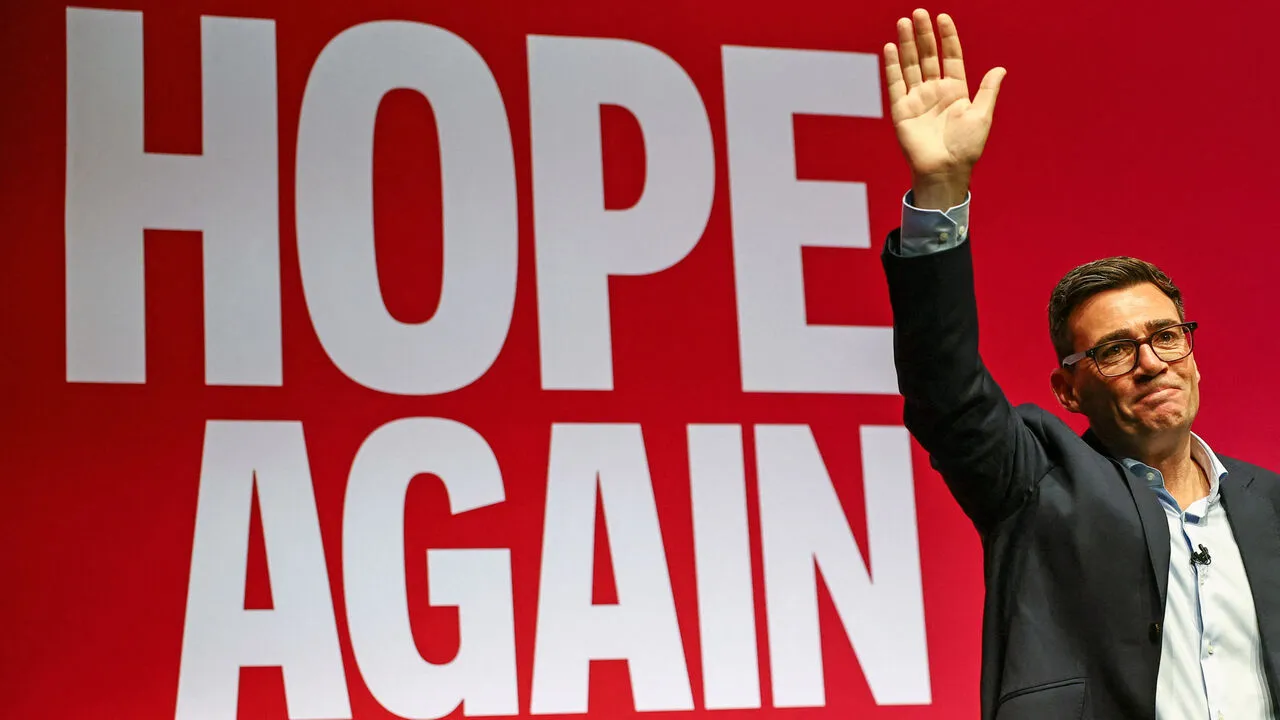
Kamala Aghazada, our PhD student in Politics, analyses Andy Burnham’s first Labour conference speech as Prime Minister and what it reveals about his political vision.
Andy Burnham’s first Labour conference speech as Prime Minister was built around two words: hope and control. He used both repeatedly, but the interesting part is what he attached them to. Housing, water, energy, social care, welfare, Brexit and electoral reform all became part of the same argument: Britain has lost control of too much, and Labour can give people a reason to believe that it can be taken back.
Burnham opened his speech with ‘People with hope again’ and ended with ‘We will hope again.’ It is the kind of political word that can mean almost anything because voters can fill it with their own concerns. For someone struggling with housing costs, hope means a home they can afford. For an older person worried about care, it means security. For a younger voter, it might mean a job, education or simply the sense that their prospects are improving.
Burnham’s use of the word reminded me of Alexis Tsipras and SYRIZA in Greece. In the 2015 Greek election campaign, SYRIZA used the slogan ‘Hope is coming – Greece is moving forward – Europe is changing.’ The political context was very different, but the language performed a similar function. ‘Hope’ offered a positive emotional alternative to austerity, frustration and political stagnation without needing to spell out every consequence of the change being promised.
Burnham is doing something comparable with his own version of ‘hope again.’ He presents Britain as having been on the wrong path for a long time: ‘Deindustrialisation. Deregulation. Privatisation. Austerity. Brexit.’ That is where the politics of nostalgia comes in. His speech creates a contrast between a Britain that once worked for ordinary people and a Britain that has gradually given away control. The past becomes the explanation for the present, while restoring what has been lost becomes part of the promise of the future. The word ‘hope’ works brilliantly to bring a wide range of problems together under one broad political message. But the Budget, legislation and implementation will decide whether ‘hope’ can move beyond a discursive tool and work as a governing one.
If nostalgia explains what Burnham thinks Britain has lost, ‘control’ is his answer to how it can be regained.
Burnham was taking on one of the defining phrases of Brexit politics: ‘taking back control.’ But he was trying to change what the phrase means. His argument was that the British Right talked about taking back control while actually giving it away through privatisation, the weakening of councils and the loss of public control over essential services. For him, control means being able to afford your home. It means communities having a say over empty properties. It means public authorities having greater influence over water and energy. It means councils having more power. It means people having greater control over the services they depend on. He repeats this throughout the speech.
Perhaps Burnham’s move is to take a phrase that has belonged to the political right and give it a different meaning. For years, politicians, including Starmer, have allowed the radical right to set the terms of the debate, particularly around Britain’s decline and immigration. Burnham is trying to move the argument towards issues where the radical right is less comfortable and has less to say, beyond blaming particular groups.
Burnham also understands the importance of who is delivering this message.
He talks about ‘the powers-that-be pulling against the people’, a country where people want to feel that ‘the country has got their back again’, and power being concentrated in too few hands. His speech makes this distinction: people versus powerful interests, ordinary communities versus Westminster, and a political system that has supposedly stopped responding to those it represents.
He presents himself as an outsider, much like figures such as Nigel Farage, despite both having spent decades inside British politics, including Burnham’s time in government and the Cabinet. He reminds the audience that he left Westminster a decade ago, describing himself as having become ‘an outsider from the Westminster club’. He says he returned not because he missed Westminster but because he wanted to change it.
Burnham later attached his ideas of hope and control to a series of policy proposals.
Starting with his approach to welfare, Burnham offers a different framing of the role of social security. Chancellor John Healey has presented welfare reform partly as a moral obligation, particularly in relation to getting young people into work and reducing welfare dependency. However, Burnham does not use the same language of welfare as a problem of dependency or irresponsible spending. His speech describes social security as an investment in people.When discussing young people, he presents the choice as being between investing in them now or paying later through benefits: He follows as: ‘My choice is to invest in them.’He describes it as a ‘different approach to welfare’ and argues that social security should be understood as an investment in people’s success.
Burnham also promises to maintain the current triple lock for the rest of this Parliament. After 2030, he proposes changing the system so that pensions would continue to be protected against inflation, while the earnings link would be removed. The savings would then contribute to funding the National Care Service. The government’s own estimate is that the adjustment could reduce state pension spending by £15 billion a year by the end of the 2030s, rising to £50 billion a year by 2050.
He wants to expand social provision, create a National Care Service, remove personal care charges and maintain the value of the state pension. At the same time, he says the care service will be fully funded and not financed through borrowing. So the obvious question is: who pays? We will have to wait until we see the Autumn Budget on 28 October to get the definitive answer.
Placing most of his emphasis on domestic issues, he said very little about foreign policy. Yet this comes at a time of major international challenges, including the war involving Russia and Ukraine and the conflict involving Iran. Foreign policy may not win many votes, but as Prime Minister, he should still have a clear vision for Britain’s role in the world, rather than leaving the substance of foreign policy largely to Ed Miliband.
The one major exception to this domestic focus, however, is Europe. Burnham’s speech gives us a hint of what to expect from the UK-EU summit this November. Linking his argument back to the ‘take back control’ message of the Leave campaign, he argues that Brexit failed to deliver the control it promised. Instead, he says, Britain lost economic control through low growth and weakened its control over immigration by losing cooperation with European partners. His conclusion was clear: ‘Brexit has done more harm than good.’ He then leaves the door open to different forms of a future relationship with Europe.
His promise to look at electoral reform may also reveal how Burnham is thinking about the next election. By offering proportional representation alongside a closer relationship with the EU, he may be trying to win back Green and Liberal Democrat voters and appeal to left-wing voters more broadly. This could also suggest that he is preparing for a possibility in which Labour may need to work with other parties to form a government after 2029. He made this appeal explicit towards the end of his speech: ‘If you agree with enough of what I’ve said, get behind this plan and get behind each other. It’s time to draw a line. To move beyond a decade of drift and division.’
But there is an obvious tension in this strategy. The same electoral reform could also significantly increase Reform UK’s representation in Parliament – the political force Burnham says he wants to challenge. It could also potentially deepen the divisions between Labour’s own factions. In that sense, this was arguably the biggest challenge Burnham presented to his own party.
In the end, Burnham has offered a clear political direction with a powerful speech, but not yet all the answers. The Budget on 28 October will show how much of his programme can actually be delivered. That is when the ambition of this speech will meet the harder realities of governing.
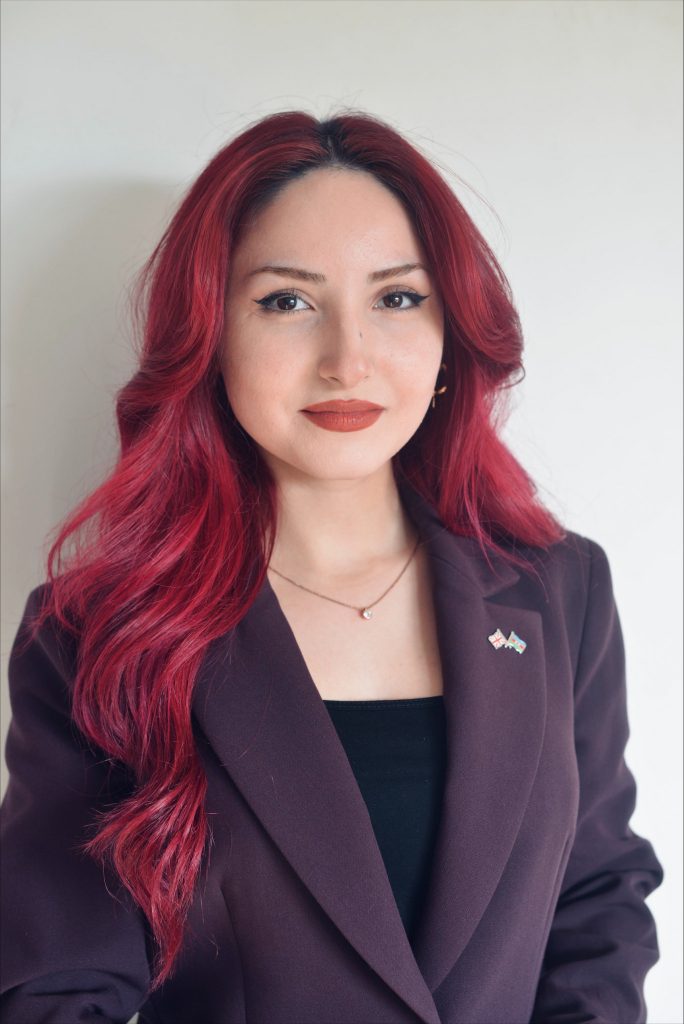
Kamala Aghazada is a second-year PhD student at Canterbury Christ Church University, researching right-wing populism in the UK. Her current work focuses on populist radical right parties and their impact on social policy, with a particular interest in welfare chauvinism and how these ideas are mainstreamed and institutionalised.


