 Politics
 Kamalakhanim Aghazada
 17
17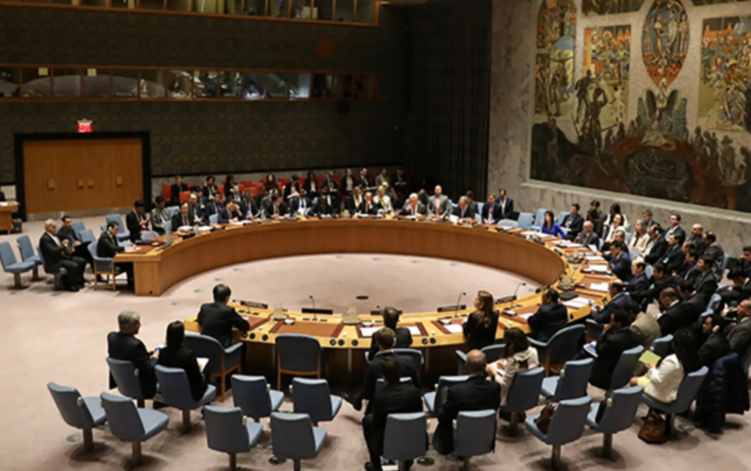
Dr Dele Babalola discusses Africa’s call for permanent representation on the UN Security Council and the challenges to reform.
In 1976, at the Organisation of African Unity (OAU) summit in Addis Ababa, Ethiopia, Nigeria’s former military Head of State, the late General Murtala Muhammed, declared in a very powerful tone that “Africa has come of age.” This statement was directed at the United States, which was pressuring OAU member states not to recognise the MPLA as Angola’s legitimate government during the Angolan civil war. What makes this message powerful was the affirmation of Africa’s right to solve its own problems without external interference. The connection between 1976 and today is clear. Muhammed’s declaration was about Africa’s right to influence decisions affecting the continent during the Cold War, while today’s demand for permanent seats on the United Nations Security Council (UNSC) is about Africa’s right to be a player, and not a spectator in global governance in the 21st century.
Fifty years after Nigeria’s proclamation, African leaders renewed their call for permanent UNSC seats at the recently concluded 81st United Nations General Assembly (UNGA). The call was aimed at reforming a body whose five permanent members had not changed since the formation of the UN in 1945 after the failure of the League of Nations. Their argument was simple, straightforward and unambiguous: Africa, a continent with nearly 2 billion people, cannot continue to be a permanent subject of global decisions while remaining absent from the table where those decisions are made. They demand that the continent’s voice must count in the architecture of global governance. Most of the conflicts on the Council’s agenda are in Africa, yet it has no meaningful presence in the room where decisions affecting the region are made. Africa contributes troops to peacekeeping missions, hosts critical global resources, and bears the brunt of many global crises, including climate change, but no African state has a say in how those decisions are made. Africa is home to 54 of the UN’s 193 member nations, more than a quarter of the General Assembly, and is projected to have a quarter of the world’s population by 2050, making it difficult to continue to ignore the resource-rich continent.
The African Union’s shared position, codified in the 2005 Ezulwini Consensus and the Sirte Declaration, calls for at least two permanent seats for Africa, with all the rights and responsibilities of permanent membership, including veto power, as well as five non-permanent seats in an enlarged Council. Given Africa’s exclusion from crucial global decision-making, the proposal to make the UNSC more representative of contemporary realities is legitimate. Even the UN Secretary-General Antonio Guterres echoed this call in his final address to the General Assembly, emphasising that the Council must become more representative and better reflect today’s geopolitical reality. He contended that it is unacceptable that Africa continues to lack permanent representation on the Council.
Clearly, African leaders have once more shown remarkable solidarity in voicing their demand. At no time has this call enjoyed such widespread rhetorical backing. Of course, the five permanent members – China, France, Russia, the United Kingdom, and the United States – are occupying those positions because they won a war fought when most of Africa was still under colonial rule, but the institutional architecture cannot remain static in the face of a dynamic world that has become a global village. It should be noted that the former colonies fought alongside their colonisers during the Second World War. Not only that, but they also provided resources in the aftermath of the war, particularly agricultural products, on which Europe relied heavily to rebuild its war-torn economy and infrastructure. The call for permanent UNSC seats is therefore not about symbolism; it is about justice and fairness. The question, however, remains whether Africa can translate this shared resolve into tangible institutional reform.
It must be emphasised unequivocally that Africa’s unified demand is being made within a system designed to resist it. The P5’s strong attachment to the status quo is a massive stumbling block standing between Africa and the representation it deserves. A system in which five nations are granted veto power and then asked to approve reforms that will weaken that power is a locked door, and the P5 hold the key. The United States supports Africa having permanent members but opposes expanding veto rights, fearing that more vetoes will paralyse the Council; Russia supports African representation but opposes the Council’s expansion; and China supports prioritising Africa’s under-representation but does not commit to extending its veto. All three claim to back Africa, yet each withholds the one thing that would give Africa real power. According to Article 108 of the UN Charter, amendments must be approved by two-thirds of the General Assembly and further approved by two-thirds of members, including all P5 states. As a result, any permanent member can block an amendment by refusing ratification. Another concern for some P5 states is that granting Africa’s demand would certainly result in similar demands from Latin America and Asia-Pacific, reshaping the Council’s hierarchy in ways that the P5 may find uncomfortable.
Even if P5 resistance were overcome, Africa would still face an obstacle of its own making – the AU’s lack of internal cohesion on the question of candidature. The Union’s shared position avoids naming which nations should occupy the proposed seats, insisting they belong to Africa as a whole. Algeria, Egypt, Kenya, Morocco, Nigeria, and South Africa are all credible contenders, but choosing one would reignite the very regional rivalries the position was meant to transcend. These states have legitimate claims, and the continent’s demographic and economic weight makes their exclusion from global decision-making increasingly difficult to justify. But Africa must be honest with itself as global standing rests on domestic policies. So long as the continent depends on external powers for security, its claim to strategic autonomy rings hollow. So long as weak democratic culture, poverty, corruption, insecurity, and coups continue to erode its institutions, its moral authority remains fragile. If Africa wants the world to take its demand seriously, it must first take itself seriously. If Africa wants to demonstrate to the world that it has truly come of age, it must fix its political, economic, and security challenges. Charity, they say, begins at home.
At this juncture, one thing must be acknowledged. It is far from certain that Africa’s pressure will finally deliver the long-awaited reform, but what is certain, and what the UN can no longer ignore, is that Africa’s demand has moved decisively from quiet ambition to insistent emphasis, with the rhetoric of “historical injustice” now voiced by African leaders at every opportunity. The cost of dismissal is real. In an era of globalisation, where the legitimacy of the Security Council is already under scrutiny, that legitimacy will erode further with every year Africa remains excluded from permanent membership. Africa may not yet hold the seats it demands, but it has firmly planted itself at the centre of the debate over the UN’s future. The question, therefore, is no longer whether Africa deserves a permanent seat; the sincere question, the one the world must now confront, is whether the Security Council can survive without it. So, the time to act is now.
Dr Dele Babalola is a Senior Lecturer in Politics and International Relations at Canterbury Christ Church University. His research focuses on federalism and political economy, particularly ethnicity, democracy and terrorism in Nigeria. He teaches on our undergraduate and postgraduate degrees and welcomes applications from PhD students interested in similar research themes.
His most recent publication is Babalola, D. and Seiyefa, E. (2025), Organised crime, violent conflicts and the movement towards a dual policing system in Nigeria, The Round Table, 114:4, 417-435, https://doi.org/10.1080/00358533.2025.2522843


