 Library
 Michelle Crowther
 22
The theme for Green Libraries Week 2026 is Climate Facts for a greener future: Navigating mis – and disinformation in libraries. The purpose of the week is to demonstrate how libraries play a vital role in working with users to build information literacy skills and confidence at every stage of their lives. In this article, Michelle Crowther, Librarian for Geography, Wildlife Ecology and Conservation Science discusses some of the good quality resources available for students and researchers in life sciences to support their understanding of climate change.
If you are looking for good credible sources about climate change, then try visiting a library where you’ll find a wealth of information. As a starting point, the CCCU Library guides for Geography, and for Wildlife Ecology and Conservation Science provide advice about how to find the print and ebooks in their collection, as well as recommendations for databases and good quality websites.
This week there is even a display highlighting books on climate change and sustainability. This was prepared by three secondary school students, Farah, Elise and Kathryn, during their work placement in the summer.
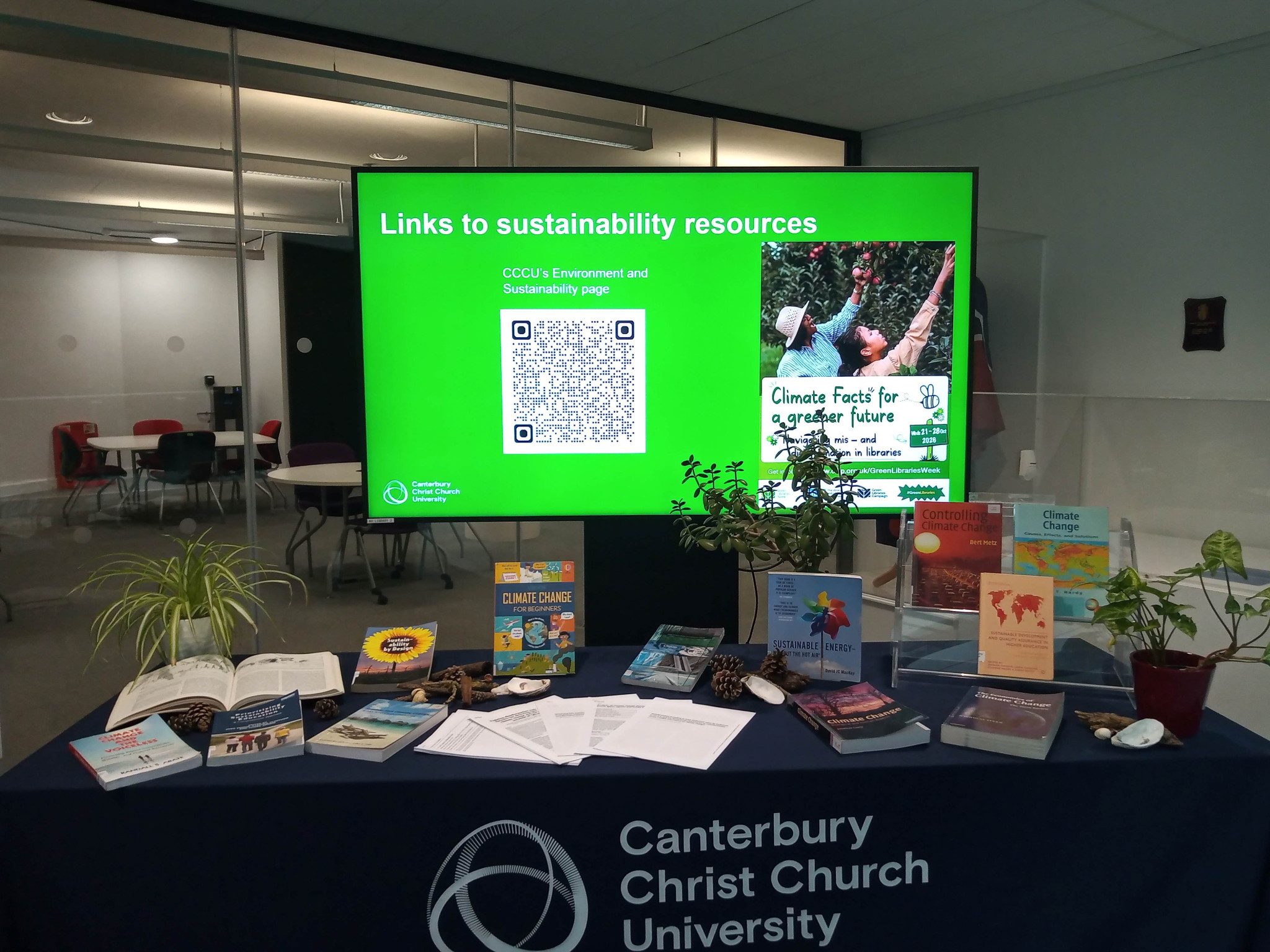
Photo by M. Crowther
Once you have become familiar with the library, you might want to delve into some introductory books about climate change, for example, The Very Short Introduction to Climate Change (4th edn) by Mark Maslin which covers the science, the history, and the politics of climate change or The Climate Book by Greta Thunberg which is an urgent call for climate action. There are plenty of books on climate change, covering more specific topics such as geoengineering and climate change, as well as thousands of in-depth academic journal articles which examine the causes and impacts of climate change.
The Earth Day 2026 collection on Libby is a collection of e-books, audiobooks and magazines which includes National Geographic, BBC Wildlife Magazine and Good Organic Gardening. Although not strictly academic information, these are perfect for general knowledge and public awareness. But, if you prefer listening to reading, The BBC World Service has a podcast called The Climate Question which discusses topics such as mining, super El Ninos, and solar power.
Beyond these introductory and popular works, there is a lot of good quality sources, but also some bad sources that are best avoided, but how do we separate the wheat from the chaff?
Photo by M. Crowther
Navigating misinformation or disinformation and what is the difference?
Misinformation is false and misleading information which has not been checked for accuracy, is often shared accidentally and is designed to be sensational clickbait. Disinformation is false information that is purposely spread to deceive and includes hoaxes, spear phishing and the manipulation of search rankings. Although scientists largely agree on climate change there are some climate deniers. Make sure you look for evidence-based information, before believing the news headlines. What are the facts of climate change? The Learning Skills Hub has some good information on how to navigate mis- and disinformation in its Evaluating Sources section.
Dispelling the Myths
Here are some recommended websites that seek to provide balanced information about climate change:
The United Nation’s Climate Action web pages provide a useful page called Myth Busters. This summarizes some of the key facts about climate change such as the impact of extreme heat on human health and links to reports produced by the Intergovernmental Panel on Climate Change (IPCC).
The European Digital Media Observatory in partnership with the School of Transnational Governance have produced an excellent guide on how to spot climate disinformaton.
The National Climate Emergency Briefing provides the perspective of a a range of experts who argue that urgent action is needed to strengthen the economy, resilience, and quality of life in the UK in the face of climate change. These videos are highly recommended.
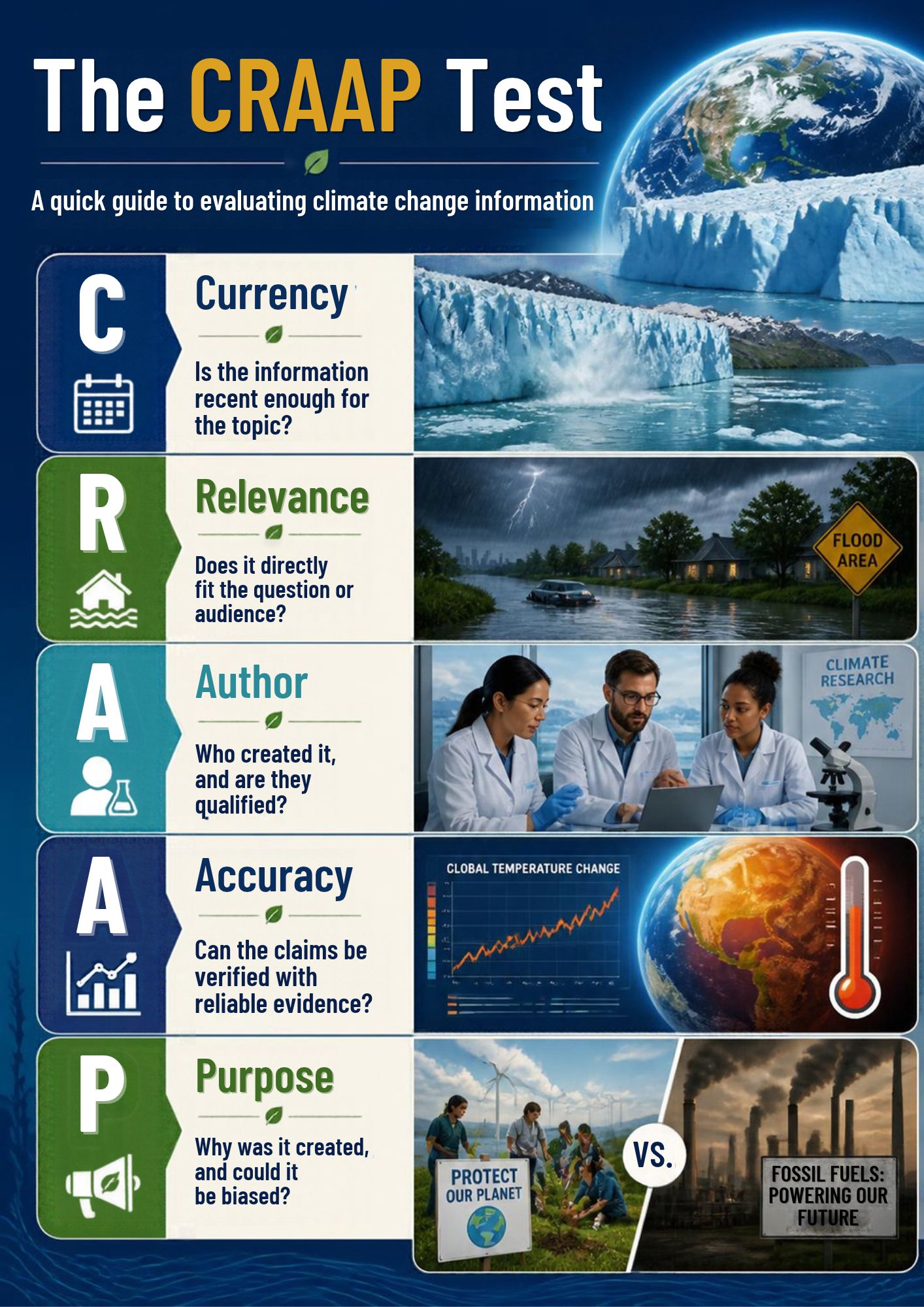
Infographic created with Canva AI
Where can I find good quality information?
To undertake your own research, it is recommended that you start with the academic databases. Large interdisciplinary databases such as Science Direct and Scopus are useful, as well as subject specific sources such as GreenFile and Zoological Record.
GreenFile
GreenFILE is a database of well-researched information covering all aspects of human impact to the environment. Its collection of scholarly, government and general-interest titles includes content on global warming, green building, pollution, sustainable agriculture, renewable energy, recycling, and more.
Zoological Record
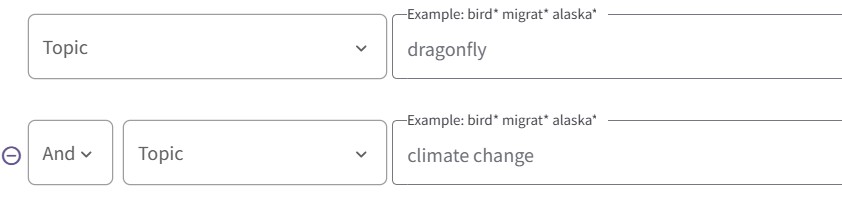
The Zoological Record is one of the world’s leading taxonomic reference databases of animal biology, allowing you to keep up to date on all aspects of animal biology and biodiversity issues. You can combine searches in the boxes to find good quality scholarly articles on how climate change is impacting species.
In the search example below, it was possible to locate an article called ‘Scientists warning on the need for greater inclusion of dragonflies in global conservation’ published in the journal of Insect Conservation and Diversity in 2025. This article was funded by Stellenbosch University Department for Conservation Ecology & Entomology, Matieland, South Africa and included global research.
If you’d like to know more about database searching, you can book an appointment with Michelle, via the Learning Skills Hub.
If you are interested in reading more, you may like these blog posts:
New Year: new zero-waste you? | Library
The fast fashion debate: What can we do to reduce the impact fast fashion has on the environment? The fast fashion debate: What can we do to reduce the impact fast fashion has on the environment? | Library


