 Sustainability
 Bethany Climpson
 217
217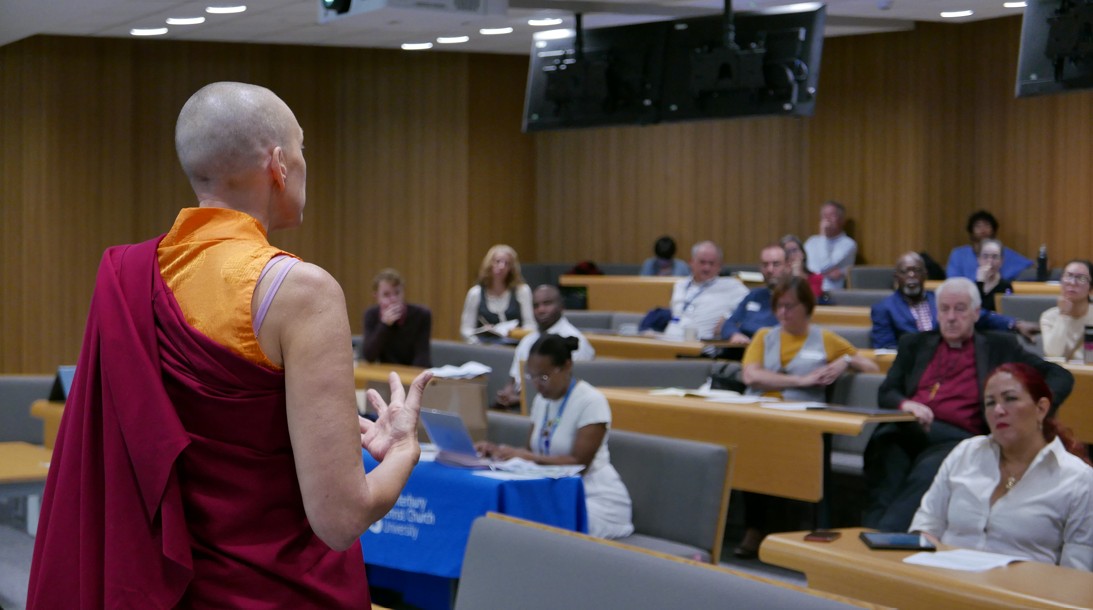
In early September 2025, before I was rehired as Student Green Office Projects Officer (and before the degree I love started making me cry, again…), my colleague Maddie and I had the opportunity to volunteer at the ‘Sustainability and Spirituality: Building Ecologies of Hope’ Symposium, hosted by the Academy for Sustainable Futures at Canterbury Christ Church University. The environmental crisis is often framed as a spiritual one, influenced by the disconnection from nature that consumerism propels – but this Symposium did something different. This symposium set out to explore alternative narratives of prosperity beyond consumption, using a spiritual lens to create space for practical approaches to environmental sustainability.
Organised in collaboration with the UK Consortium on Sustainability Research (UK-CSR), the event brought together an interdisciplinary community through talks, posters, workshops, temporary art instillations and other creative responses. These formats encouraged academic discussion, reflection, dialogue and shared learning. The outcome of the Symposium will be a new book ‘Sustainability and Spirituality: Building Ecologies of Hope’, to be published by Springer Nature as part of the ‘World Sustainability Series’, the leading peer-reviewed book series on sustainability in higher education – following the success of ‘Sustainability and the Humanities’ (2019).
As someone at the very beginning of their academic and environmental journeys, I found the Symposium deeply inspiring, and I wanted to talk to Dr Adriana Consorte-McCrea, Lead for Education in the Academy for Sustainable Futures at CCCU, who led the organisation of the event. I was also inspired by the blog that was published prior to the conference which you can read here.
In the interview that follows, Dr Adriana Consorte-McCrea reflects on spirituality as something embedded in sustainability, how we treat each other, the planet and forces greater than ourselves. These reflections point to the importance of creating spaces allowing for self-reflection, inclusion and hope in the face of today’s environmental and social challenges.
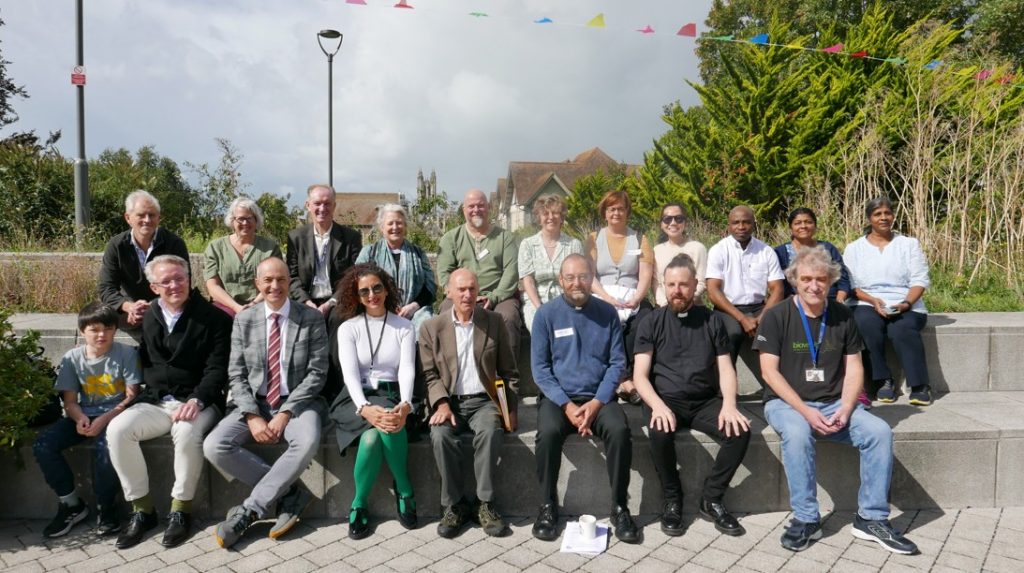
In your first blog about the symposium, ‘Do we need spiritual dimensions to build sustainable futures?’, you reflected on the importance of spirituality within sustainability. What does this mean to you personally, and why do you think it is important in today’s context?
It is easy to fall into mainstream narratives of sustainability such as development and economic growth. However, development and growth can also be associated with the inner dimensions of our relationships with others and with the planet. Our relationships are rich in material and immaterial dimensions, and spiritual dimensions refer to these intangible connections with forces that are greater than ourselves and not easy to define – the intangible ways in which we connect with the universe, with other beings, with nature, with all we care for and love, the ones who are present, the ones who passed. Science and technology are part of the world we constructed but are not all of it.
The Symposium, ‘Sustainability and Spirituality: Building Ecologies of Hope’, invited presenters to contribute to an upcoming book of the same name, under Springer Nature’s ‘World Sustainability Series’ – the leading peer-reviewed book series on sustainability in higher education. What does this title mean to you personally, and have your perspective or feelings about it evolved since the symposium in September?
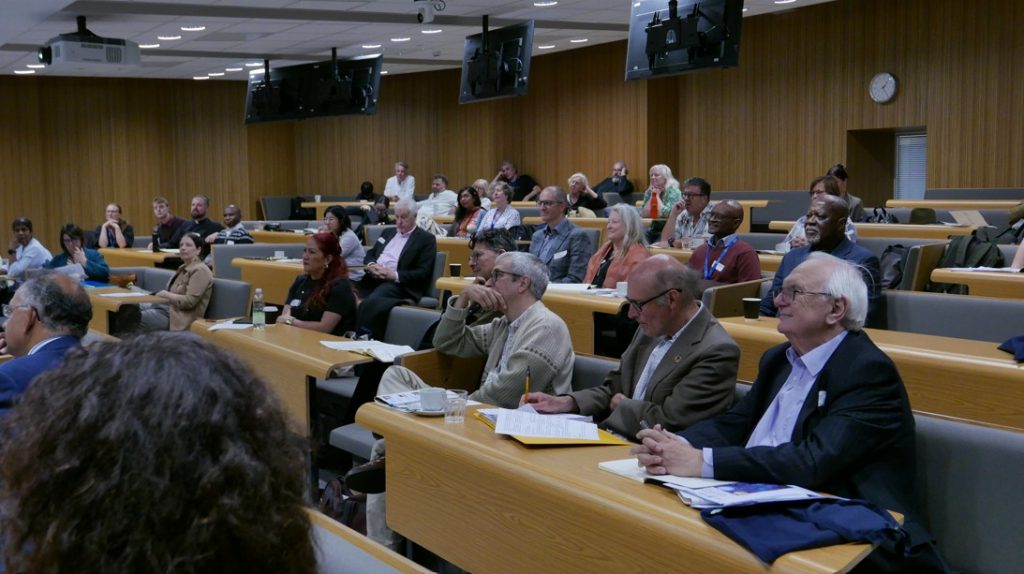
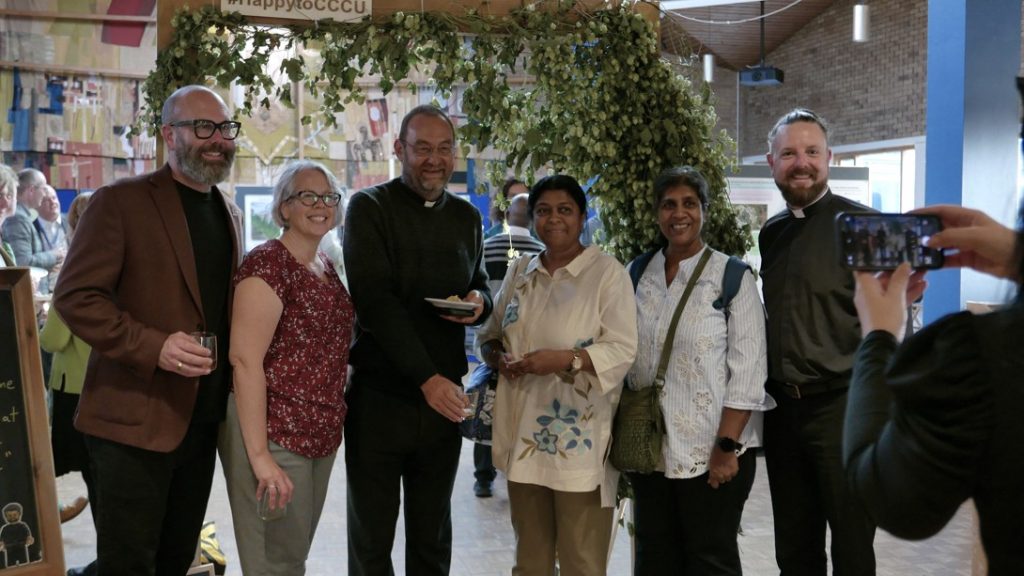
The symposium was a very special occasion indeed. It was very powerful to have people from very diverse backgrounds and from different faith groups, religions and worldviews engaged in stimulating discussions around the common theme of spiritual dimensions of sustainability. It felt like we provided a space that was needed. There was a general sense of happiness, of compassion, of respect and care that was overwhelming in the best possible way. The participants, chairs, keynote speakers and helpers created the perfect atmosphere to foment creative and powerful insights… I got to hear amazing work from colleagues I never met before and now I can’t wait to see the full book and to be able to read at length what each one of them are developing. We managed to reduce the overlapping of sessions but still you miss a lot of what is going on. The book also has work from other colleagues who could not come all the way to the UK to present, so it will be great to get to know more about their work on this theme.
How do you see sustainability and spirituality working together in practice, in your own life or the wider community, and has self-reflection shaped this?
85% of the world’s population is estimated to belong to a faith community. In spite of what I may feel personally, this insight shows how important and influential faith leaders and faith-based education institutions, such as our own Canterbury Christ Church University, may be in shaping a sustainable future. Spirituality can provide powerful inspiration to organise societies towards the common good. Religious and spiritual beliefs tend to overlap in matters of care, respect and responsibility around ethical values- to fight for social and environmental justice, to protect the most vulnerable, to care for the most in need. They also share respect and gratitude for the divine, which involves stewardship towards nature and all creatures and a sense of responsibility in looking after it for the next generations. These are values very much aligned with the way we see sustainable futures, so there are real synergies between spiritual values and the type of development we want to sustain for present and future generations.
What was the candlelit pilgrimage like for you, and what did it come to mean on a personal or symbolic level?
Keith Beasley talked about experiences of transcendence of consciousness in his talk: for me the candlelit pilgrimage was one of those. It created a moment that transcended space, time, centuries, millions of people…
How do the mix of religions at a primarily Christian University contribute to dialogue and inclusivity?
Religion can be a double-edged sword with the power to both reinforce and to challenge marginalisation of individuals and groups due to disability, gender, sexual orientation, belief. At their best, faith-based universities can exemplify love and acceptance, be catalysts for social change, and advocates for inclusion in their own and in the wider community and bring together diverse belief narratives around ethical values of care for people and for nature. Inter faith collaborations provide powerful voices to inspire social and environmental justice. This is a great responsibility that institutions like ours can uphold.
In what ways can interdisciplinary dialogue help people connect and understand deeply with the spiritual and ethical sides of sustainability?
A dialogue between faith traditions and science may provide the best answers to contemporary socio-environmental existential challenges addressed by the SDGs, particularly when practiced at local level. Together these complementary dimensions may inspire holistic change and help operationalise the necessary actions towards sustainable futures.
While the UN SDGs understanding of ‘development’ tend to focus on economic growth, religious and spiritual narratives call for reflection on development discourses, questioning what is to be sustained by the SDGs, favouring decolonial approaches and new models of development, searching for faith guidance to counter market liberalism. It is undeniable that the most vulnerable and marginalised in society will be disproportionately affected by climate change. They are also the ones with the lightest carbon footprint and sustainable lifestyles underpinned by spirituality, often living in highly biodiverse areas, on which their livelihoods depend. Exploring the spiritual dimension may provide an antidote to ruthless exploitation of nature and to consumerism by inspiring values of simplicity, moderation, frugality and re-orienting the connection with environment, society and economy.
Spirituality, Hope and Connection
Dr Consorte-McCrea’s reflections allow us to reflect on our futures, and the type of futures we would like people to experience. Through Dr Consorte-McCrea’s reflections, spirituality, hope and our responsibility to care for others have an important role to play. Through creating space for dialogue and reflection, the Symposium is an important reminder that hope is something we build together.
By Felicity Lindo, SGO Projects Officer


