 Sustainability
 Bethany Climpson
 700
700
Bulls have a bad reputation, but are they just misunderstood? For one thing, they are colourblind, so the whole seeing red and charging thing—untrue. On top of having a major image problem, bulls are victims of widespread maltreatment and cruelty globally, placing them at the centre of many cultural controversies. But why then can’t these animals seem to catch a break?
Since Roman times, bulls have been used as a religious animal sacrifice (known as taurobolium), believed to help achieve a sacred afterlife, and the murder of these creatures is promoted as acceptable due to its deep ties in worldwide cultural practices.
On a family holiday to France many years ago, I saw a bull tied up in a field next to the supermarket petrol station I was waiting in. I watched in terror as the bull then charged towards a man. The man was fine (I think?), but it was a scary sight to witness, even from afar. Later that day, I saw said bull performing in a circus ring, which given my previous encounter with the animal, was little short of terrifying. I tell this story to draw attention to the abusive conditions that wild animals face in captivity.
The use of animals, including bulls, in circuses has been banned since 2020 in the UK, and since 2021 in France. Although these local circuses can no longer perpetrate violence against these animals, maltreatment of bulls has continued elsewhere in the world.
Bull fighting
As a survivor of A-Level Spanish, I have had to think more more about the controversy surrounding the use of bulls in cultural events and festivals than most people I know, but in short, it’s a highly disputed issue.
Bull fighting is legal in Spain, France, Portugal, USA, and many South American countries, due to its cultural relevance and use in festivities. Especially in Spain, it is considered to be a traditional art form. In Spanish bullfights, which are often promoted to tourists as a must-see activity, the bull is almost always killed. Its death is violent and brutal. Matadors stab the bull at different points in the back to cause blood loss, making it easier to control and kill. The bull is then stabbed in the back of the neck to be murdered; however, this move is often unsuccessful, meaning it is stabbed repeatedly, prolonging its death.
And if you thought that the risk was only directed at the bull, you would be wrong – horses used in the fights are also at high risk of injury, and matador deaths, although increasingly uncommon, are not unheard of either.

Despite deep cultural significance of bullfighting in Spain, it is banned in some regions, including Catalonia and the Canary Islands, only further demonstrating that this is a practice that needs to end. Other countries, such as France, Portugal, the USA, and Ecuador operate ‘bloodless bullfights’, in which the bull isn’t killed, however the bulls are still subjected to abusive conditions and high levels of stress.
The spectacle of animal abuse continues even after the death of the bull, with the meat being sold after fights. Although it is considered a delicacy, high stress levels in the blood of the animal when it dies means that the many people consider the meat unsafe for consumption, meaning the animal has died entirely for entertainment purposes.
Bull running
It’s a bad day to be a bull in Spain, as many bulls are also subjected to the running of the bulls during the San Fermin festival in Pamplona. This event involves bulls running through crowded streets alongside people, posing a high risk to both the animals and the participants, which in many cases are tourists as this event is promoted by many holiday companies.
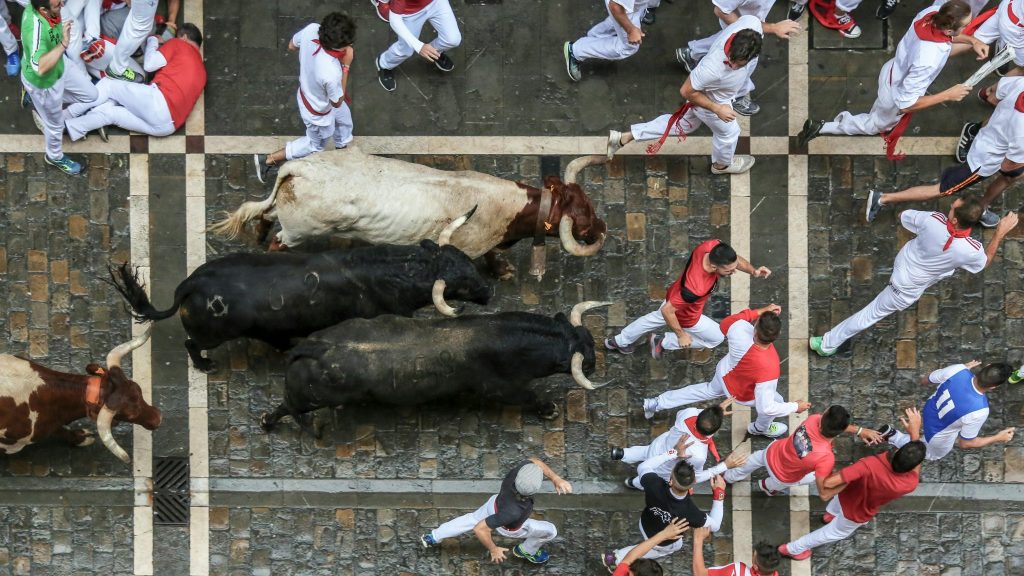
The event is highly dangerous, and the bulls are frequently injured when running. And if the bull run was not bad enough already, the bulls are then used in bull fights throughout the festival.
Rodeos
You’d think then, outside of Spain that the treatment of bulls can only improve. Across the pond in the USA, cattle farming is a great staple of the American economy. Vast open lands provide an ideal home for cows, and ethical consumption of meat is highly achievable in many states.
A country with such a rich history tied to cattle farming has created the phenomenon of cowboys. And of course, with cowboys comes rodeos.
Rodeos result in the maltreatment of horses, calves, and once again, bulls. The use of hotshots (a type of electric prod used on the bull to provoke aggressive behaviour), metal spurs, and bucking straps on the bulls create a spectacle for attendees to witness, with no regard for the harm inflicted on the animals. In some cases, bulls are even doped so that they become stronger, and more aggressive.
Legally, animals can be transported for up to 24 hours without food or water when travelling to rodeo events. This already should be considered an act of abuse and neglect. Further to this, fines for breaking this rule are often much less than the potential reward money that can be won at a rodeo, and so cowboys are willing to risk the maltreatment of a bull even more so.
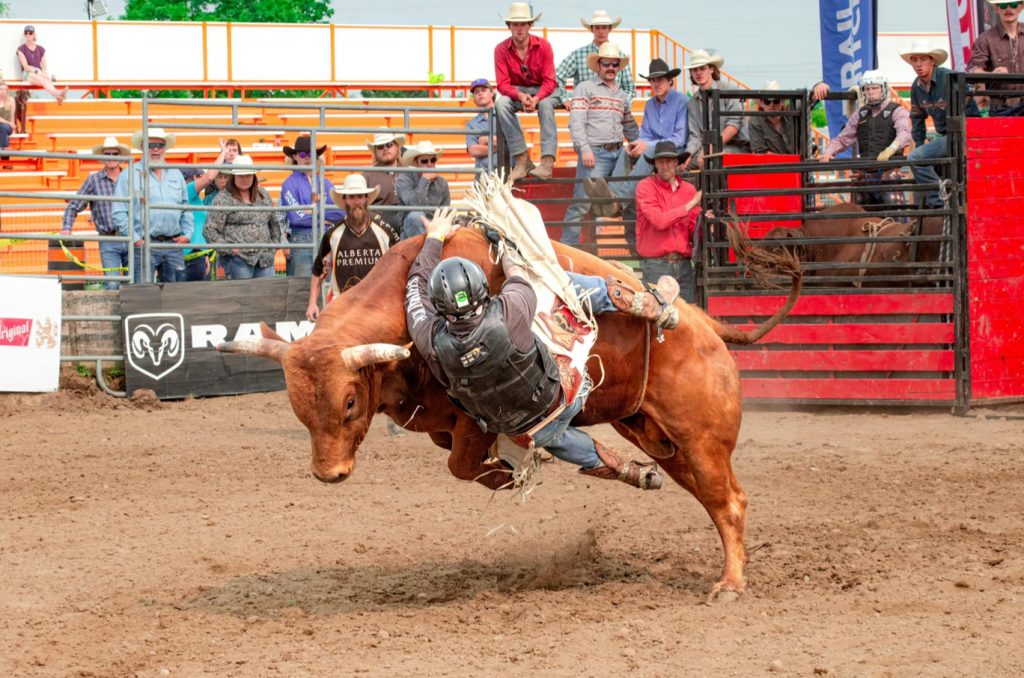
I have actually been to a rodeo and being a vegetarian, I hate to admit that I can understand the appeal. In vast and desolate areas, the events can act as a way to bring together the community and unite the people, as well as creating a sense of patriotism. However, this does not negate the cruel treatment of the animals, and therefore, steps should be taken to consider how harmful treatment towards animals at rodeos could be reduced, so that this tradition can become more sustainable for both the attendees, and the animals involved.
So, what can you actually do to help fight the maltreatment of bulls worldwide? Never attend a bullfight or any event in which significant harm is being perpetrated against a bull and consider the sustainability of events which involve animals.
Simply being educated on animal abuse helps to raise awareness, and to work towards a more sustainable future, so just you taking the time to read these blogs and checking out the links helps work towards change.
So, help the bulls out, as their image clearly needs rethinking to move away from one of violence and towards one of sympathy.
By Emilia Hollingdale, SGO Project Officer


