 Sustainability
 Bethany Climpson
 454
454
In the lead up to Christmas, with the nights getting longer and the days getting darker, we see a sharp increase in the environmental nightmare that is glitter. Everywhere you turn, from tinsel to wrapping paper, cards to jumpers, these tiny shards of aesthetically pleasing plastic have attached themselves to the image of Christmas festivities.
Ask anyone who has ever been near something sparkly, glitter just keeps on coming back to haunt you, year on year, no matter how many attempts you make to clean it up. Here in lies the problem, just like the glitter that you are still finding in the carpet, and can’t even remember where it came from originally, glitter gets everywhere in the world as well.
All glitz and glam
Glitter, usually made from plastic and aluminium, is a microplastic. Essentially, microplastics, including glitter, are a fish’s worst enemy, due to the significant harm they cause to the ecology of rivers, lakes, and the ocean. Between 9.25m to 15.87m tons of microplastics are embedded in the sea floor, and they have even been found in the bellies of whales.
This issue has become increasingly apparent in recent years. Traditional glass baubles have been ditched in favour of the modern monstrosity that is plastic glitter on a plastic ball, plastic ‘maxing’ if you will. Even old tinsel used to be made from metal, unlike today where it has become a PVC film with a metallic finish, meaning it takes roughly 450 years to decompose.
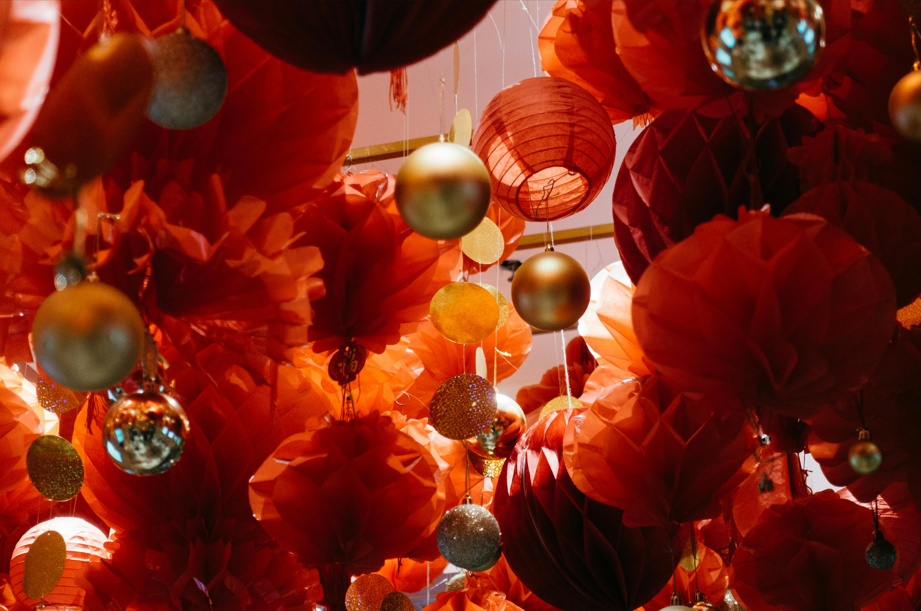
Image description: a series of orange and red hanging paper decorations
A sparkly scapegoat?
In actuality, glitter only makes up a small percentage of the total microplastics damaging our world. On its own, it is nowhere near the biggest issue our planet is facing, but more an easy target for blame. But this does not mean it is off the hook, in fact it actually exacerbates many other problems during the festive period, especially waste.
Around the holiday season, waste increases significantly, much of which is coated in these lethal sparkles. Wrapping paper, cards and Christmas crackers, which would otherwise be recyclable, become tainted with the glittery curse, meaning more unrecyclable waste. As well as being covered with glitter, these items, which if where made of simply card and paper would be easily recyclable, are frequently coated with plastic, making them impossible to give a new life after their short term stunt during the festive period.
Even your clothes fall victim to this sparkly curse, with Christmas jumpers usually being made from polyester, and covered with glitter. And let’s be realistic here, how many times are you actually going to wear that Rudolph jumper outside of the festive season before throwing it out? Not only are you contributing to textile waste, but you’re also chucking some shimmer on there as salt (or glitter?) in the wound that is overconsumption, waste, and environmental damage.
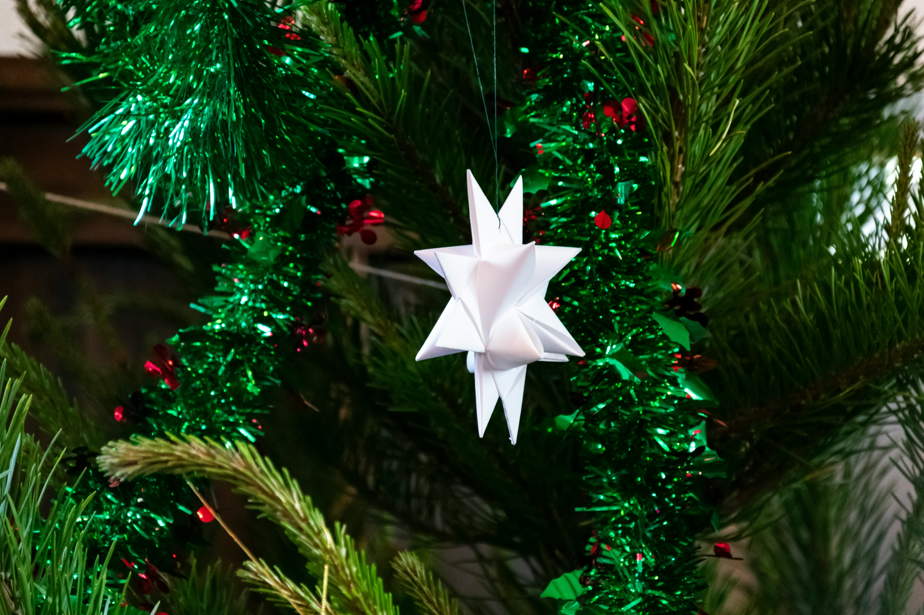
Image description: a paper decoration in a christmas tree, surrounded by green tinsel.
Greener ways to feel festive
So how can we keep Christmas shimmering without harming the environment? Well for one, reusing decorations year after year essentially prevents any waste, and although tinsel is an environmental nightmare disguised with a pretty glimmer, it is also very easily reusable. Using it year after year can be a great investment to reduce waste, and a cheaper way to add sparkle when compared to fairly lights.
Or perhaps you want to try avoiding the plastics altogether this holiday season. Try switching to paper decorations, such as paper chains and paper tinsel. You could try your hand at origami, with plenty of tutorials on how to make paper Christmas baubles available online. My family have been using some of the same paper decorations since the 1970s, and it gives the house a nostalgic and vintage touch, helping to get into the festive feeling. Even ribbons can make a great alternative and be repurposed afterwards to wrap presents.
Perhaps you are feeling particularly crafty in which case you could attempt to make a garland using dried oranges, making your decorations compostable when you have finished with them. Try incorporating cinnamon sticks to give your home that signature festive smell.
So, your Christmas can still be full of festive joy and light, but without damaging the environment in the process. Get yourself on the planet’s nice list, and skip the glitter this holiday season, because after all, the fish deserve a great Christmas too.
By Emilia Hollingdale, SGO Projects Officer


