 Sustainability
 Bethany Climpson
 603
603
On Wednesday 1st October, I joined the monthly Cultural Conversations session led by Professor Adrian Holliday and Dina Norris.
To be honest, this is the kind of event I probably would not have joined before. I used to think such discussions were more relevant for people studying culture, language, or education directly. But ever since taking on the role of Student Green Officer, I feel a stronger sense of mission. Sustainability is my role, and I wanted to see how a conversation about culture might connect to it.
And it did—surprisingly well.
🌱 What I Took Away
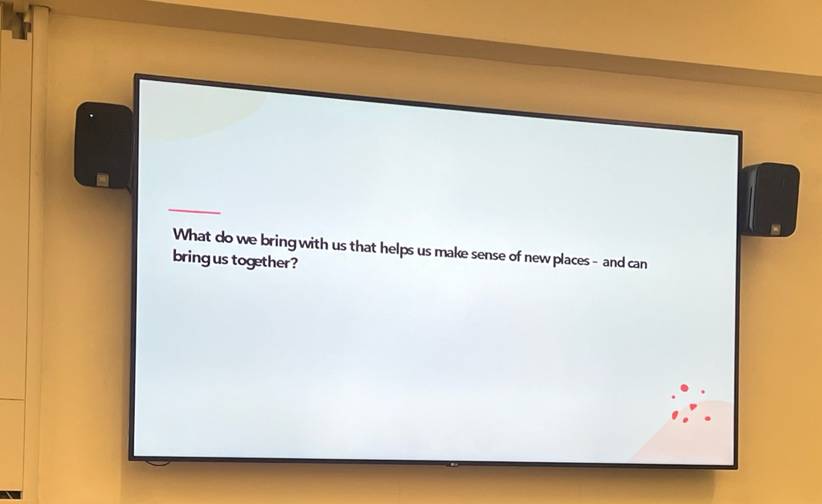
We discussed this question for an hour and a half: what do we bring with us that helps us make sense of new places -and can bring us together? Professor Holliday reminded us that our past experiences often help us navigate new situations. Entering primary school, for example, was already a kind of “intercultural moment”—learning to belong in a new group, figuring out unfamiliar rules, and adjusting to new expectations.
One story that stood out was about a Japanese novel mentioned by Professor Adrian Holliday: a child imagines themselves as an alien to cope with the strangeness of school life. This really resonated with me. When I was little, I often imagined a superhero coming to rescue me. Psychologists call this kind of daydream a “superhero fantasy”—a way children cope with the unknown by creating protective figures. Looking back, I realise that this kind of imagination probably is also a form of sustainability: it helps us carry forward resilience and hope, equipping us to survive and adapt when the world feels overwhelming.
Another participant shared a personal story: when she emailed Professor Holliday with academic questions, his reply was not only about theory. When he heard she had come here with two children, he added a list of fun places she could visit with them. That small gesture showed empathy, and to her, it meant: “someone sees me as a whole person.”
She also recalled the first time she took her children to school in the UK. She was nervous but said nothing. Another teacher, however, noticed her worry through body language and came over to reassure her: “Don’t worry, leave the children with us.” That one sentence immediately eased her fears. It reminded me that empathy is not just verbal—body language can also sustain trust.
Later in the session, some participants left the room early. Nobody questioned it, but the teacher who had brought them explained: sometimes people need to step out quickly because their family’s internet connection back home may only be available for a few minutes—they need to say a brief hello to loved ones. Others pointed out it could also be a language barrier. Hearing this, I reflected on my previous teaching experiences. When students leave the classroom early, my instinct is often to worry: “Did I do something wrong?” This conversation reminded me that understanding goes both ways—sometimes what looks like disengagement is really about life circumstances we cannot see.
🌍 Rethinking Sustainability
For many of us, the word “sustainability” first brings to mind recycling bins, solar panels, or carbon footprints. These are, of course, crucial. But after this session, I realised something broader:
👉 Sustainability is also about people.
It is about sustaining an inclusive environment where everyone—international students, staff, parents, or newcomers—can feel at home and be recognised beyond their labels.
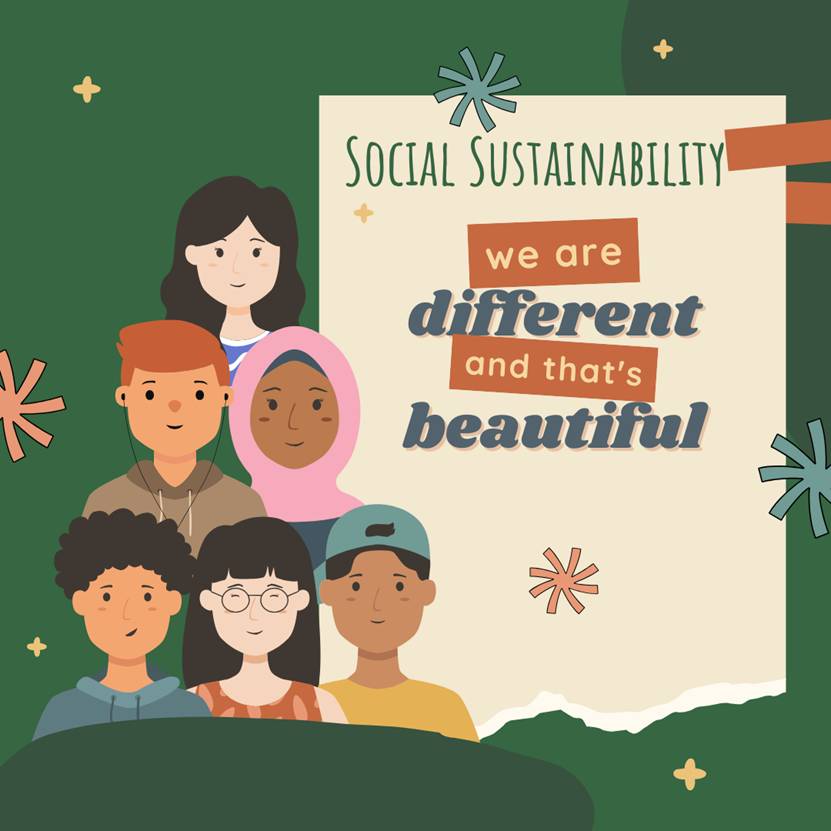
In fact, the United Nations uses the term Social Sustainability to describe this dimension: building fairness, inclusion, diversity, and community cohesion. From this perspective, culture, empathy, and belonging are not side issues—they are essential resources that make our university truly sustainable. Just as environmental sustainability protects ecosystems, social sustainability protects the invisible ecosystems of relationships, respect, and trust.
💡 Tips for More Sustainable Conversations
- Avoid “where are you really from” questions. They may seem harmless, but they often reduce people to stereotypes or suggest they don’t belong.
- Don’t turn cultural differences into competitions. Instead of saying “our food is healthier” or “our education system is better,” try asking: “What do you enjoy most about food back home?” or “What surprised you about studying here?”
- Be mindful of language hierarchy. English may be the shared medium, but avoid framing one language as “superior.” Multilingualism itself is a resource.
- Respect personal boundaries. Topics such as family, finances, or faith can be sensitive—especially early on. Let people choose how much they want to share.
- Pay attention to body language. A kind gesture or reassuring word, like the teacher who eased a parent’s worry, can communicate care more strongly than explanations.
- Prioritise understanding over assumption. Sometimes what looks like disengagement or difference is really about life circumstances we cannot see. It is better to listen, check in, and communicate rather than speculate.
- Practice cultural humility. Rather than assuming you already understand someone’s background, approach differences with genuine curiosity and the willingness to learn.
🌟 A Broader Reflection
Leaving the session, I felt that sustainability is not only about what we save, but also about what we create together: spaces of trust, belonging, and respect. For me, this was a turning point. As a Student Green Officer, I now see my role as not just advocating for recycling or energy reduction, but also contributing to social sustainability—supporting an environment where cultural diversity and human empathy are sustained just as carefully as our natural resources.
Because in the end, a sustainable university is one where both the planet and its people can thrive.
By Huiwen Wang, SGO Project Officer


