 Library
 Michelle Crowther
 529
529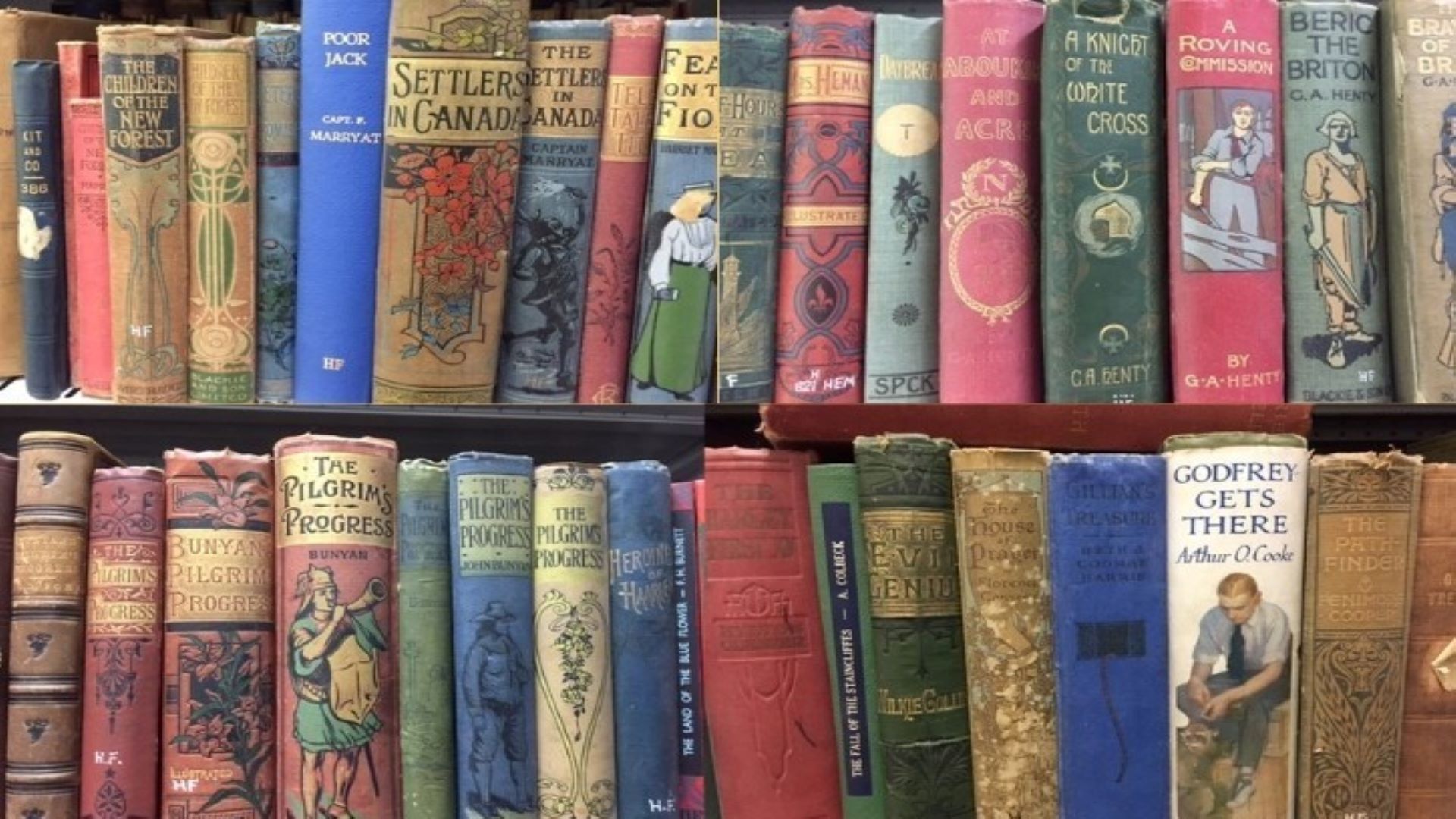
When second year English literature student, Rosie Bond, came to work in the archives and special collections, she was enchanted by the historic children’s fiction collection. So much so, that she created a display about some of her favourite authors. Read on to find out more about the fairy tales and legends she found.
In her preface to Legends of Greece & Rome (1907) Grace H. Kupfer says “Almost all boys and girls like fairy tales” (5). Personally, I can agree with this statement, and I would go as far as to say that the majority of people can too. Even though fairy tales have certainly changed over the last 100 years, the younger generations still find excitement and adventure in some of the classics. Throughout my research I have discovered many unheard-of fairy tales, but I will save you the brain ache of following my train of thought and discuss the well-known and beloved stories. I hope to broaden your understanding of fairy tales and how they are integrated throughout modern media and different cultures.
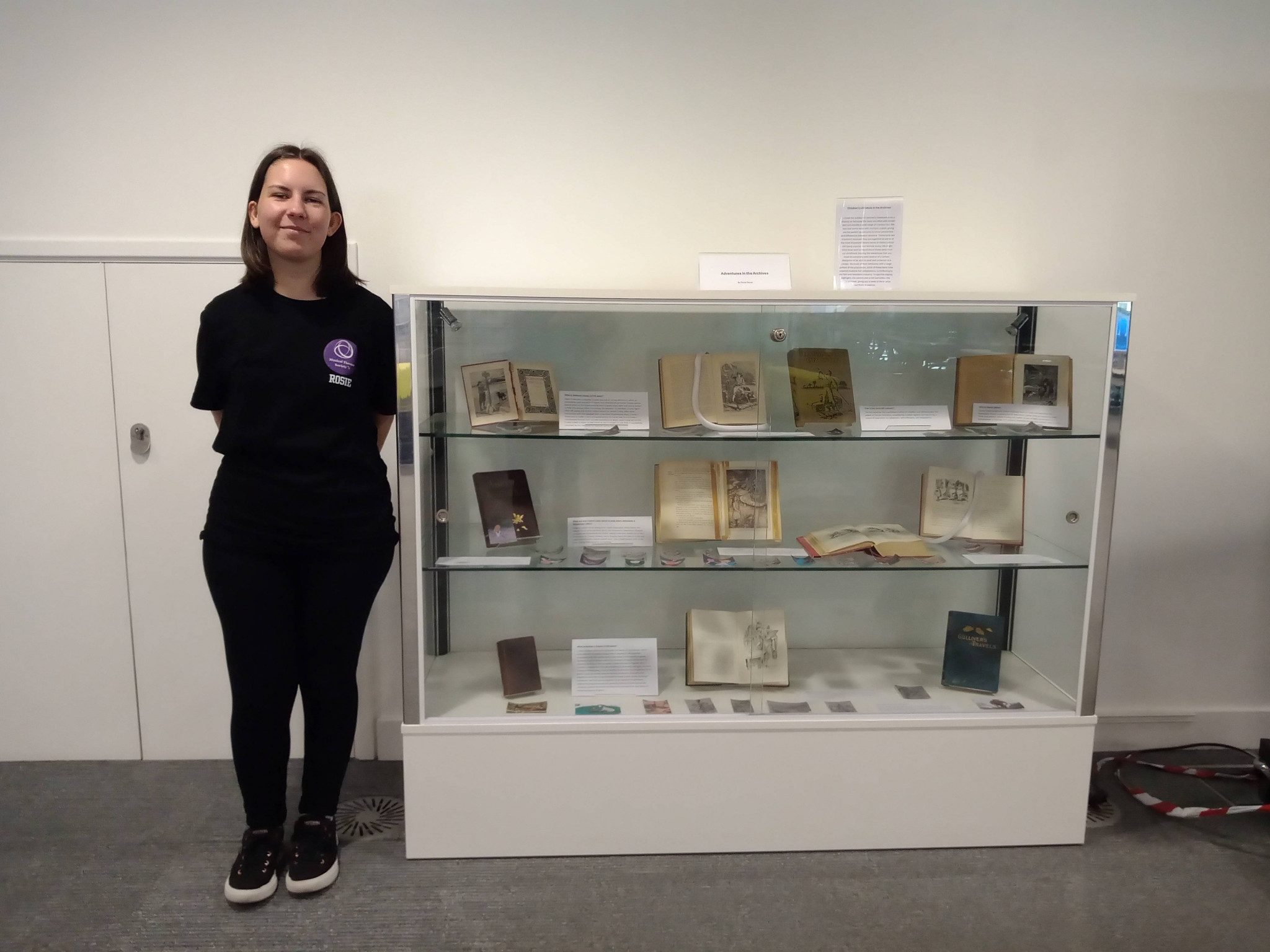
Rosie Bond with her display ‘Adventures in the Archives’. Photograph: Michelle Crowther
We might start to consider what made fairy tales popular: the fantasy adventures, the idea of magic, the concept of a happily ever after? Well, the answers are endless. Fairy tale’s tackle timeless themes like that of love (whether it be between parent and child or husband and wife), courage and core morals. Their excitement and sense of adventure encourage the use of imagination thereby improving young children’s creative influence. It is, after all, the idea of having English folklore and mythology that inspired J.R.R Tolkien to famously write The Hobbit. Kupfer also argues that mythology stories, and, by extension, fairy tales as being “an inseparable part of art and literature” (5). This emphasises how traditional fairy tales, folklore legends, and myths are an integral part of our culture, displaying the values and morals of the time. Of course, a lot of these values and morals are extremely outdated by today’s standards but without the presentation of such, would we have ever realised or challenged these views to form our own?
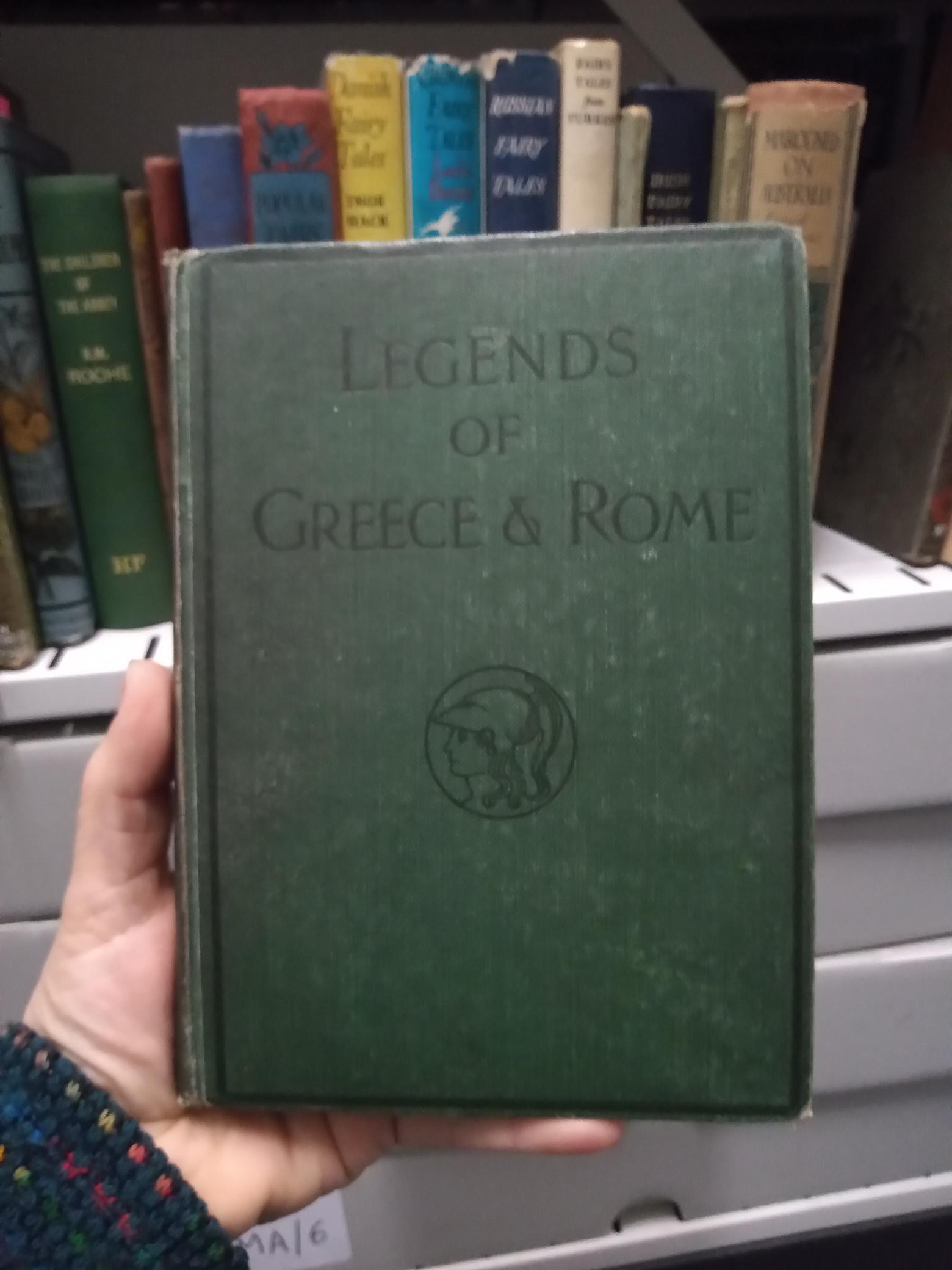
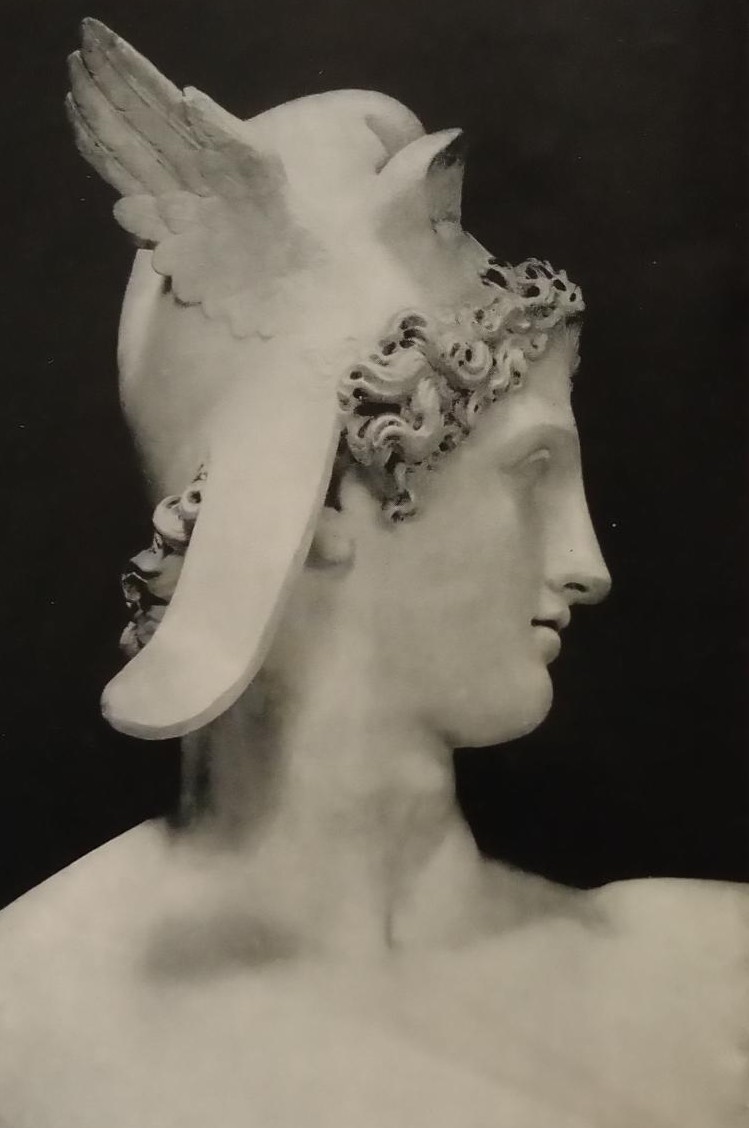
On the left and centre: Legends of Greece & Rome (1907) by Grace H. Kupfer is illustrated with photographs of classical Greek and Roman statues, for example this image of Perseus by Canova. Photographs: Rosie Bond and Michelle Crowther.
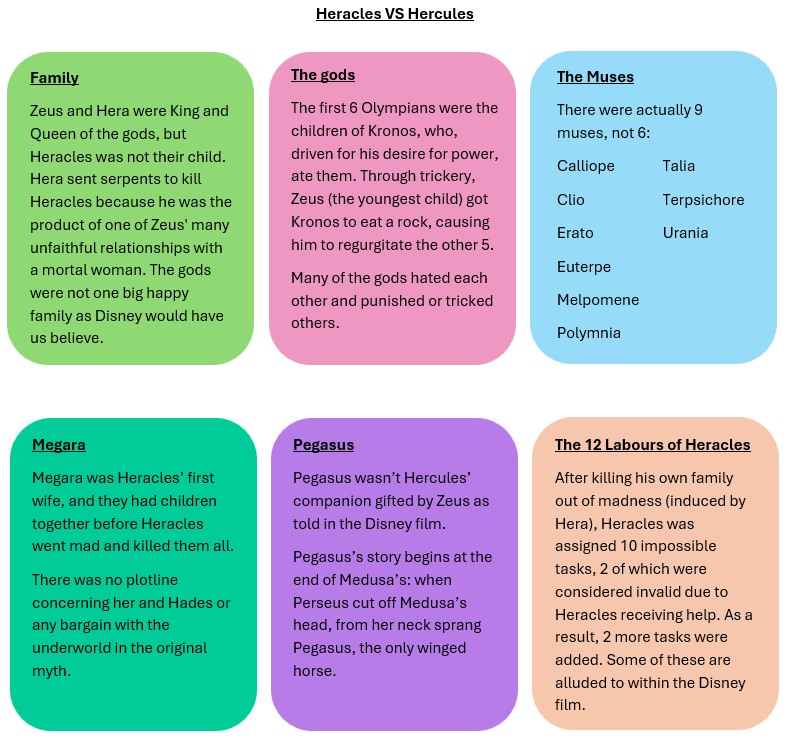
Fairy tales are perhaps known for their inclusion of the supernatural, through characters such as witches and giants to prophecies and talking frogs. Such ideas are also used throughout Greek mythology with gods and magic. There are, however, a few key differences. Fairy tales tend to base their supernatural elements on the evil and manipulative whereas mythology is more mystical and awe-inspiring. Several popular tales include witches or witch-like figures, like Rapunzel or Sleeping Beauty. These characters are a caution to children that not everything can be taken at face value and that they should always be careful about where they place their trust. The gods in Greek myths are usually depicted as both vengeful and proud but also generous and nurturing. Both kinds of stories are still told today through the most common platform: Disney films. Things tend to get a little mixed up when they become disneyfied. For example, according to the Household Stories from the collection of the brothers Grimm (1822) translated from the German by Lucy Crane, Rapunzel’s parents are not the King and Queen, but, were regular members of society who just happened to live next door to a witch. Likewise, in the 1997 musical fantasy comedy film Hercules, much of the original Greek myth is changed such as Hercules’ name (the Greek form is Heracles), Meg’s role, Hercules’ parentage, the presentation of the gods and Hercules’ story. Read my Heracles vs Hercules analysis below:
Some of our most popular and familiar tales may also be recognised in other cultures. For example, the popular classic of Cinderella (or Aschenputtel as it is known in Household Stories) features distinct descriptions of mistreatment which can also be seen in the story of Vassilissa the Beautiful (1855-67). Whilst certain parallels can be drawn between the two cultures, the Russian tale (as told in Russian Fairy Tales (1957) by Edith Almedingen) also has some individuality with the inclusion of the famed Russian witch, Baba Yaga. The fairy tale tells the story of a young girl who, aided by a magical doll, completes various impossible tasks set by her unkind stepmother and Baba Yaga. She finally catches the attention of the Tsar who marries her.
I would encourage you to return to the fairy tales of your childhood and have a magical adventure in the Historical Children’s Fiction Collection – just as I have!
The Library wishes to thank Rosie for using her subject knowledge to explore the collection in detail. If you would like to visit the special collections and archives, please book an appointment via the Library Point.
#EnglishCreates.


