 Politics
 Kamalakhanim Aghazada
 993
993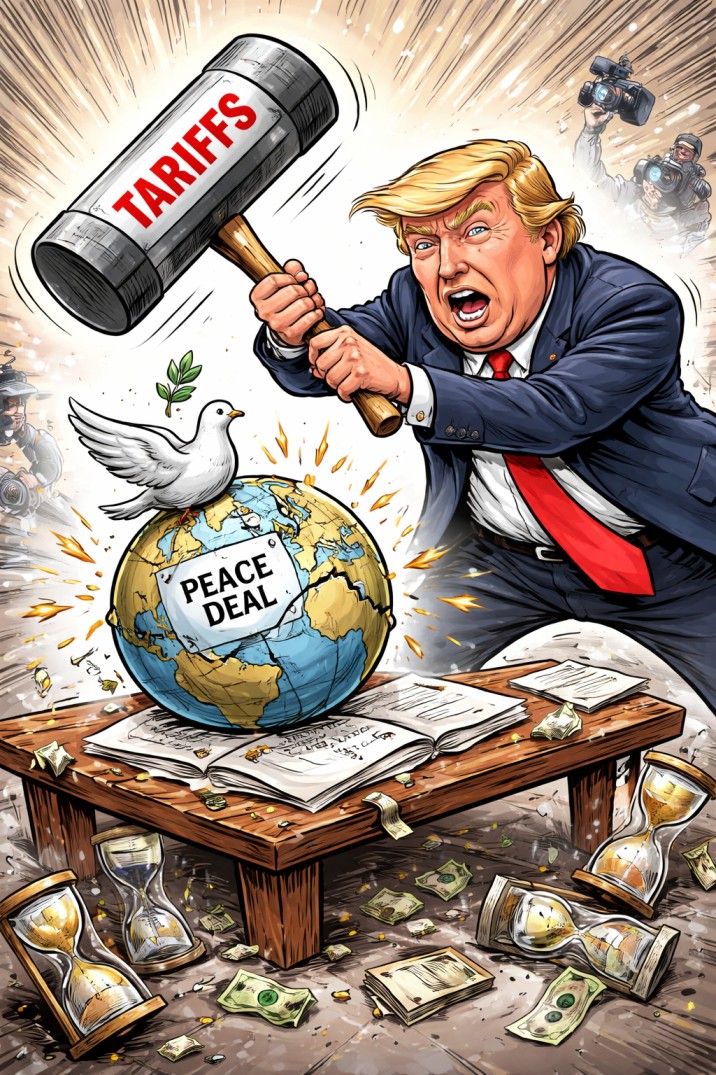
Kamala Aghazada, a PhD researcher in Politics and International Relations, reflects on what populism means for peacemaking and how it shapes the understanding of peace.
We usually think of populism as a domestic force, something tied to rhetoric, elections, or national policy. But it does not stop at the border. It is also reshaping how states approach peace and conflict. What emerges is not just a different style of peacemaking, but a different understanding of what peace is.
Contemporary peacemaking relies on expertise, long-term engagement, and sustained negotiation involving mediators and international institutions. Populist leaders push back against this model. Diplomats and experts are dismissed, while ‘outsider’ status is framed as an advantage. In practice, this often means expertise is sidelined in favour of more overtly political approaches.
Peace processes are no longer treated as complex efforts requiring careful management, but as problems to be ‘solved’ through decisive, top-down leadership. The focus shifts from process to outcome, specifically to visible agreements or ‘deals’ that can be politically owned and presented as personal successes.
The Serbia–Kosovo agreements brokered in Washington in 2020 are a clear example. Framed by Donald Trump as a ‘major breakthrough’, the focus was narrowed to economic cooperation and infrastructure, effectively bypassing the central political dispute over Kosovo’s status. The result was a set of separate, non-binding commitments – more about optics than substance.
As US envoy Richard Grenell put it, the agreement succeeded precisely because it avoided the ‘typical political’ approach and ignored what he described as ‘all of the really smart people at NGOs and think tanks’ in Washington. This is the logic of populist peacemaking at play: expertise is not just sidelined, but treated as part of the problem, while quick, visible deals are framed as proof of success. The deal was also used to advance unrelated US priorities, including embassy relocations to Jerusalem and the designation of Hezbollah as a terrorist organisation.
This logic runs through other cases. In interstate conflicts, peace is increasingly pursued through transactional bargaining rather than negotiation. Tariffs, diplomatic recognition, arms deals, and investment are exchanged to secure agreements. These arrangements can produce quick, high-profile outcomes, but they often sidestep the core disputes at the heart of the conflict.
The Abraham Accords follow this pattern. While widely presented as a diplomatic success, they relied on clear trade-offs: US recognition of Moroccan sovereignty over Western Sahara, for instance, was exchanged for normalisation with Israel. The agreements reshaped regional alignments, but left the Israeli–Palestinian conflict largely untouched.
Recent developments in the South Caucasus point in a similar direction. Proposals framed as steps towards peace between Armenia and Azerbaijan have centred on transit corridors and external investment, including initiatives such as the ‘Trump Route for International Peace and Prosperity’ (TRIPP). Yet core issues and unresolved grievances remain in place, which highlights the limits of agreement-focused approaches.
Across these cases, peace takes on a transactional character. It becomes something to be negotiated through exchange rather than built through inclusion. Complex conflicts are reduced to agreements between a small circle of leaders, while broader social and political dynamics are pushed aside.
This logic is not limited to interstate diplomacy; it also reshapes how ‘peace’ is defined within states. In domestic contexts, where populism thrives on ‘us versus them’ divisions, peace is often reframed as control over internal ‘others’ rather than the resolution of underlying tensions.
A related dynamic is visible in India, where Hindu nationalist populism has deepened divisions between Hindus and Muslims. Under Narendra Modi, political rhetoric has increasingly framed Muslims as outsiders, drawing on historical grievances and religious identity to reinforce an ‘us versus them’ narrative. This has been accompanied by policies and practices that marginalise Muslim communities and normalise hostility towards them. Rather than resolving tensions, this approach redefines ‘peace’ in terms of order and majoritarian control, while leaving the underlying drivers of conflict intact or even intensified.
The result is a shift toward what scholars describe as negative peace, the absence of immediate violence, rather than positive peace, which addresses the underlying causes of conflict. Agreements may reduce tensions in the short term, but without addressing root causes, they remain fragile.
For scholars and practitioners, this matters. If peace is reduced to deals between (often male) leaders, enforced through leverage and detached from social realities, its foundations are weak. Populists are not simply inconsistent when they promise peace while pursuing conflict elsewhere. They are advancing a different model altogether, one that prioritises visibility over substance and short-term calm over long-term transformation.
And that kind of peace is unlikely to hold.
Kamala Aghazada is a second-year PhD student at Canterbury Christ Church University, researching right-wing populism in the UK. Her current work focuses on populist radical right parties and their impact on social policy, with a particular interest in welfare chauvinism and how these ideas are mainstreamed and institutionalised.


