 Politics
 Laura Cashman
 12
12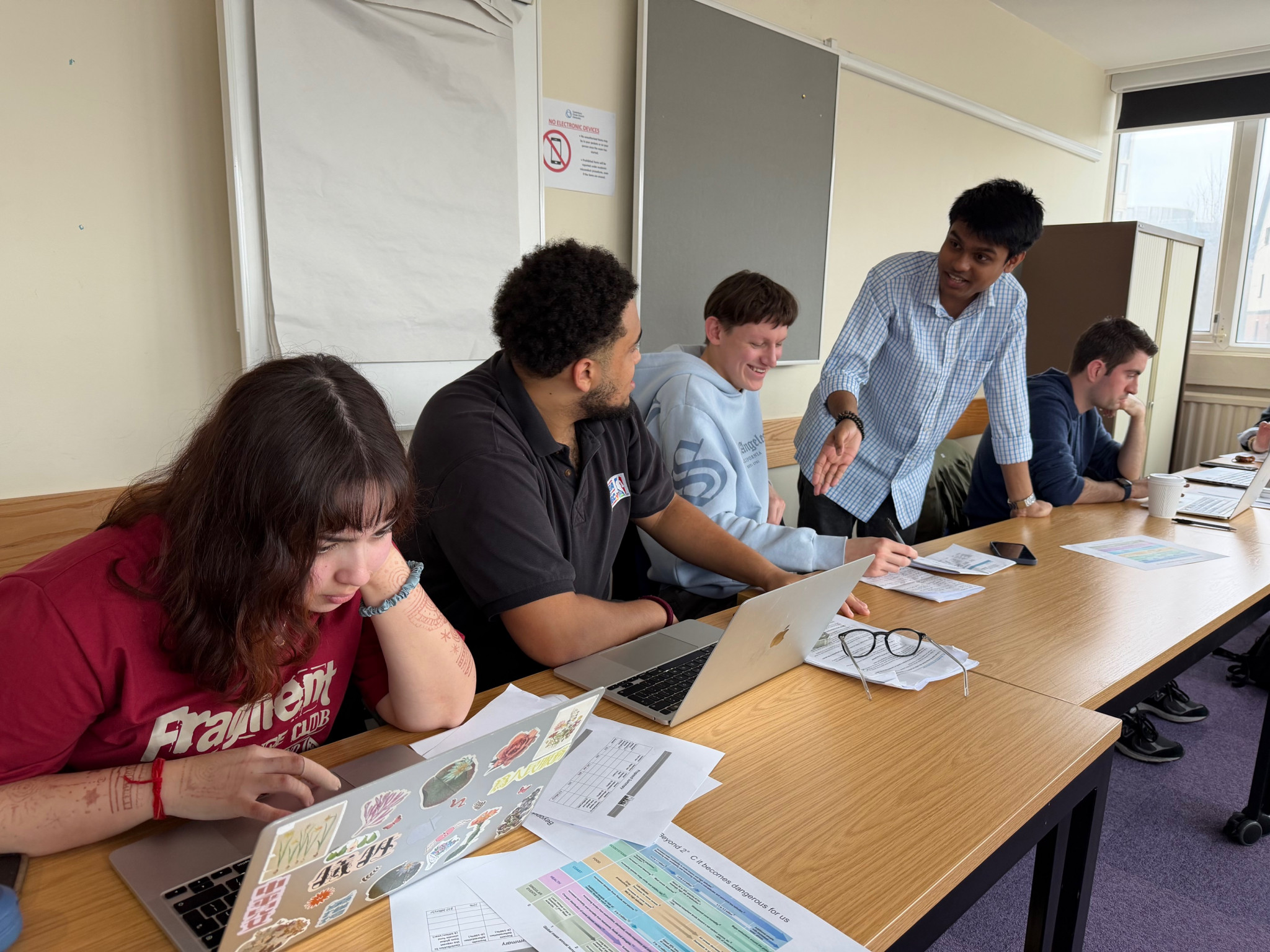
The study of global diplomacy often remains confined to lectures and textbooks, but what happens when students step into the roles of real-world negotiators?
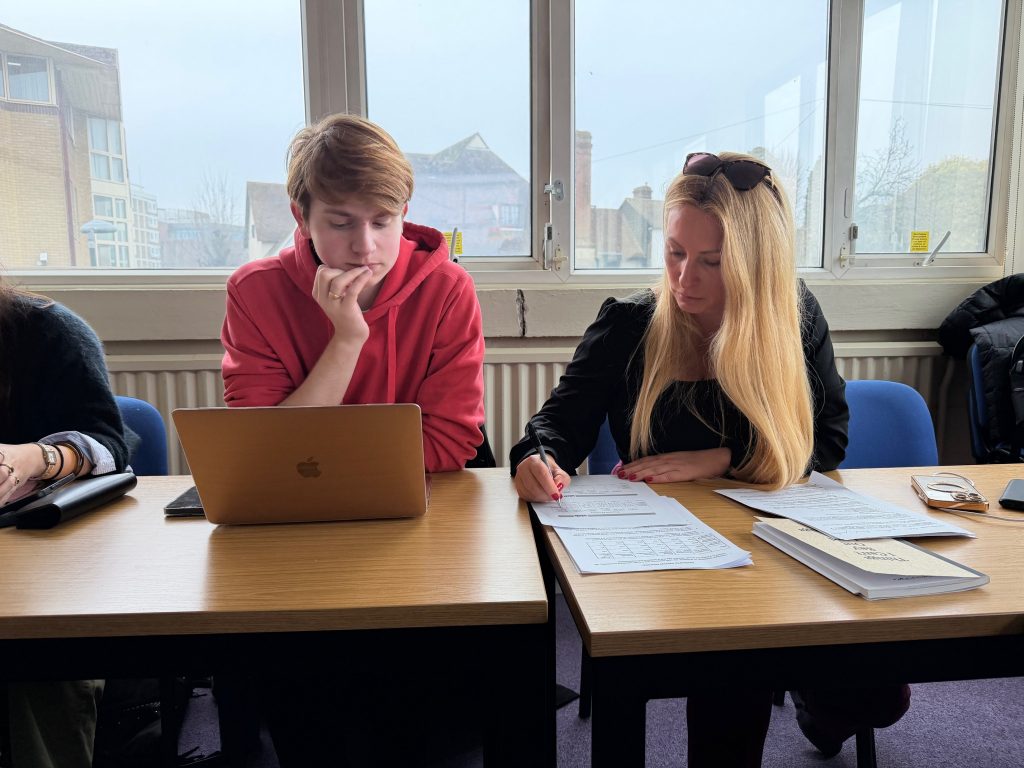
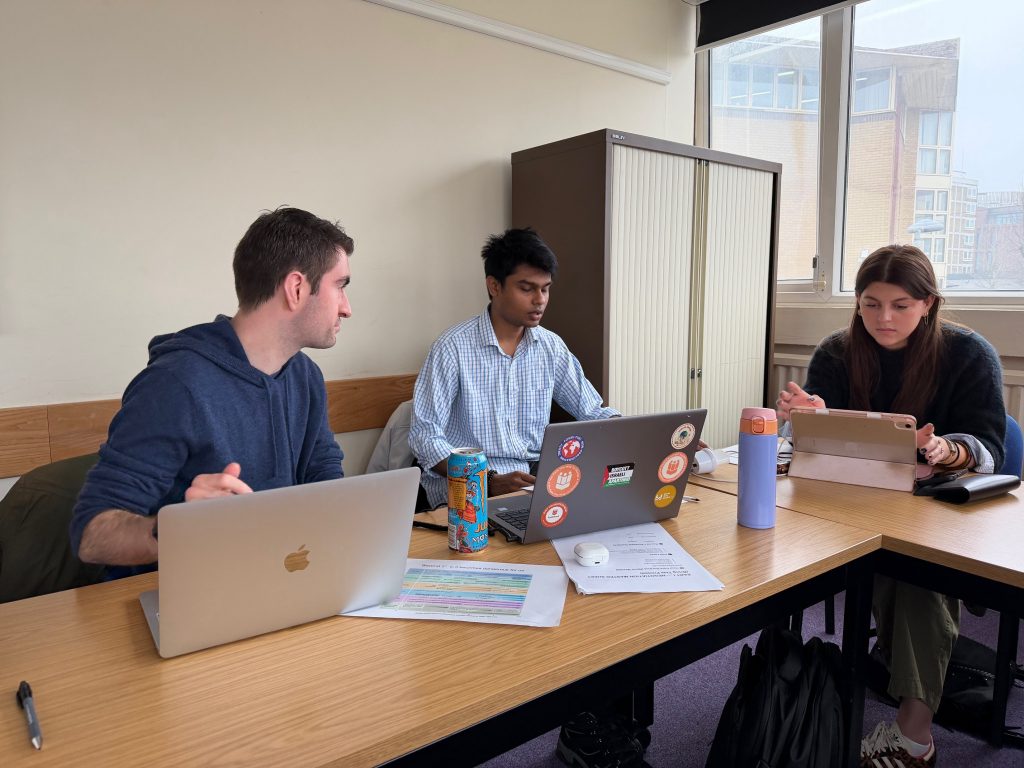
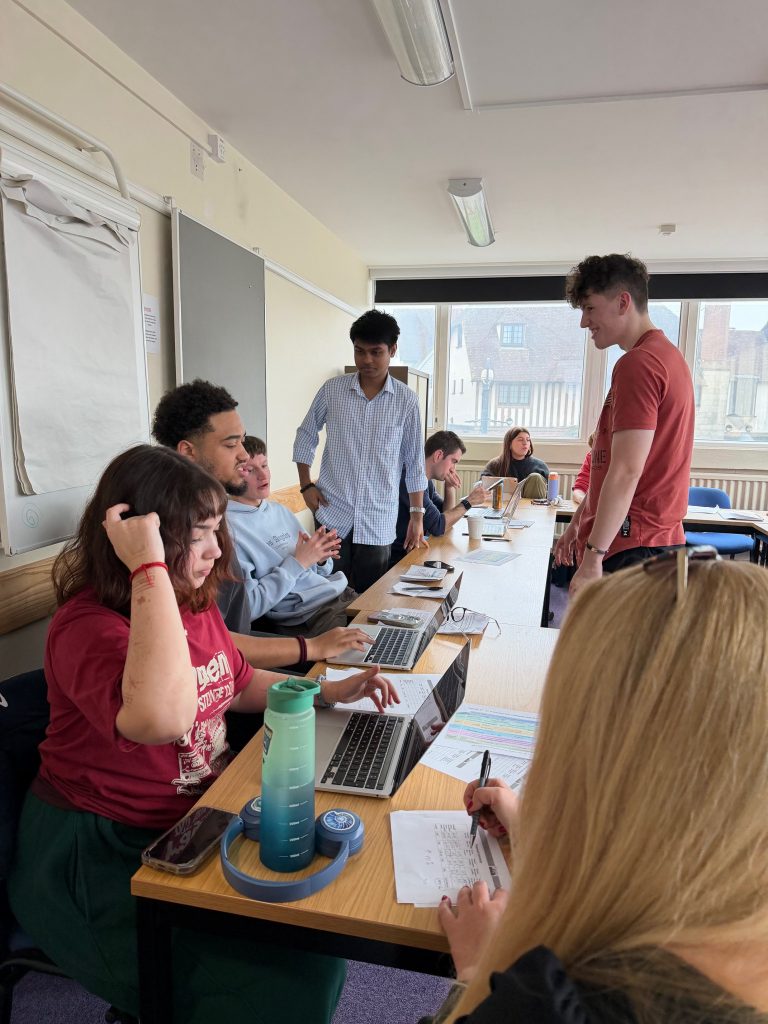
A recent climate summit simulation, as part of Dr Muzaffer Kutlay’s Global Governance and Diplomacy module, brought these challenges to life, offering students a dynamic experience of international climate negotiations.
Through role-play, debate and strategic bargaining, the Level 5 students engaged with the complexities of balancing national interests, environmental urgency and global cooperation. The reflections below, written by two students, Olga Harrison and Juliette Stone, provide valuable insight into both the dynamics of the simulation and the personal and academic growth it inspired.
Understanding Diplomatic Complexity – Olga’s Reflection
By Olga Harrison, Year 2 BSc (Hons) Politics and International Relations
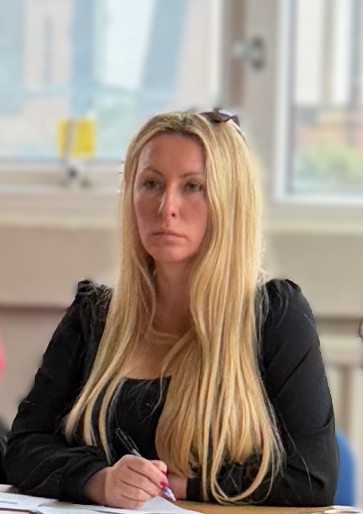
“Opportunities multiply as they are seized.” – Sun Tzu
CCCU’s Global Governance and Diplomacy module recently ran a climate negotiation simulation that gave students a front-row seat to the realities of global climate diplomacy. What quickly became clear was that successful negotiations depend on far more than passion or powerful statements. They require strategy, timing, and a willingness to compromise.
The summit began with opening statements from each delegation before moving into two rounds of lively negotiations. Students represented different global blocs, including Developed Nations (EU, USA, UK, Russia, etc), Developing Nations A (China, India, Indonesia South Africa, Malaysia, etc), Developing Nations B (over 100 nations from Southeastern Asia, Central and South America, small island nations, etc), climate activists group, a media representative and the fossil fuel lobby.
As a rule, climate activists delivered one of the strongest and most powerful opening speeches of the summit, highlighting the urgency of climate action. However, during negotiations they chose a quieter role as an observer and did not actively push for commitments from other blocs.
Another surprising development came from the fossil fuel lobby, which committed $100 billion in climate funding at the very beginning of the negotiations without asking for anything in return. While generous, this move also sparked debate about negotiation strategy, as such commitments are often used as leverage to secure certain benefits, such as gradual policy changes.
Developing Nations A, delivered an incredibly balanced, reasonable, and evidence-based statement, acknowledging their current responsibility for high emissions level and committing to play their part in reducing the greenhouse gas emissions, while also highlighting the historical responsibility of Developed Nations.
Perhaps the most intense discussions involved Developing Nations B, representing countries already experiencing some of the harshest impacts of climate change. These delegations strongly highlighted the struggles faced by their populations. However, negotiations stalled when discussions focused more on historical grievances than on securing the funding and discussing commitments and financial support that had been placed on the table.
Meanwhile, Developed Nations took a more strategic approach. While cautious about committing domestic funding in the current economic climate, they led negotiations and secured an additional $30 billion from the fossil fuel sector, which they offered to support the most vulnerable countries. When this offer was declined due to political reasons, the funding was redirected toward Developing Nations A, including large emerging economies such as China and India.
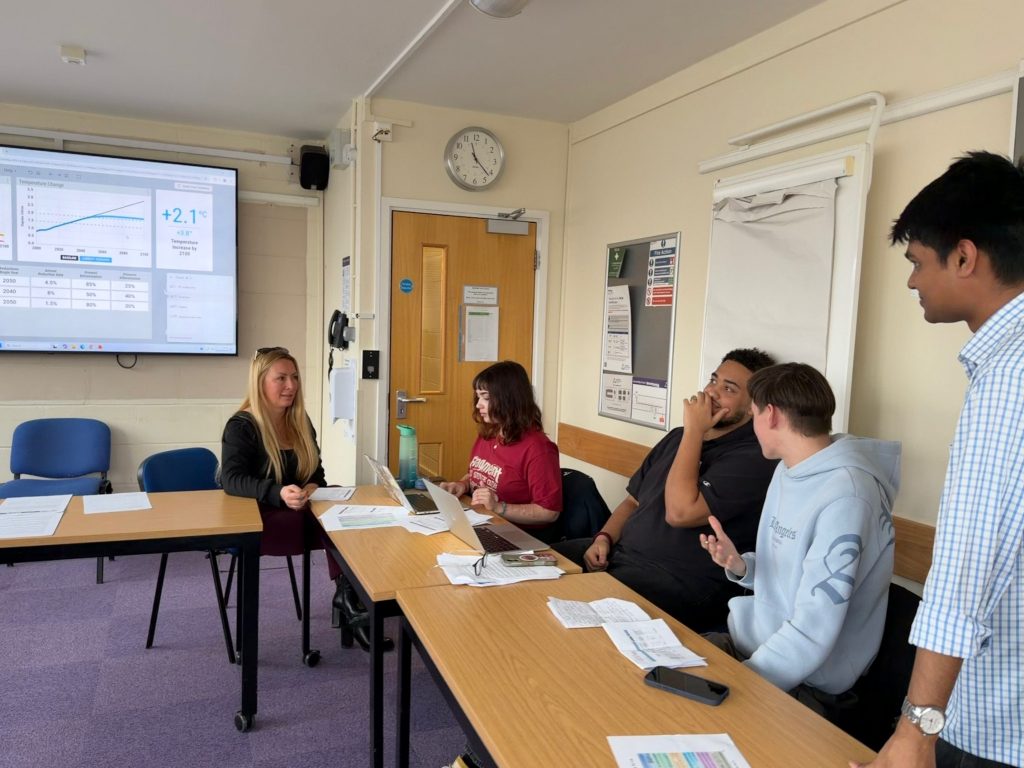
According to the climate modelling used in the simulation (C-Roads), if Developing Nations B had agreed to a 10% annual emissions reduction and accepted the proposed funding, the combined commitments of all parties would have been enough to reach the global target of limiting warming to below 2°C.
At the end of the summit, the organisers had to admit that once again the global community had fallen short of agreeing on a concrete framework capable of limiting global temperature rise to 2°C by 2100.
What made the summit truly memorable was not only the negotiations themselves but the passionate conversations that continued afterwards. Students kept debating strategies, missed opportunities, and alternative outcomes long after the official session ended.
In that sense, the simulation achieved exactly what it set out to do – giving students the chance to move beyond theory and experience the complexity, unpredictability, and excitement of real-world climate diplomacy.
Gaining Confidence Through Action – Juliette’s Reflection
By Juliette Stone LLB (Hons) Bachelor Of Law With International Relations
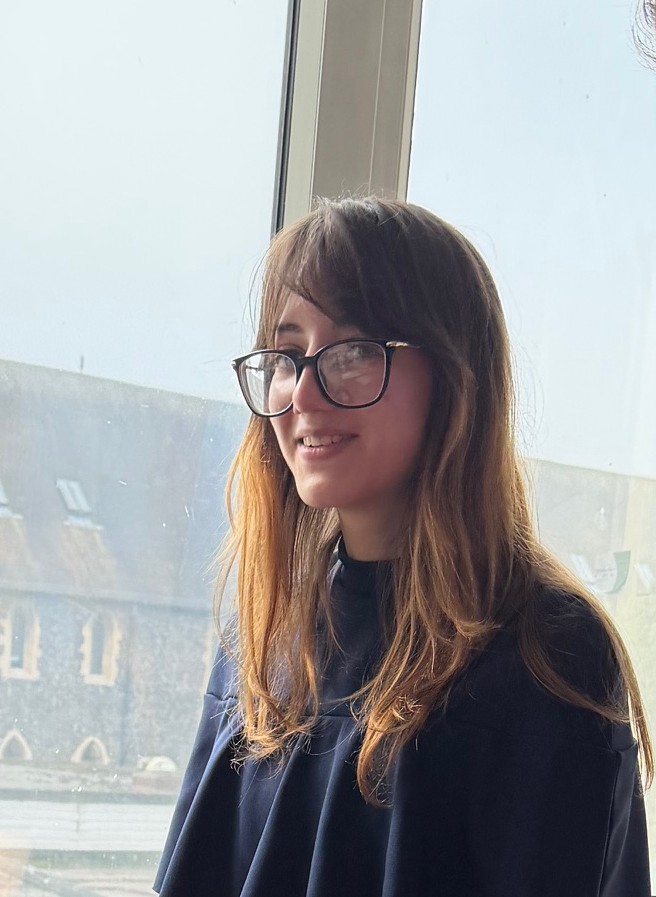
Recently, I participated in a Climate Simulation as part of my Global Governance & Diplomacy module, where I represented the Climate Activists NGO. The experience was amazing and engaging which helped grow my confidence in public speaking which I previously struggled with. Our main priority was to advocate for limiting global temperatures rise to below 2.0°C, preferably at 1.5°C.
Throughout the simulation, we began with our proposals in which we delivered a 3 minute presentation outlining our policy priorities. As I was advocating for the prevention of the rise of global warming, my proposition held decreasing the rates of deforestation and promoting afforestation, whilst ensuring the nations cooperated internationally with each other in funding and contributing to renewable energy resources.
Afterwards, we entered a negotiation phase which showcased our interactions, whilst remaining in character, and finding a common goal. It was fascinating to see the passionate, yet challenging debates we held with each other, finding ways to benefit our position whilst also aiding the environment and vulnerable nations. The simulation soon concluded where unfortunately we didn’t reach a positive conclusion and were left with the outcome of 2.1°C which was far from our goal. It suggested how difficult it is to actually negotiate when each party has their own terms they need to fulfil.
Overall, the simulation provided valuable skills for me to improve on, where I developed my confidence in public speaking which I never knew I had. I would say this simulation has been positively impactful for me and I’m grateful that I could experience this.
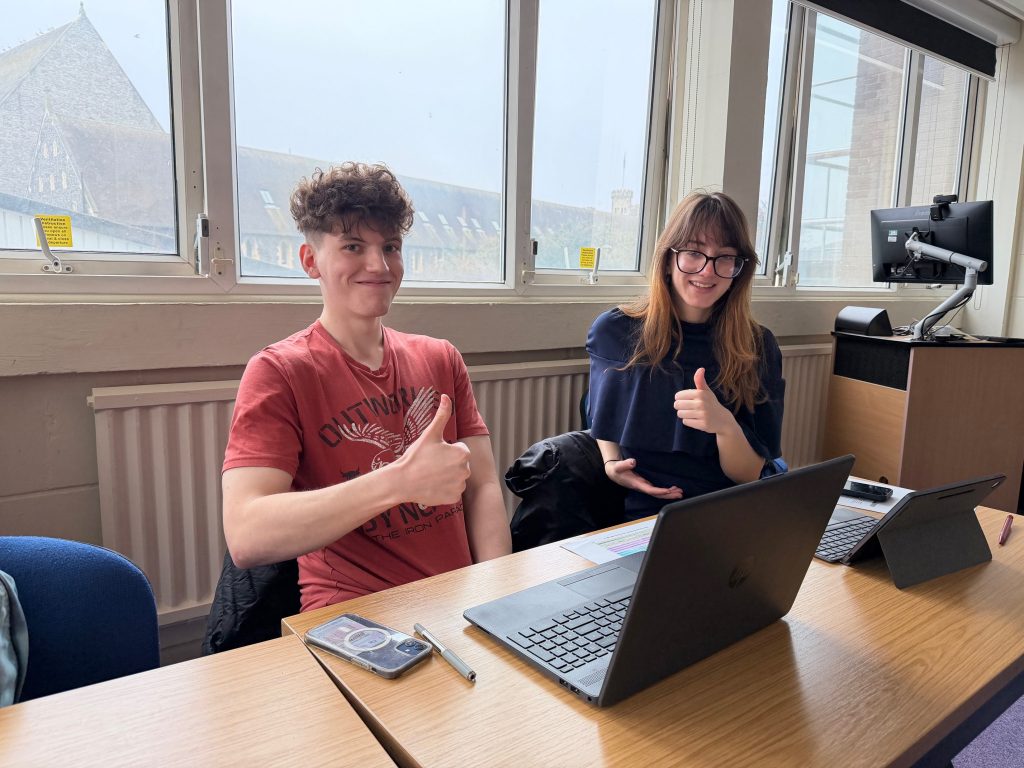

Dr Muzaffer Kutlay teaches International Relations at CCCU. Her research focusses on forced migration in global politics, inter-ethnic co-existence and resilience. She welcomes applications for PhD projects on these topics.
Find out more about how to study with us here: BSc Politics and International Relations


