 Politics
 Laura Cashman
 92
92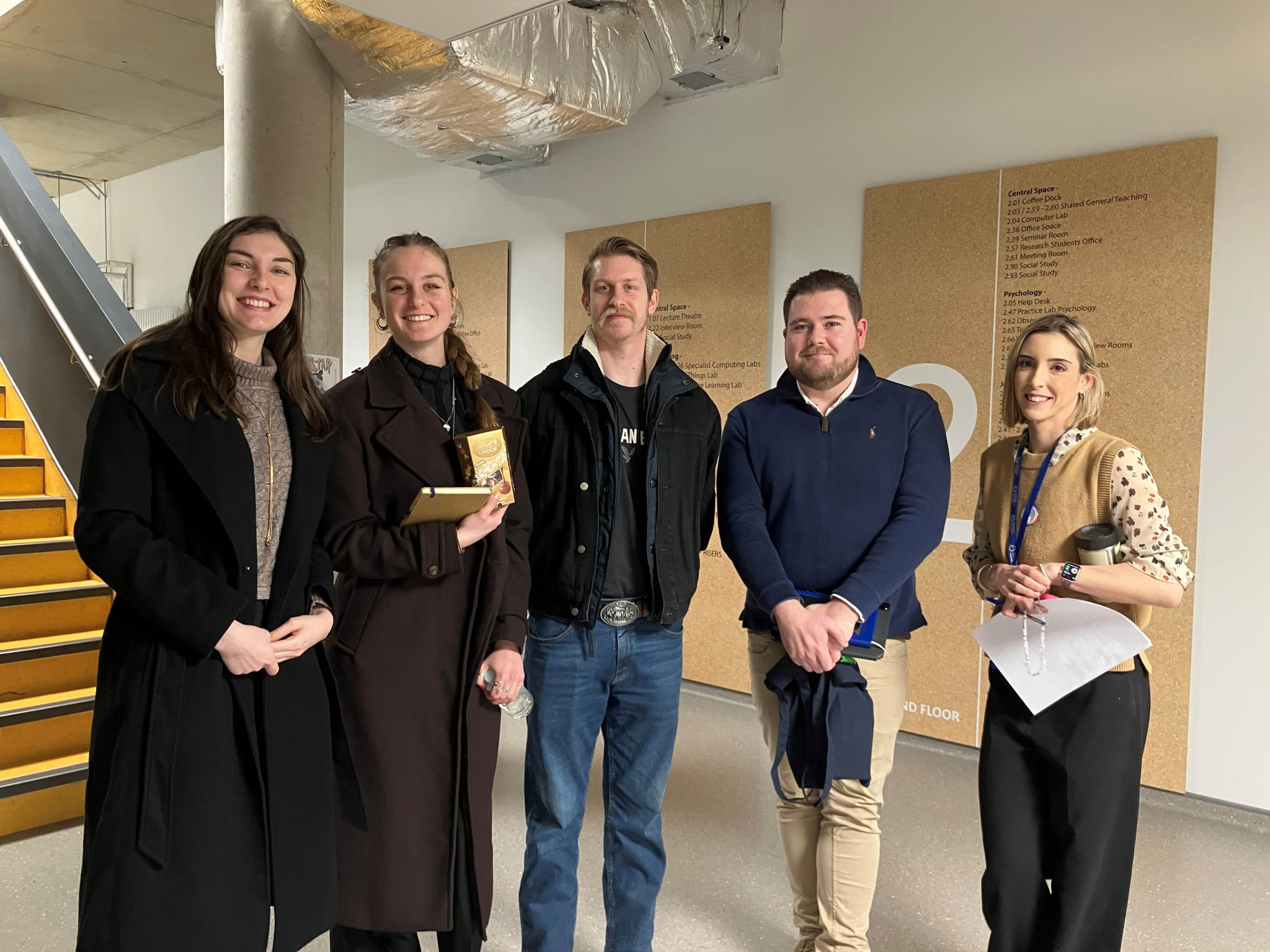
In the first of two posts exploring Get Grad Ready week, third‑year student Mariia Kaliuzhna reflects on the insights she gained from our visiting alumni.
The final year of being an undergraduate is, perhaps, one of the most nerve-racking and strange times in a student’s life. On the one hand, you feel enormous pressure from upcoming deadlines. At the same time, however, you can barely focus on the assignments because almost all your thoughts are about your future career pathway. You feel frightened by the wilderness outside the university, and it seems like you are expected to have everything sorted right after graduation. In moments like this, it is incredibly important to hear the voices of those who have already been through it. Therefore, attending the Get Grad Ready week at CCCU and learning from alumni experiences felt like a breath of fresh air.
This year, Politics and IR students enjoyed a wonderful conversation with two graduates. Virginia Sala graduated from Law and International Relations in 2023 has recently completed a master’s in International Law. She participated in a few internships and is now exploring journalism. Nick Rayner graduated from Politics and International Relations in 2012 but went into business. Today, he is the Head of Track Geometry Services at Balfour Beatty, whose work is hallmarked by communication with trainees, customers, and business owners. In this blog post, I will share their insights into the job application process, useful skills, and contemporary challenges of AI use and networking.
The discussion started by pondering the question of what is needed to get a job offer. Nick instantly stressed on a job-tailored CV as the main component, however he also added a caveat not to rely on AI. A CV should have a personal touch, something which makes you stand out. AI, to the contrary, has a set style which is easy to recognise for experienced users. Furthermore, AI-generated text signals laziness, which is a red flag for employers, as they may assume that a careless approach to writing a CV reflects a similar attitude to work. However, abstaining from AI may still not be enough. Nick used his personal story of changing own writing style which involved hyphens (and therefore resembled AI-generated text) as an example. At this point, dear reader might be seriously thinking of never using AI again. But Virginia’s perspective that AI should be used as a really helpful tool for checking grammar and punctuation is quite reassuring. After all, even one small mistake in your CV or cover letter, if noticed, could cost you a job. Thus, the new generation of graduates is facing a new challenge, a part of which is to be authentic and professional but also know enough about AI stylistics to avoid it.
The next step in a job application is the cover letter. One of the questions I asked was what employers wanted to see in it. Virginia’s answer that it is all sector dependent was both relieving and puzzling. She shared her observations that if you are applying to law-related sectors, your cover letter should be to the point, highly structured, and focused on your skills. However, for those who are willing to change their pathways slightly (e.g., from law to journalism), her suggestion was to explain your motivation in the cover letter. Nick’s advice on the cover letter was to demonstrate your knowledge about the role and company you are applying to. To do that, it is necessary to conduct thorough research. The most ideal situation is when you can mention that you have spoken to some of the current employees. It allows you to adapt your narrative to the organisation’s values and current priorities, showing that you understand not only what the role entails but also how you would fit within the team. At this point, the conversation naturally turned to the importance of LinkedIn as the main networking tool. My takeaway is that networking can get you much further because if a company insider remembers your name, you immediately stand out. As the saying goes, it is not only about what you know, but also who you know.
The last insight I would like to share is Nick’s opinion on the main skill missing from today’s graduates. To my surprise, it was communication abilities. However, it is not about how quickly you can sell a product, as you might have thought. Under communication, Nick primarily implies the capacity to negotiate effectively with colleagues over tasks and responsibilities. The lack of this skill is blamed on the effects of Covid shutdown, which significantly reshaped social and professional interaction. For this reason, it is important to work from the office as much as possible, as this not only helps master communication skills but also fosters stronger connections with the pre-Covid generation of co-workers.
Finally, I wish the best of luck to all graduates looking for their first professional roles. But those who have read this blog to the end can be confident they hold a valuable advantage, if they follow the advice shared by CCCU alumni.

Mariia Kaliuzhna is a third year BSc Politics and International Relations student at CCCU


