 Politics
 Laura Cashman
 1055
1055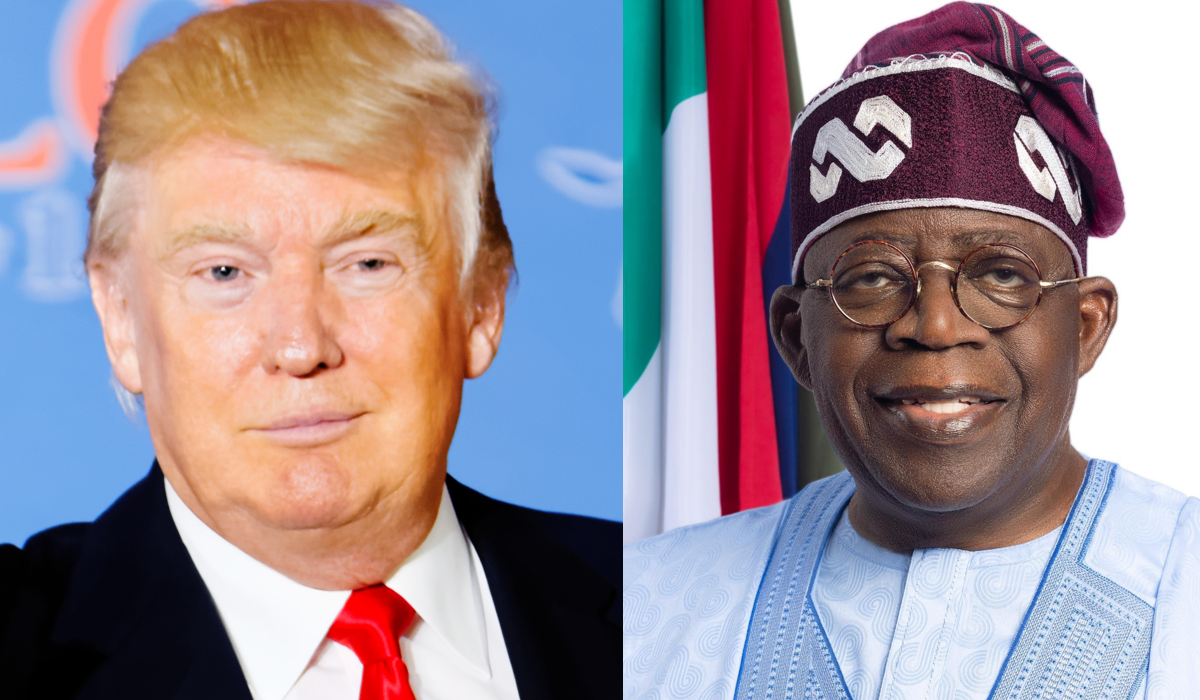
Dr Dele Babalola, Senior Lecturer in Politics and International Relations, offers his thoughts on Donald Trump’s latest pronouncements about Nigeria
Introduction
Donald Trump’s presidency has generated a number of dramatic foreign policy statements, but few have been as consequentially framed as his November 2025 claim that the Nigerian government was allowing, or enabling, a genocide against Christians, and that he could intervene militarily to stop it. This statement immediately elicited mixed reactions in Nigeria. While the governing elites criticised the genocide label as false and inflammatory and opposed the threat of foreign military intervention, some groups within the Christian population, as well as opposition actors, expressed support for Trump’s threat. Abuja’s calculated yet firm diplomatic response – rejecting the claim and emphasising its commitment to eliminate terrorism – exemplifies a well-established sovereignty norm and the country’s commitment to managing its domestic affairs without external interference.
Although Trump’s remarks appeared to be rhetorical, they played directly into the larger Western discourse, in which Africa is often depicted as a continent characterised by religious violence, civil war, and humanitarian crisis. They also appealed to his key domestic constituencies, particularly evangelical Christians concerned with global Christian persecution. Not only that, the remarks also aligned with a large segment of Nigerian Christians, home and abroad. Despite this, Trump’s assertion remains strategically puzzling. Why would a US president threaten to intervene militarily in Nigeria, a country vital to US strategic interests in West Africa? Why invoke a term as politically charged as genocide, especially when academic and legal analyses of violence in Nigeria generally fall short of meeting the threshold for the crime? And what, if anything, would have made such an intervention feasible in the current international system? Let’s attempt to answer these questions.
Trump, leadership style, and the politics of genocide claims
Genocide is one of the most rhetorically potent terms in international politics. It evokes moral urgency and responsibilities. It is also a term that political actors often deploy instrumentally to achieve one objective or the other. Interest groups, political actors, and activists typically use genocide narratives to generate pressure for humanitarian assistance or to stigmatise political opponents. The narrative of Christian genocide in Nigeria resonates with religious advocacy groups like Christian Solidarity International, Open Doors USA, and International Christian Concern, who have depicted the violence in Nigeria in religious terms. However, while Christians have sometimes been attacked by extremist groups, the intent does not meet legal or scholarly standards for genocide, which involve demonstrable intent to physically eliminate a religious group in whole or in part. The conflicts are multi-causal, involving ethnicity, land-use disputes, governance failures, extremist ideologies, and criminality.
As previously stated, Trump’s characterisation of the violence in Nigeria as a genocide against Christians served multiple political purposes, both domestically and internationally. First, it strengthens his appeal to his American evangelical Christian constituency, a crucial voting bloc. Evangelical voters constitute a major Republican constituency concerned with religious persecution abroad, especially involving Christians. By portraying himself as a defender of global Christian interests, Trump has positioned himself as a moral champion for a group that prioritises Christian values in political decision-making. Another goal was the symbolic projection of American power. By expressing a willingness to intervene militarily, Trump conveyed hegemonic confidence and reinforced the notion that the US is willing to act unilaterally when it chooses. Even without deploying troops, such symbolic threats indicate a determination to defend specific norms or communities. In this way, rhetoric functions as a low-cost means of projecting power on the global stage. Finally, the framing put pressure on Nigeria’s government to end the violence in Nigeria. Trump implied that Nigeria was either unwilling or incapable of defending its Christian population, undermining the legitimacy and efficacy of Nigerian authorities.
Despite the anarchic nature of the international system, it imposes limitations on state actions. Nonetheless, the personalities and views of leaders can affect their navigation of these constraints. Trump’s use of foreign policy rhetoric is shaped by his leadership style, defined by impulsiveness, symbolic gestures, and a penchant for dramatic statements. Trump has demonstrated a disposition to challenge norms, withdraw from institutions, and issue unconventional threats. However, in each case, real policy decisions were influenced by bureaucratic resistance, alliance dynamics, military assessments, and systemic constraints. The Nigerian case follows this pattern since the threat lacked institutional support, and diplomatic strategy. Personalistic discourse is unlikely to be translated into action unless it has bureaucratic support or is in line with national goals.
Humanitarian narratives as a political instrument
Evidence suggests that interventions are more motivated by strategic and geopolitical goals rather than universal moral principles. Invoking moral imperatives can disguise underlying geopolitical calculations, making contentious policies more appealing to domestic and global audiences. Humanitarian interventions, when they occur, often reflect larger geopolitical motives, such as the US-led action in Iraq and NATO’s intervention in Libya. Even the concept of the Responsibility to Protect (R2P) has been hotly contested, with non-Western countries seeing it as a threat to sovereignty and a weapon for great-power interventionism. In the Nigerian case, the instrumental use of humanitarian claims has enabled Washington to project moral authority without committing to costly action.
The selective nature of humanitarian intervention emphasises its political utility. If genuine humanitarian concern were the fundamental motive of US foreign policy, there would be consistent responses to comparable crises around the world. Trump’s focus on Nigerian Christians, while mostly ignoring ongoing mass atrocities in other places, demonstrates the selective use of humanitarian rhetoric for political and strategic gain. This selective application implies that moral claims were used strategically rather than as a consistent humanitarian ideal. Besides, unlike genuine humanitarian interventions, which are preceded by significant planning, and coalition building, Trump’s claim was abrupt and lacked institutional support. Without a doubt, Trump’s selective focus on the plight of Nigerian Christians exemplifies the instrumental use of humanitarian rhetoric.
Multipolarity, Nigeria as a regional power, and the improbability of US intervention
The international system is undergoing considerable structural reconfiguration. The unipolar period that followed the end of the Cold War, characterised by overwhelming American military and economic supremacy, has progressively given way to a more diffuse distribution of power. This emerging multipolarity is marked by the rise of multiple powerful actors, such as China and Russia, each capable of shaping regional political and security landscapes. Africa, long on the periphery of global strategic planning, has re-emerged as a crucial arena in which great powers compete, cooperate, and negotiate their interests. The continent’s growing economic importance, combined with shifting global supply chains and escalating geopolitical rivalries, has made it an important region of strategic engagement for China, Russia, the European Union, and the United States. Regional institutions have also become more assertive since alternative relationships offer them the freedom to oppose external interference. Organisations such as the African Union (AU) and the Economic Community of West African States (ECOWAS) have also stepped up their rhetorical and defences of sovereignty. In an environment where member states can seek developmental or security assistance from a variety of partners, these institutions are more confident in condemning external unilateral actions as abuses of international norms and national sovereignty. In this context, the political logic underlying unilateral foreign military intervention has changed dramatically.
The presence of multiple actors with overlapping and sometimes conflicting interests places additional constraints on the use of force. No single great power can act in isolation without anticipating the reactions of others, and even the most powerful state must consider likely diplomatic, economic, and security implications. Nigeria, Africa’s most populous country and key regional force, exemplifies this greater structural shift. Far from being a weak or peripheral state, Nigeria is an undisputed regional hegemon whose stability is critical to West African security. With over 200 million people, colossal natural resources, and the continent’s largest economy, Nigeria wields considerable diplomatic, economic, and military influence. It leads peacekeeping missions, mediates regional conflicts, thwarts military coups, and remains the most formidable conventional force in West Africa. Nigeria’s domestic resilience, economic weight, and continuous relevance in West Africa combine with global great-power competition to create conditions in which unilateral US military intervention is not only implausible but also strategically imprudent. These factors create a clear strategic reality: destabilising Nigeria poses an intolerable risk. An intervention that caused state fragmentation or widespread conflict would have disastrous ramifications for the region, resulting in refugee flows, strengthening transnational armed groups, and weakening economic integration efforts. Are these in line with what the United States desires for Africa? I don’t think so.
This strategic caution is further reinforced by Nigeria’s position in the emerging multipolar world. China has emerged as the country’s largest infrastructure partner, financing trains, energy facilities, and telecommunications networks. Meanwhile, Russia has increased its security presence in West Africa, particularly through arms sales, counterterrorism support, and military training. Both countries see Nigeria as an important partner in their efforts to enhance their influence on the continent. A unilateral US action in Nigeria would thus be regarded as a challenge to these developing partnerships. China might retaliate by stepping up its economic commitments, organising diplomatic resistance, or isolating the US through global platforms. Similarly, Russia might expand security cooperation, employ private military contractors, or use the circumstances to launch disinformation campaigns aimed at weakening US trust. Such dynamics risk transforming West Africa into a battleground for proxy conflicts reminiscent of the Cold War era.
Conclusion
A unilateral US military intervention in Nigeria is highly unlikely and strategically unwise. Rather than advancing US goals, intervention would risk exacerbating instability, inflaming insurgencies, and disrupting regional security. Domestic political constraints further limit the viability of such an action. Given the experience of military interventions in Iraq and Afghanistan, American public opinion would be leery of long-term military commitments, and the American Congress would oppose such intervention without a convincing strategic justification. Furthermore, in today’s multipolar world, the risks are considerably high. Any aggressive action by Washington may push Abuja closer to Beijing or Moscow, undercutting the US’s long-term goals in Africa.
Given these constraints, a more effective strategy should be sought in diplomacy, partnership, and targeted military assistance. Supporting Nigerian-led counterterrorism efforts, strengthening governance, and collaborating with ECOWAS and the AU provide more durable pathways for advancing US goals. These approaches respect Nigeria’s sovereignty, avoid provoking great-power escalation, and are consistent with the realities of multipolarism. Unilateral military intervention would be a strategic miscalculation, whereas cooperative engagement preserves US influence while promoting regional security and stability.
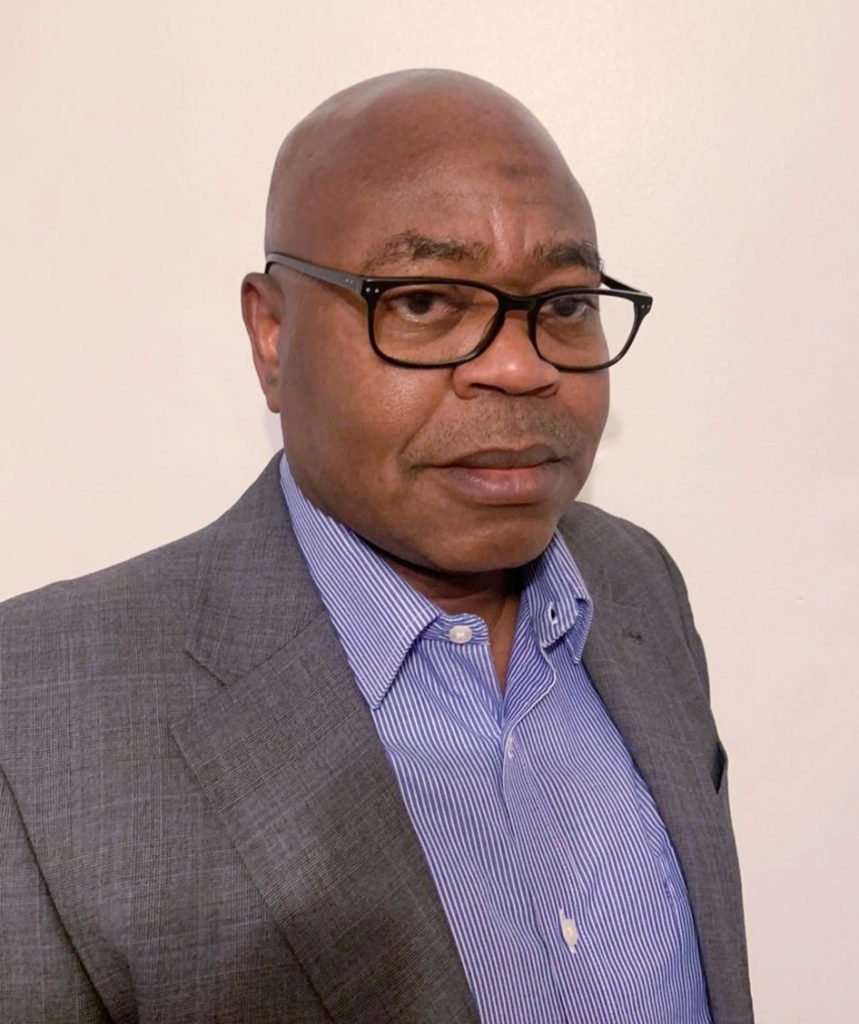
Dr Dele Babalola is a Senior Lecturer in Politics and International Relations at Canterbury Christ Church University. His research focuses on federalism and political economy; particularly ethnicity, democracy and terrorism in Nigeria. He teaches on our undergraduate and postgraduate degrees and welcomes applications from PhD students interested in similar research themes.


