 Politics
 Laura Cashman
 384
384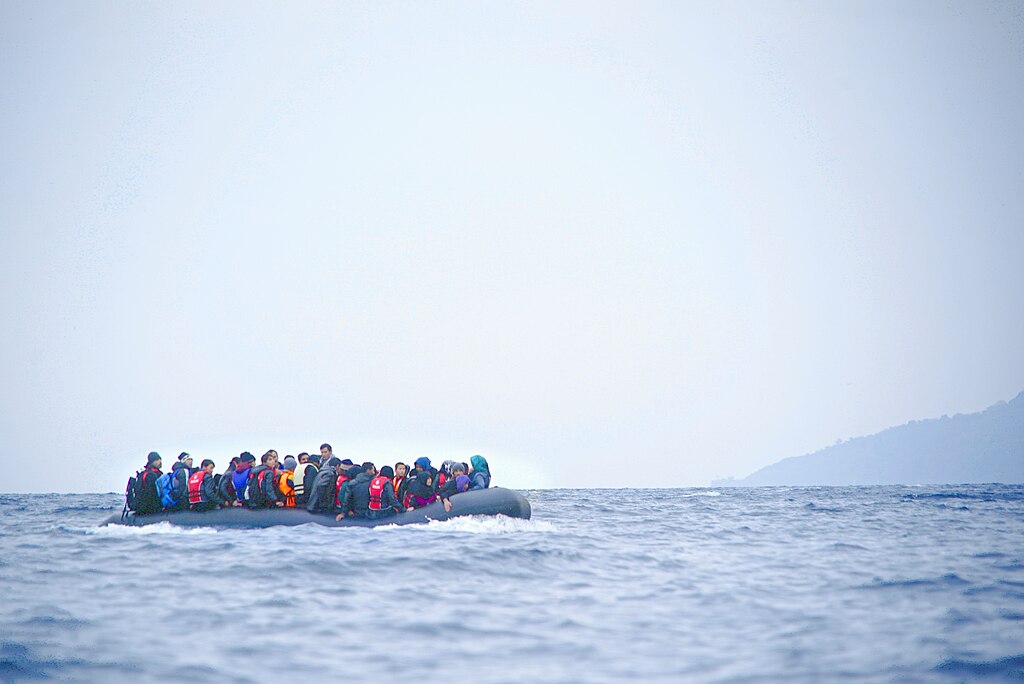
Long regarded as a cornerstone of international law, the principle of non-refoulement is now facing mounting challenges. In this blog, Dr Emo Idornigie-Pearce explains why this principle matters and examines the far-reaching consequences of its erosion.
In the contemporary world, one increasingly shaped by war, political upheaval, authoritarian repression, forced displacement, and the ever-deepening consequences of climate change, millions of individuals find themselves compelled to leave behind the familiarity of their homes. Whether fleeing armed conflict, escaping targeted persecution, or seeking refuge from collapsing political systems, these people begin journeys marked by uncertainty and danger. Amid this global landscape of human suffering and mass displacement, the international community has long relied on one foundational legal and moral safeguard, which is the principle of non-refoulement. At its core, the principle of non-refoulement protects individuals from being expelled, returned, or transferred to a territory where their life, liberty, or physical integrity might be at risk. This protection does not depend on citizenship, documentation, or immigration status, rather, it draws its power from an understanding of human dignity that transcends borders. Formally enshrined in the 1951 Convention Relating to the Status of Refugees and its 1967 Protocol, the principle has also evolved into a rule of customary international law, binding even states that have not signed either instrument. Additionally, numerous human rights treaties, from the Convention Against Torture to regional human rights frameworks in Europe, Africa, and the Americas embed variants of the principle, demonstrating its widespread acceptance as an indispensable element of global protection norms.
The logic behind non-refoulement is simple, no individual should be forced back into the hands of their persecutors. Yet its simplicity masks the considerable ethical burden the rule carries. Non-refoulement serves as a critical barrier between individuals and potential harm, functioning as the minimum obligation that states owe to those seeking sanctuary. The protection it offers is not merely procedural, it represents the first line of defence against tyranny, discrimination, and violence. For this reason, scholars and human rights advocates often describe non-refoulement as the “cornerstone” or bedrock of international refugee law.
On paper, the principle appears unassailable. Its wording in Article 33(1) of the Refugee Convention is sweeping and clear. Its status as customary law implies that no state may disregard it without risking international disapproval or legal consequences. Courts across the world have consistently upheld the centrality of the rule. Even the United Nations High Commissioner for Refugees (UNHCR) operates based on the assumption that non-refoulement is a non-negotiable commitment.
Given this legal and moral architecture, one might reasonably assume that non-refoulement stands as one of the few steadfast protections in a world increasingly intolerant of refugees and migrants. In theory, it symbolises humanity’s collective promise not to turn away those in mortal danger. Yet the lived reality of displaced populations tells a far more complex story, one often characterised by pushbacks at borders, detention practices designed to deter asylum seekers, and political rhetoric that dehumanises those in search of safety. In practice, non-refoulement is frequently tested, reinterpreted, or outrightly ignored. States, faced with rising anti-immigrant sentiment and pressured by domestic politics, often prioritise national sovereignty and border control over humanitarian obligations. Some governments employ aggressive deterrence tactics such as maritime interdictions, externalised asylum processing, or “safe third country” arrangements to circumvent responsibility. Others engage in indirect refoulement, where individuals are expelled to countries that are themselves unsafe or unable to offer adequate protection. These practices raise fundamental questions about the durability of non-refoulement in a geopolitical climate increasingly shaped by nationalism and securitisation.
The Mediterranean Sea has become a graveyard for thousands attempting dangerous crossings, with reports of state-sanctioned pushbacks regularly surfacing. What was once a route of connection and exchange has increasingly turned into a space of humanitarian crisis, where vulnerable people fleeing conflict, persecution, and economic hardship face perilous journeys in overcrowded, unseaworthy vessels. Despite international obligations to protect those in distress, allegations of coordinated pushbacks, delayed rescues, and deterrence-focused border practices continue to emerge, raising profound ethical and legal concerns. As deaths mount and safe pathways remain limited, the Mediterranean now stands as a stark symbol of Europe’s struggle to balance security, responsibility, and compassion.
These recurring tensions invite a deeper inquiry which is: is non-refoulement truly a fixed and reliable safeguard, or has it become more of a symbolic aspiration than an enforceable reality? On the one hand, the principle’s enduring presence in international legal frameworks reinforces its legitimacy and importance. On the other, states’ increasing willingness to circumvent or reinterpret the rule exposes the fragility of relying on legal norms without robust enforcement mechanisms. Furthermore, contemporary global challenges add further complexity. Climate change is producing new categories of displaced persons who often fall outside the traditional refugee definition. Non-state actors such as extremist groups, criminal organisations, and militias pose threats that complicate protection frameworks. Rapid shifts in political power, economic crises, and pandemics have also prompted states to adopt more restrictive immigration measures, sometimes at the expense of fundamental rights. In such an environment, the principle of non-refoulement stands at a crossroads, its normative strength remains intact, but its implementation is increasingly contested.
Thus, the debate over whether non-refoulement is a myth or a reality is not merely academic. It carries direct implications for millions of lives and for the credibility of the international protection system. If non-refoulement erodes in practice, the consequences extends far beyond legal inconsistency, they undermine the moral foundation of refugee protection and expose vulnerable populations to irreparable harm. As we navigate an era marked by displacement on an unprecedented scale, it becomes essential to reassess the real-world efficacy of non-refoulement. Does the principle still function as a reliable shield for those fleeing persecution? Or has it evolved into a lofty ideal, honoured more in rhetoric than in practice? By examining its legal foundations, contemporary challenges, and the diverse ways states respond to refugee flows, we can better understand whether non-refoulement remains a living reality or whether it risks becoming an increasingly fragile aspiration.

Dr Emo IdornigiePearce is Senior Lecturer in Law at Canterbury Christ Church University. Her research interest focuses on International human rights, with particular focus on socio-economic and cultural rights and the advancement of minority and Indigenous Peoples’ rights. Beyond International human rights law, she equally has a particular interest in the relationship between environmental law and human rights. She teaches on the undergraduate and postgraduate degrees.


