 Arts and culture
 Kellie Hogben
 30
30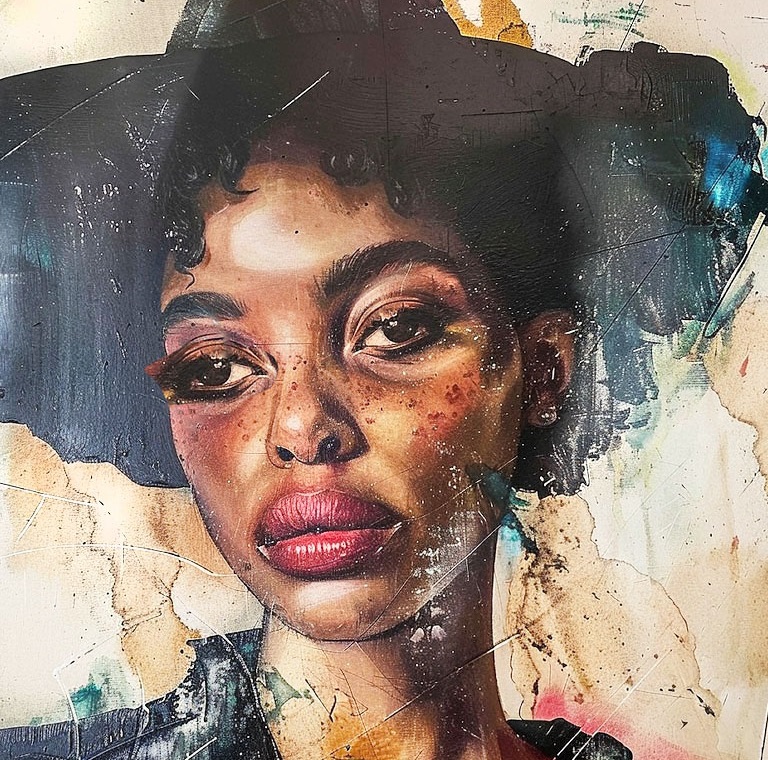
Michi Masumi is a CCCU PhD artist-researcher exploring how Artificial Intelligence (AI) operates within creative practice. She is currently exhibiting her work in our AI in Art exhibition in the Daphne Oram Gallery. Here she discusses her research and creative practice in more detail.
If you want to know more, she will be giving an Artist talk on Monday 27 April, and appearing on The Creative Careers and AI Podcast with Jo Samuel (Course Director and Senior Lecturer for BA (Hons) Media Production, CCCU).
🔬 My Research: AI, Identity and Black British Women
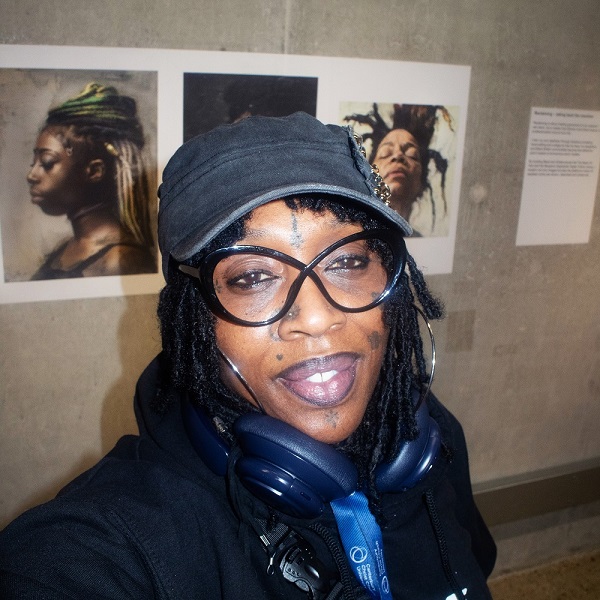
My PhD research at Canterbury Christ Church University explores how Black British middle-aged women use artificial intelligence within creative practice to express lived experience, identity, and cultural narratives.
The study examines the utilisation of AI-assisted and AI-hybrid creative tools by artists in conjunction with conventional art forms, including photography, poetry, and mixed-media digital art. Rather than replacing artistic practice, these technologies can expand the ways stories are told.
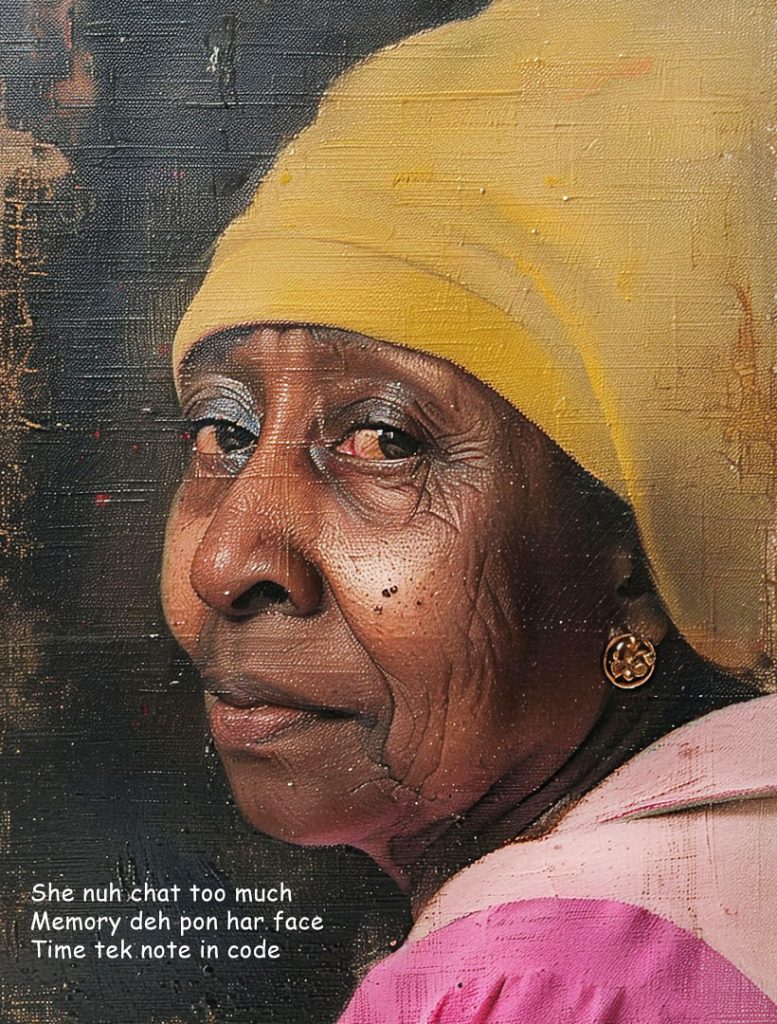
This research is practice-based, meaning the artworks themselves form part of the research process. My creative outputs include AI-assisted visual art, portrait photography, and sonic poetry, which explore themes of identity, representation, and cultural memory.
At the centre of this work is a key question: How can Black British women use AI creatively while maintaining authorship, cultural voice, and artistic control?
🌍 Art, Technology and Cultural Voice
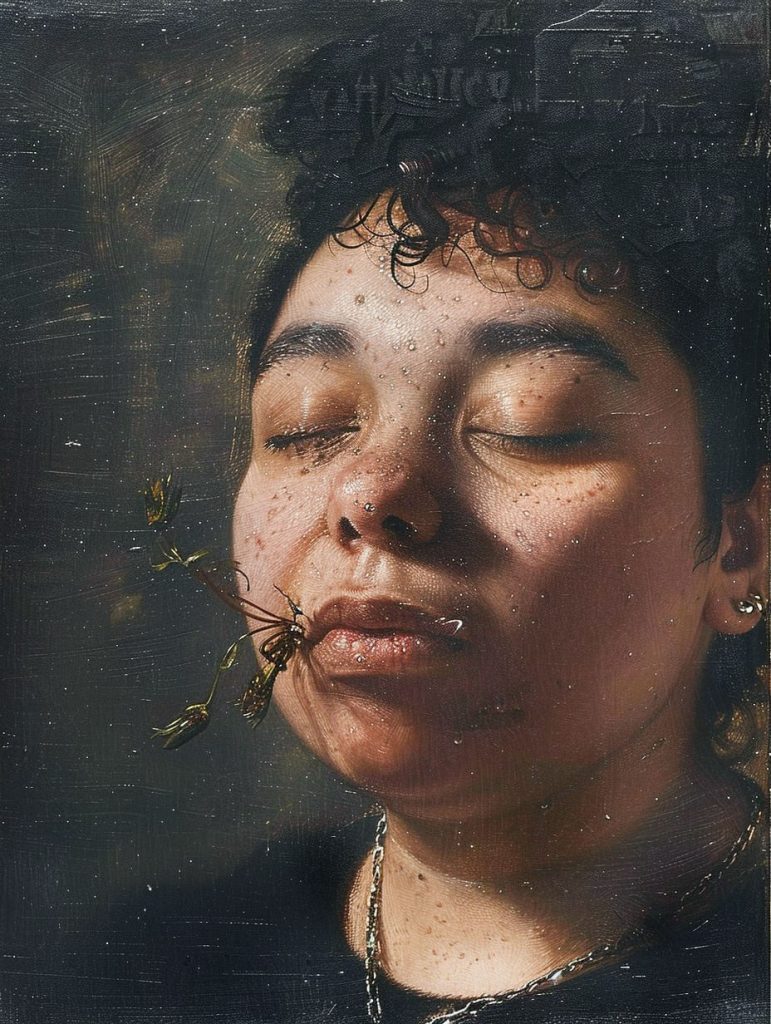
Artificial intelligence is increasingly shaping the creative industries. Artists across the world are exploring how AI in art and digital creativity can influence visual culture and storytelling.
My approach sits slightly differently within this wider discussion.
I work with AI-assisted art tools, but every project begins with my own photographs, poetry, and research themes. AI becomes one tool within a wider creative process.
Rather than replacing artistic practice, AI becomes something closer to a contested collaborator. It can challenge visual decisions, introduce new textures, and expand possibilities. However, the narrative, cultural grounding, and creative direction always come from the artist.
My work also draws on ideas from Black feminist theory, digital anthropology, and critical race scholarship, which examine how technology shapes representation, culture, and power.
🧠 AI-Assisted Practice vs Generative AI
There is often confusion around how artists use artificial intelligence.
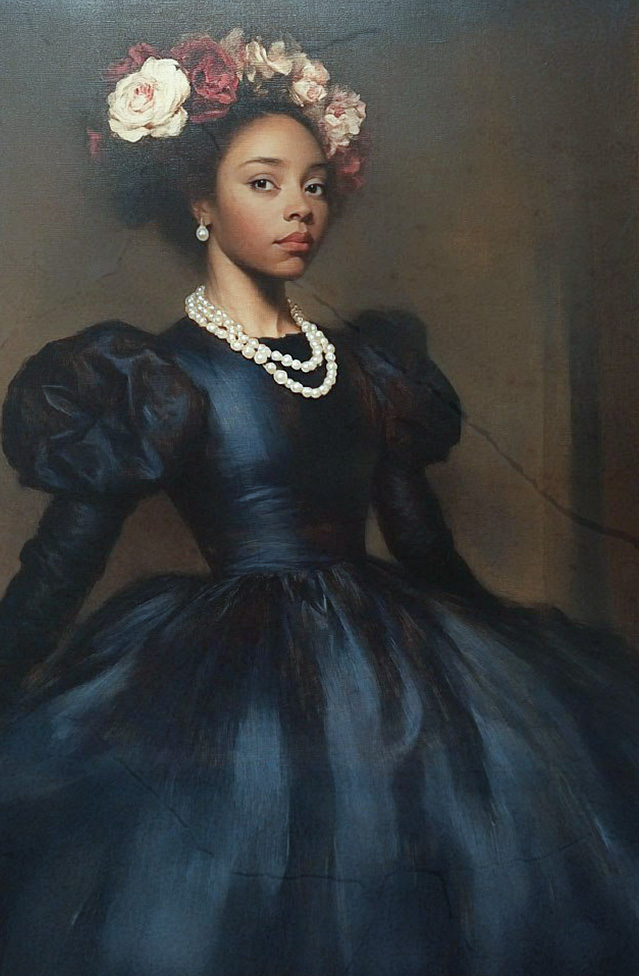
Many people assume AI-generated art is created simply by typing a short prompt and allowing a machine to produce an image. While generative AI can work this way, that is not how my practice operates.
My creative process usually begins with my own photography, poetry, and research themes. From there, I use AI tools carefully to explore texture, symbolism, and composition. The work may move through several digital platforms before reaching its final form.
Because of this, I describe my work as an AI-assisted or AI-hybrid creative practice, rather than purely generative AI.
In this sense, AI becomes a digital extension of the artist’s studio, supporting creativity rather than replacing it.
🔁 The 4Rs Framework
Resistance • Reclaiming • Reframing • Retaining
My work is guided by a framework I call the 4Rs.
These principles shape how I approach AI and creative practice.
Resistance
Challenging narratives that suggest AI will replace artists or control creativity.
Reclaiming
Artists are taking ownership of digital technologies and ensuring cultural voices remain present within AI systems.
Reframing
Shifting conversations about AI and creativity away from hype or fear and towards critical artistic engagement.
Retaining
Protecting the core elements of artistic practice, including cultural knowledge, lived experience, and creative authorship.
Together, the 4Rs encourage artists to use AI in visual art and digital creativity in ways that remain culturally grounded and critically aware.
✍🏾 The 3As Framework
Authorship • Agency • Autonomy
Alongside the 4Rs, my work emphasises the 3As: Authorship, Agency and Autonomy.
These principles are essential when exploring AI in the creative industries.
Authorship ensures that the artist remains recognised as the creator and director of the work.
The agency allows artists to guide the creative process rather than letting technology dictate outcomes.
Autonomy protects artistic independence so that AI tools support creativity rather than replacing it, allowing artists to make choices that reflect their unique vision and style.
Together, the 3As help artists use AI-assisted creative technologies while maintaining artistic integrity and cultural representation, ensuring unique voices and perspectives are preserved in their work.
🚀 Looking Forward
Artificial intelligence will continue to shape the future of digital art, visual culture, and creative technologies.
The challenge is ensuring that artists remain authors, decision-makers, and cultural storytellers within that process.
Through my research and creative practice, I aim to contribute to conversations around AI ethics in art, representation in technology, and the future of AI-assisted creativity.
Technology should not define culture on its own.
Instead, the future of AI and creativity should be shaped by the artists, communities, and cultural narratives that engage with it.
🖼 The Exhibition
AI in Art features the work of two CCCU PhD artist-researchers; Masumi and Ju Li. They each take different approaches to this shared interest; not just prompting AI but exploring how they can leverage it to enhance their own unique creativity.
The exhibition runs in the Daphne Oram Gallery from Monday 2 March until Monday 27 April 2026, but will be closed to the public from Friday 3 April (Good Friday) until Friday 10 April.
The usual opening hours are Monday – Friday, 10am – 4pm.


