 Alumni
 Celia Pearce
 794
794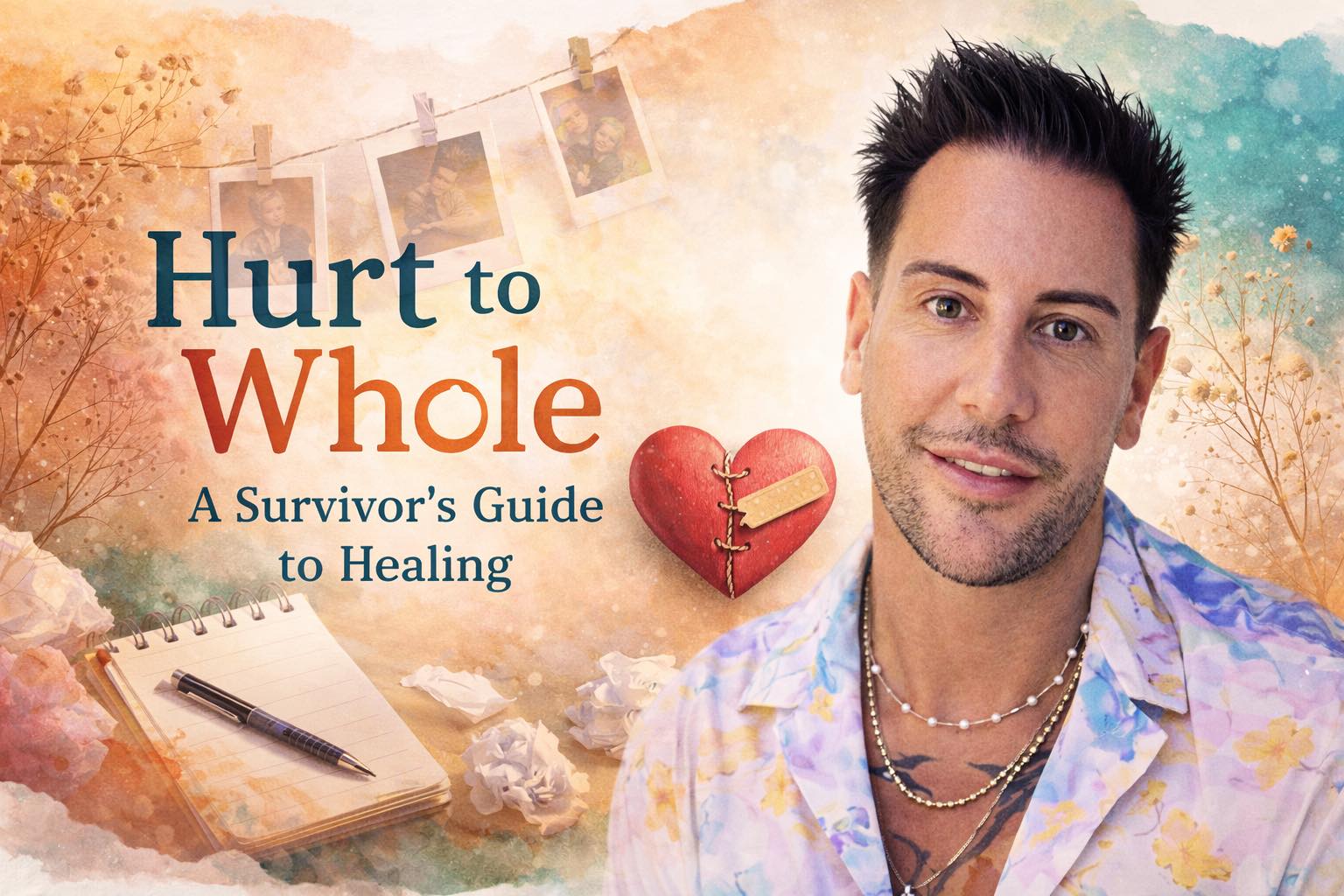
CCCU graduate Gavin Chilcott (MA in Human Resources Management, 2021) recently completed his memoir, From Hurt to Whole – A Survivor’s Guide to Healing. The book details his path from a difficult childhood and educational exclusion to rebuilding his life through resilience, community, and later‑life learning. His time at Canterbury Christ Church University played a central role in that transformation.
We caught up with Gavin as he reflected on his journey, his time at CCCU, and the message he hopes to share with current students.
What prompted you to return to education, and why did you choose CCCU?
I never expected to return to education. I left school without qualifications and with very little confidence in my academic ability, convinced that university “wasn’t for people like me.” Over time, frustration and a quiet determination pushed me to reconsider. I didn’t want my past to dictate my future anymore, and I wanted to prove to myself that I was capable of more than the labels I’d been given at 15.
I chose CCCU because it felt accessible, supportive, and rooted in community. From the very beginning, I felt seen as an individual rather than a statistic. I wasn’t looking for prestige; I was looking for a place where I could rebuild, and CCCU offered exactly that.
You describe your time at CCCU as pivotal in your unlearning and that you were supported with a second chance – could you expand on that?
My time at CCCU challenged the story I had carried about myself for years – that I wasn’t academic, that I wasn’t capable, that I was somehow “behind.” I’d been diagnosed with dyslexia at 15 but received almost no support at school. At university, for the first time, my learning differences were properly acknowledged and accommodated.
“More importantly, I was treated as someone with potential. That changed everything. Education stopped being about proving I wasn’t “stupid” and became about discovering how I learn best. It was hard work, but that effort built resilience and confidence. CCCU wasn’t just an academic experience for me; it was psychological repair. It was where I began unlearning shame and rebuilding belief in myself.”
How has your degree influenced your career in the HR sector?
My Master’s degree shaped my HR career in profound ways. It gave me theoretical grounding and critical thinking skills, but it also deepened my understanding of systems, behaviour, and fairness.
Because of my own experiences of educational exclusion, misunderstanding, and lack of support, I entered HR with a strong commitment to equity rather than just policy compliance. I know what it feels like to fall through the gaps, and that perspective informs how I approach employee relations, wellbeing, and development. Creating psychologically safe workplaces and advocating for people who may not feel confident advocating for themselves has become central to my work. Education didn’t just open career doors, it reshaped how I see people and potential.
What message would you most like current students to take from your story?
Your starting point does not determine your ceiling.
You are not defined by early setbacks, by decisions made in survival mode, or by the opinions of people who underestimated you. Growth is rarely linear, and sometimes the second chance is the one that changes everything.
If you struggle academically, it doesn’t mean you lack intelligence. If your journey has been unconventional, it doesn’t mean it lacks value. Often, the students who have had to fight hardest to be in the room bring the deepest insight and resilience into their careers.


I would love to hear feedback on this subject, I’m releasing my story via a publisher in September 2026.
HR Business Partner | Author From Hurt to Whole (Sept 2026) Writing about masculinity, shame & survival Late coming out | Dyslexia | Breaking cycles